Arregui’s revolutionary organization
Kiss of the Spider WomanArregui’s revolutionary organization remains largely unseen, but its methods and vulnerability shape the novel’s final movement. Through Valentin’s instructions to Molina, the group appears as a network of comrades protected by coded communication and limits on what an intermediary knows. Outside the prison, authorities watch Molina’s ordinary movements for signs of contact, converting uncertainty into a plan to intercept him. His death during that operation leaves the organization’s connection to the shooting unresolved.
Clandestine Organization and Methods
The organization is presented through Valentin’s concern for the comrades who depend on him. He tells Molina that an extraordinary plan of action has occurred to him and that he has been trying to find a way to pass it to them. The plan’s substance is not disclosed in this episode; what becomes clear is that communication with the group matters urgently, and that Valentin regards himself as responsible for its members.
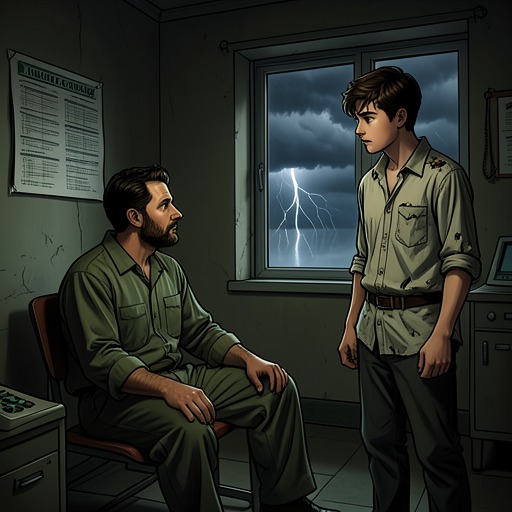
Valentin asks Molina to memorize the plan rather than carry written instructions. He proposes that Molina wait several days, call from a public telephone rather than his home, and arrange a meeting at a false location. The apparent destination would function as a code: a reference to the Rio Coffee Shop could signify another place, while the Monumental Theater could stand for a member’s house and the Plaza Hotel for a corner in the Boedo district. The system allows a conversation to name one location while directing the listener elsewhere, reducing the danger if telephone lines are monitored.
Molina is wary of becoming a courier. He tells Valentin that he is poorly suited to keeping information from interrogators and fears that, if caught, he would disclose everything. Valentin answers by asserting that he would not ask Molina to do anything risky and that the responsibility for the comrades remains his own. The exchange shows both the organization’s dependence on trusted intermediaries and the limits of that trust: Molina’s willingness to help does not erase his fear that pressure could make him betray the network.
The Prison Authorities’ Counterplan
The authorities recognize that Molina may provide access to Valentin’s group, but they do not know whether he is cooperating with them, protecting the organization, or simply looking out for himself. A prison official considers several explanations, including the possibility that Valentin’s comrades have influenced Molina or that Molina hopes to leave prison without compromising either side. These are suspicions, not established facts; the official’s uncertainty becomes part of the operational problem.
The authorities keep Molina for another week and allow Valentin to believe that a transfer to another cell is imminent because Molina has been recommended for parole. Their purpose is to give Valentin time to act and to discover whether Molina will carry a message. If he does, the authorities expect to follow him to the organization. They also discuss a fallback: publicizing a fictitious account in which Molina has secretly informed on the group, hoping Valentin’s comrades will seek him out and expose themselves. The scheme is later cancelled because officials consider contact between Molina and the partisans possible or imminent.
Surveillance and Misreading
Upon Molina’s release, a report identifies him as prisoner 3.018, records his parole on the ninth, and notes that CISL is surveilling him in conjunction with TISL’s wiretap unit. The resulting account turns his movements, telephone calls, and meetings into potential intelligence. Yet its detailed observations do not consistently yield reliable interpretations. When Molina and his friend Lalo exchange a series of feminine names, investigators consider whether the names conceal a code, then judge the conversation to be disordered and playful rather than prearranged.
Later calls attract renewed attention for more concrete reasons. At a coffee shop on Calle Juncal, Molina dials a number three times, hangs up, and then speaks for several minutes from a public telephone, despite having access to a phone at work. The report cannot identify the person he contacted. On another occasion, at a pizzeria on Las Heras, he again dials three times before speaking. These actions resemble the organization’s use of public phones, but the reports do not establish that either call reached Valentin’s comrades. The gap between observed behavior and proven contact is central to the surveillance narrative: close observation produces suspicion, not certainty.
Arrest and Uncertain Aftermath
On Friday, Molina leaves work, travels by bus and subway, and waits at Riglos and Formosa. The report states that he has been given a period in which to meet a party or parties; if nobody appears, agents intend to take him for questioning. Two CISL agents approach, and Molina demands to see their credentials. Before the agents can complete the arrest, shots are fired from a passing car. Molina and agent Joaquin Perrone are hit; Molina dies before the patrol unit can give first aid, while Perrone survives with a thigh wound and injuries from his fall.
The official report attributes the shooting to extremists seeking to prevent Molina from confessing, but presents that explanation as the patrol members’ impression rather than confirmed knowledge. It also notes that Molina’s recent activity and withdrawal of his savings suggest that he may have feared an encounter. The report entertains competing possibilities: that he expected to escape with the extremists, or that he anticipated they might kill him if he were found in a compromising position. None is resolved. The organization’s actual role in the attack, and whether Molina had made contact with it, remain unproved.
Significance
The organization is defined less by a public program than by the practical conditions of remaining underground: messages must be memorized, calls placed away from home, and locations translated through an agreed code. Valentin’s care for his comrades makes those procedures more than technical details; they are the means by which he tries to continue acting for them from prison. At the same time, his reliance on Molina exposes the fragility of clandestine work when a messenger fears interrogation and surveillance follows him into ordinary life.
The reports give the reader no neutral view of the network. They document addresses, routes, calls, and pauses, but repeatedly turn those details into hypotheses about hidden allegiance. The authorities’ imagined press leak is abandoned, yet their surveillance culminates in an attempted arrest and Molina’s death. Because the final account cannot establish who fired on him or what he knew, the organization remains present as both a real structure of communication and an object of institutional suspicion.