CISL
Kiss of the Spider WomanCISL is the security organization responsible for surveilling Molina after his release from prison, tracing his contacts, and taking part in the operation that ends with his death. Its role is presented chiefly through official reports: detailed records of routes, calls, work, and meetings that show how observation becomes an attempted means of control, but also how uncertain inference can remain beneath an authoritative institutional voice.
Identity and Role
The novel does not expand the acronym CISL or explain the organization’s formal structure. It does establish its practical role: CISL places Molina under surveillance in conjunction with TISL’s wiretap unit, dispatches agents to follow him, and coordinates with a patrol unit and the Central Bureau. The reports portray it as part of a wider security apparatus concerned with the activities of Valentin Arregui’s group and with whether Molina can be made to provide information.
CISL’s work spans both observation and intervention. Its personnel monitor Molina’s movements and communications, attempt to establish the identity of Gabriel, and eventually move to arrest Molina. These activities make the organization more than a background authority: its surveillance shapes the circumstances of Molina’s life outside prison and helps determine the novel’s final turn.
Surveillance and the Production of Suspicion
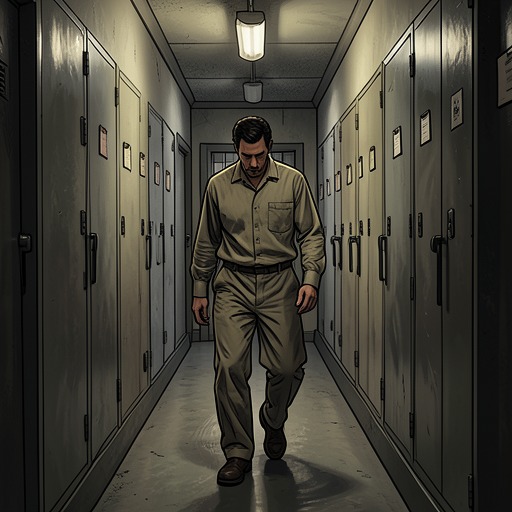
The report on Molina begins with his parole on the 9th and his placement under surveillance. It records his arrival home by taxi, his repeated appearances at a window, and his attention to a northwesterly direction. The watchers later connect that direction with the site of the penitentiary. The report preserves what its agents see, but the meaning they assign to those observations is less certain: a glance becomes noteworthy because it can be fitted into an intelligence narrative.
Telephone monitoring provides another example. The reports record Molina’s playful exchanges with Lalo, in which the two address each other by a changing series of women’s names. CISL considers whether the names conceal a code, then judges the conversations disordered and bantering, more likely a running joke than a covert system. The episode exposes a basic tension in the organization’s method: scrutiny can uncover patterns, but it can also make ordinary intimacy look like evidence before the interpretation is tested.
The reports likewise follow Molina through cinemas, family visits, meals, and the search for work. When he begins arranging a window-dressing job, agents note his meetings with prospective employers and the details of his journeys. On one workday, he uses a public telephone, dialing several times and hanging up before completing a brief call. The report treats the choice of a public phone, despite telephones available at his workplace and familiar locations, as suspicious. It records the behavior precisely without establishing whom he contacted or what the call meant.
Investigation and Institutional Decisions
CISL’s inquiry extends to people around Molina. Its district units are assigned to establish Gabriel’s identity; a report identifies him as Gabriel Armando Solé, a waiter at the Restaurant Mallorquin, and describes him as having no known political connections. This finding narrows one line of suspicion, but the report’s attention to a restaurant worker also illustrates how surveillance expands outward from its original subject to his personal network.
The organization’s decisions are shaped by competing possibilities about Molina’s loyalties and intentions. In a discussion among prison officials, he is suspected of withholding information, perhaps out of fear of Arregui’s people, or because he wants to leave prison without compromising himself with either side. The officials also consider using a false story in the press to provoke Arregui’s associates into seeking him out. That plan is later cancelled because contact between Molina and the partisans may be imminent. These deliberations reveal an apparatus that does not simply collect information: it weighs uncertain readings of a person and considers how to manipulate the circumstances around him.
Arrest and Limits of the Record
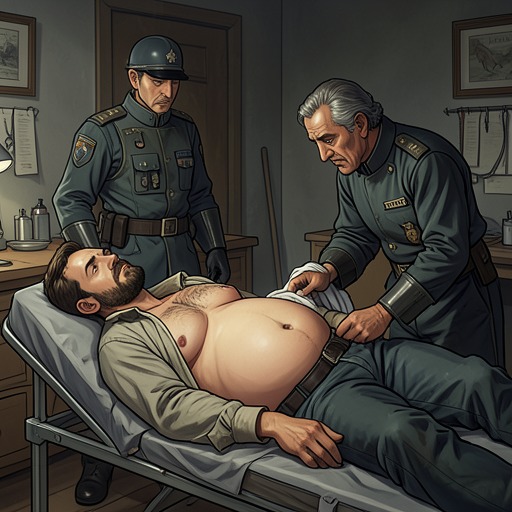
On the Friday of the final report, Molina leaves work, travels to a designated area, and waits. The report says the Central Bureau had allotted a period for him to be met by Arregui’s associates; if no one appeared, he was to be picked up for questioning. Two CISL agents approach to arrest him. As Molina asks to see their credentials, shots are fired from a passing car. Molina and agent Joaquin Perrone are wounded, and Molina dies before the patrol unit can administer first aid. The report states that the assailants escaped before the patrol could pursue them.
CISL’s account attributes the attack to Arregui’s associates and suggests that they wanted to prevent Molina from confessing. It also registers other possibilities: Molina’s recent actions, including withdrawing his savings and leaving the money in a sealed envelope for his mother, might indicate that he feared an imminent danger; if he knew he was being watched, he might have expected either to escape with the group or to be killed by them. The report does not resolve these competing explanations. Its closing authority—an official compilation typed in quadruplicate and restricted to authorized personnel—contrasts with the uncertainty inside its own analysis. CISL can record the route, schedule the arrest, and preserve the aftermath in a file; it cannot conclusively establish what Molina knew or why the attack occurred.