Inés’s coded letter
Kiss of the Spider WomanInés’s coded letter is a personal message to Valentin that also delivers concealed news about his revolutionary group: Uncle Pedro has been killed, Ines has taken responsibility for the group, and she is navigating its rules against intense personal attachments. Read aloud in prison and decoded by Valentin, the letter makes communication itself a matter of risk, loss, and political interpretation.
The Letter and Its Transmission
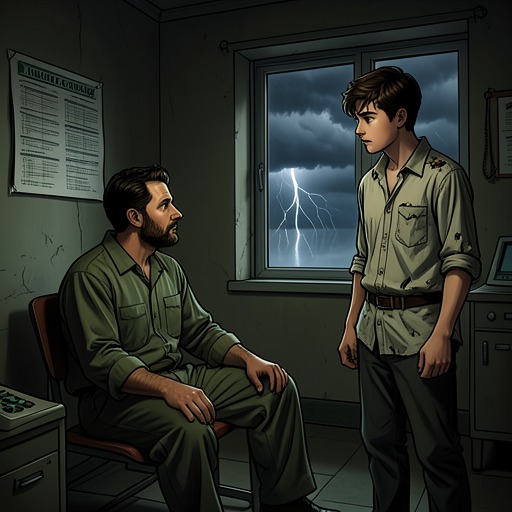
The letter arrives under conditions that shape its meaning. Valentin recognizes it as the work of a young woman with little education, while the conversation makes clear that prison authorities may open inmates’ correspondence. Ines herself anticipates that possibility: she has realized that the authorities can inspect letters, and agrees that Valentin may read this one aloud. What might have been private correspondence has become exposed communication, subject to both censorship and the scrutiny of a cellmate.
The message also refers to an earlier letter about Uncle Pedro that never reached Valentin. Ines says that Pedro’s wife had already sent him news, but Valentin has received none; he suspects the authorities may have torn up or withheld that other letter. The coded letter therefore does more than report a death. It confirms that prison control over correspondence has already left Valentin uninformed, and that the new message must carry news whose absence has prolonged his uncertainty.
Decoding the Political Message
At first, Valentin finds the letter’s meaning unclear. Its references to growing old, life’s trials, and a family house appear to belong to ordinary reflections on age, hardship, and domestic prospects. As he reads, he translates these expressions into the group’s political vocabulary: growing old means entering the movement, life’s trials mean fighting for the cause, and the house stands for the country. The letter’s language works on two levels, allowing an intimate family-like account to carry information that could not safely be stated directly.
The code is not presented as self-explanatory. Valentin supplies its meanings as he goes, while the person listening to him follows only partially. Interpretation depends on his knowledge of the movement and of Ines’s circumstances; the written message alone does not make its political report plain. This exchange turns reading into a collaborative but unequal act: the letter is spoken aloud, then its euphemisms are opened up by the person who knows the code.
Pedro’s Death and Ines’s New Responsibility
The disguised account reveals that Uncle Pedro was not an elderly relative but a twenty-five-year-old comrade in the movement. His death is a shock to Valentin, who had not known that he had been killed. The family language surrounding Pedro softens the report without reducing its stakes: he had left the family in Ines’s hands, a phrase Valentin identifies as meaning that she is now in charge of their group.
The letter connects that change in responsibility to the group’s continuing struggle. Ines describes carrying the burden left by Pedro and taking responsibility herself. Her message thus records a shift in leadership as well as a bereavement. The news reaches Valentin indirectly, through both censorship and code, but it leaves little doubt that the loss has changed who must act for the group.
Intimacy, Discipline, and the Letter’s Meaning
Ines also uses the language of a niece beginning a relationship with a respectable young man. Valentin explains that the niece, Mari, is Ines herself, and that the man’s steady employment is coded praise for his devotion to the cause. The apparent domestic story disguises a political one: Ines has begun a relationship with another comrade while missing Valentin, to whom she is writing.
Valentin interprets this choice through the movement’s rule against becoming deeply attached. Intense personal feeling, he explains, can make comrades fear the consequences of risking their lives, because one person’s danger may cause another person to suffer. The letter’s description of companionship therefore carries a tension between private longing and political discipline. Ines’s message acknowledges separation and attachment while presenting her decision within the terms of the cause.
The letter closes its political account with guarded optimism about the future of the country, again expressed through the image of a house prospering. But the reading does not settle into reassurance: Valentin says the letter has shocked him, and, after explaining it, becomes dizzy again from reading. Its significance lies in how much it makes him learn at once—Pedro’s death, Ines’s new authority, and her effort to balance intimacy with revolutionary obligation—while showing that even a personal letter can arrive fragmented, exposed, and encoded.