Irena’s Refusal of Marital Intimacy
Kiss of the Spider WomanIrena’s Refusal of Marital Intimacy is the central tension in her marriage to the Architect: she chooses a shared life with him, but cannot yet accept the marital closeness he hopes for. Her hesitation is framed through a striking contrast between domestic affection and fear, while her encounters with the zoo Panther leave the source of that fear unresolved. The episode reaches the wedding night without resolving the conflict; instead, it establishes the pattern of approach and withdrawal that follows.
A home and a promise
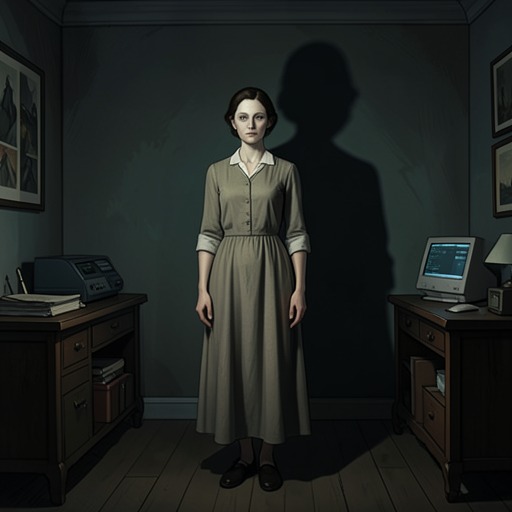
When the Architect asks again whether she will marry him, Irena answers that she wants to do so with all her heart. She says she feels at home in the house and never wants to leave it. The domestic setting is described in detail: dark velvet drapes block the light, and behind them lace curtains open onto the house’s turn-of-the-century decor. Asked who chose the furnishings, the Architect credits his mother with selecting every piece and says she would have loved Irena as her own daughter. The home thus carries both the promise of belonging and the presence of a family history that Irena is welcomed into.
Irena’s response to this welcome is intensely affectionate. She kisses the Architect on the forehead with something like reverence, asks him never to leave her, and imagines waking each morning with him at her side. At the same time, she asks him to give her time before she can become a real wife, hoping that her fears will subside. Her refusal is therefore not a rejection of the marriage or of the Architect: the scene places her stated devotion directly beside her request to postpone intimacy. The closeness she can promise is daily companionship; the further step remains beyond her present capacity.
Marriage without consummation
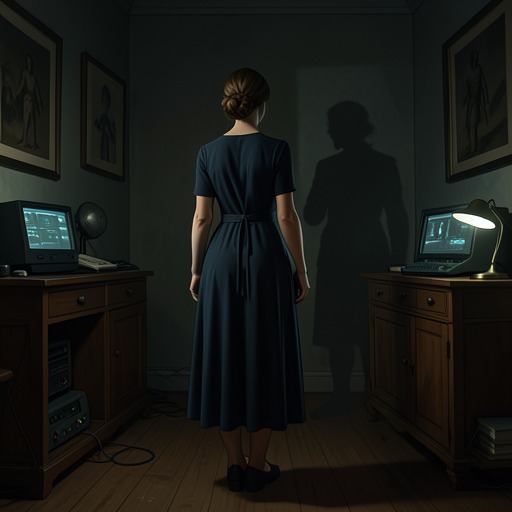
The Architect agrees to wait, and they marry. On their wedding night, Irena sleeps in the bed while he sleeps on the sofa. The physical arrangement makes her request concrete: marriage has taken place, but the couple remain apart in the room. The narration’s light joke about the Architect keeping watch over his mother’s furniture is immediately checked by Molina, who insists that he is telling the story seriously and likes the film. The comic aside does not alter the scene’s circumstances; it highlights how easily Irena’s distress might be treated as a punchline, and how firmly Molina resists that response.
The separate beds also complicate any simple account of Irena as indifferent to her husband. She has just described wanting him beside her every morning and has greeted him with a reverent kiss. Yet those gestures do not remove the limit she has placed on marital intimacy. The film holds both facts in view rather than resolving one into the other: emotional attachment is present, while the sexual and marital relationship she fears remains deferred.
Fear, interpretation, and the Panther
In a later conversation about her anxiety over being a good wife, Irena and the doctor agree that she should speak at their next appointment about her dreams or nightmares. One dream involves her becoming a Panther. Valentin interprets her behavior as fear that she will turn into one; Molina offers a different, explicitly speculative reading, suggesting that she may be frigid, afraid of men, or imagining sex as violent. These are interpretations offered in the conversation, not a confirmed explanation of Irena’s condition. The story preserves the uncertainty between a supernatural fear and a psychological account rather than identifying one as the truth.
Irena does not attend the next appointment. Instead, she goes to the zoo to look at the Panther. She watches the animal pace inside its large cage, while it keeps its eyes on her. A keeper briefly opens the cage to toss in meat, then leaves a large rusty key in the lock. Irena removes it, pauses, and returns it to the keeper. The sequence brings her close to the means of opening the cage but does not show her releasing the animal. Her attention to the Panther therefore intensifies the film’s connection between her private fear and the animal without settling what she intends or what the connection means.
Affection and evasion
After returning home, Irena waits for the Architect. The narration recalls her daily care for a canary, feeding it tenderly and changing its water as it sings to her. When her husband arrives, she embraces him and nearly kisses him on the mouth; he takes this as a sign that the treatment may be helping and that they may finally become husband and wife. But he asks how the appointment went. Irena feels guilty because she did not go, slips out of his arms, and lies that the session was fine. Affection brings them briefly together, while the question about treatment sends her back into concealment.
The episode does not provide a resolution to Irena’s refusal. Instead, it gives the hesitation a sequence of distinct forms: a request for time before the wedding, separate beds on the wedding night, an absent appointment, a watchful visit to the Panther’s cage, and a lie after a moment of renewed closeness. Each instance keeps love and avoidance in the same frame. As Molina tells the story to Valentin, that unresolved tension is central to the scene’s force: Irena wants a permanent home and the Architect’s presence, but neither her promise nor his patience makes her fear disappear.