Molina
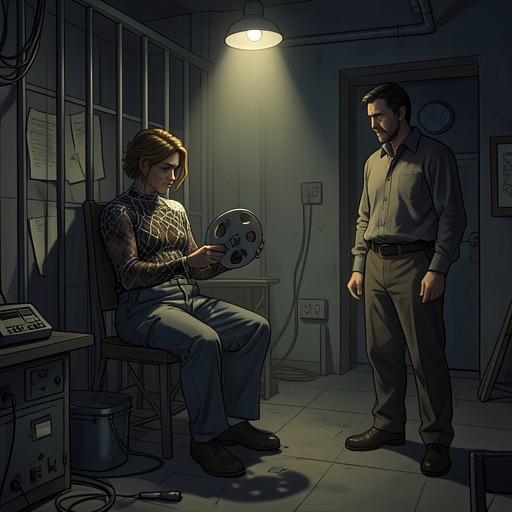
Kiss of the Spider WomanMolina is a prisoner whose imaginative film narrations give the cell a second life beyond its walls. In conversation with Valentin, he reveals both a personal longing for Gabriel, a waiter he admires, and a gift for turning remembered films into elaborate visual scenes. The contrast between his confinement and the sensuous worlds he describes makes storytelling one of his clearest ways of expressing feeling and sustaining connection.
Identity and Life in the Cell
Molina names his offense as corruption of minors and resists having the conversation turned into psychological analysis. The brief exchange shows him setting a boundary around what he will discuss even as he takes part in an unusually intimate conversation with Valentin. His identity in these passages is defined less by biographical detail than by this mixture of guardedness and disclosure.
When Valentin speaks of the woman he misses, Molina asks him to describe her. Valentin says he would give anything to hold her, even for a second; Molina answers with reassurance that the day will come. The exchange places Molina in the role of an attentive listener, able to respond to Valentin’s longing with encouragement rather than turning the conversation back to himself.
Gabriel and the Risks of Disclosure
Molina recounts an outing with two friends, one of whom was rude to a handsome waiter. He had noticed the waiter’s appearance, but what impressed him more was the man’s composure: he answered the insult without losing self-control, explained why the food was not up to standard, and did so with enough finesse to leave the customer looking foolish. Molina reads that controlled, assured response as evidence of unusual character and describes the waiter as a real man.
The story carries a personal charge that Molina does not initially state outright. Later, Valentin tells him to think about the Gabriel business as he tries to sleep. Molina asks who Gabriel is, then admits that Gabriel is his waiter. The name slips out before he has chosen to disclose it, turning an account of a stranger’s poise into an indirect revelation of his own attraction. Molina also says he feels embarrassed when discussing deep feelings, making the moment both a comic evasion and a glimpse of his vulnerability.
Storytelling as Cinematic Imagination
Molina’s accounts do more than report plots: they reconstruct scenes through setting, costume, light, sound, and movement. Recalling a movie house near his home in Buenos Aires, he shifts into a Paris music hall with dark velvet, chrome railings, and a chorus line whose appearance changes from black makeup and banana skirts to blondes in sparkling costumes. After the number, darkness gives way to a tall singer emerging through layers of tulle in a silver lamé gown. Each step down from the stage produces another streak of light, until the separate illuminated edges resolve into a staircase. The narration makes the reveal itself a performance, delaying clarity until the setting’s visual trick becomes legible.
In another film story, a blind pianist’s country-house gathering is established through precise contrasts: autumn mist, slate roofs, arriving headlights, candlelit rooms, and guests turned toward a piano. The blind man’s limited sight shifts attention away from appearances and toward sound and feeling. As he approaches a chalet, his cane and guide dog orient him in the forest; fallen leaves crackle underfoot, and he senses the house through a heartbeat rather than anything visible. Molina’s description translates the scene into a sequence of sensory cues, letting the blind man’s perspective reorganize what the audience can know.
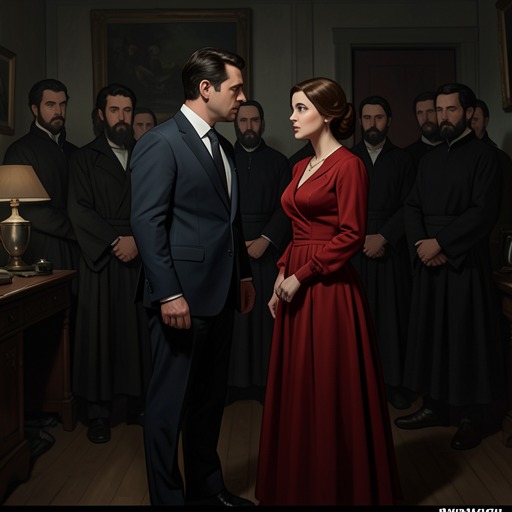
A further narration places a masked couple at the close of the Mardi Gras of Veracruz. Fishermen are already heading out before dawn; music drifts from a lit villa above a jasmine-filled walk, palms, and the beach. A slow habanera continues as the masked dancers remain among the last couples on the floor, while sunrise announces the approach of Ash Wednesday. The passage’s vivid costumes and setting make the ending of the celebration feel like a transition already underway: the spectacle persists, but daylight is arriving.
Narrative Role and Significance
Across these exchanges, Molina’s storytelling alternates between escape and contact. His descriptions can carry a listener from a cell into a velvet theater, a forest house, or a coastal masked ball, yet they also reveal what matters to him: beauty, self-possession, romantic feeling, and the particular qualities of a person who has caught his attention. Valentin’s participation helps expose the private stakes beneath the performances, especially when he recognizes that Molina’s thoughts have returned to Gabriel.
The surviving scenes also show how Molina’s narration makes cinematic effects out of language. Darkness, spotlight, costume, music, and gradual revelation structure his stories as if the listener were watching a screen. At the same time, his accounts remain conversational: Valentin interrupts to ask questions or urge him onward, and Molina adjusts the pace and detail in response. The films therefore serve not only as imagined worlds but as material for a relationship in which one man tells and the other listens.