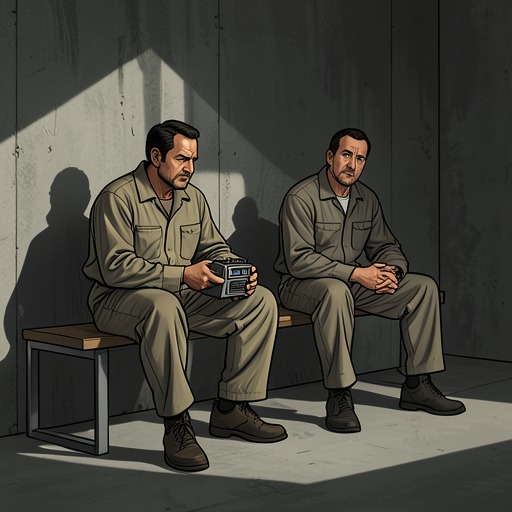
My Letter
Kiss of the Spider WomanMy Letter is a bolero that Molina introduces in prison and that suddenly acquires personal force when Valentin recognizes its language in a letter he has received. The song’s imagined separation and steadfast devotion first invite laughter; the real letter turns that reaction into recognition, making the bolero a small but revealing exchange about love, absence, and the risk of dismissing another person’s feelings.
Identity and Attribution
Molina identifies My Letter as a bolero by Mario Clavel, whom he says is from Argentina. Valentin guesses that the song might be Mexican or Cuban, but Molina’s attribution locates its composer elsewhere. He adds that he knows many songs by Agustin Lara, almost all of them, placing My Letter within a wider repertoire of boleros familiar to him rather than presenting it as an isolated lyric.
The song enters the conversation at the beginning of Chapter 7. Just beforehand, Molina has advised that it would be bad for Valentin to stir up intimate matters from the past, and offers him tea instead. The shift from that caution to a song about a love that may never be reunited is telling: private feeling is at once something Molina warns against reopening and something he is willing to approach through a familiar piece of music.
The Letter in the Song
The lyric takes the form of an intimate address. Its speaker writes at night, when silence makes it possible to speak, and wonders whether the absent beloved also remembers their strange love affair. It imagines that life and fate may keep the pair apart, yet insists that the speaker’s heart, thoughts, and life remain devoted to the other. Separation is not represented as evidence that love has ended; instead, it sharpens the song’s declaration of constancy.
Pain gives that declaration its emotional weight. As Molina recites the ending, he hesitates over whether the word is pain or hurt, saying that he cannot remember which. The uncertainty belongs to the telling, while the central sentiment remains clear: the speaker’s suffering is bound to the beloved. Valentin judges that the song is not the worst he has heard; Molina answers that it is divine. Their different assessments establish a light, teasing distance from the lyric before the conversation reveals why it matters.
The Song Meets a Real Letter
Valentin then says that he had been laughing at Molina’s bolero, but that a letter he received that day says just what the song says. The correspondence is not quoted or identified further, so the parallel remains at the level Valentin names: the song’s language of separation and attachment has become recognizable in a real communication. He concludes that he has no right to laugh at the bolero. What had sounded to him like sentimental excess now touches an experience he cannot treat as merely ridiculous.
When Molina asks which part of the song resembles the letter, Valentin answers, the whole thing. That answer extends the comparison beyond one phrase or image. The bolero’s entire emotional pattern—writing in the quiet of night, remembering a love, being kept apart, and remaining devoted—has found an echo in the message he has received. Yet the text does not disclose the letter’s writer, its circumstances, or whether its language is literally identical to the lyric. The important change is Valentin’s response: the song has become a measure of feelings he now recognizes as consequential.
Function in the Prison Conversation
My Letter works as more than a performance or a subject for musical judgment. Molina brings a conventional love song into conversation, and Valentin’s unexpected admission changes the terms on which they discuss it. His earlier laughter gives way to acknowledgment; Molina’s unabashed praise of the bolero is no longer simply a taste Valentin can dismiss. The moment makes room for an intimate subject without requiring Valentin to explain the letter itself.
The exchange also turns the song’s central condition—two people bound by feeling yet separated—into a point of contact between the prisoners. It does not establish that their situations match the lyric, nor that the letter concerns any particular relationship. Instead, its significance rests on a narrower, explicit recognition: a song Valentin mocked has voiced something that matters to him. In the movement from teasing to respect, My Letter shows how music can carry private feeling into speech while leaving the most private facts unsaid.