Nazi propaganda
Kiss of the Spider WomanNazi propaganda enters the novel not as an abstract doctrine but as a disputed film: a work whose beauty can captivate its teller even as its political associations provoke condemnation. In the prison conversation around it, aesthetic pleasure, political judgment, and the need for imaginative escape pull in different directions. The film’s elaborate spectacle and story of resistance make that tension more complicated than a simple opposition between art and propaganda.
The Film and Its Political Frame
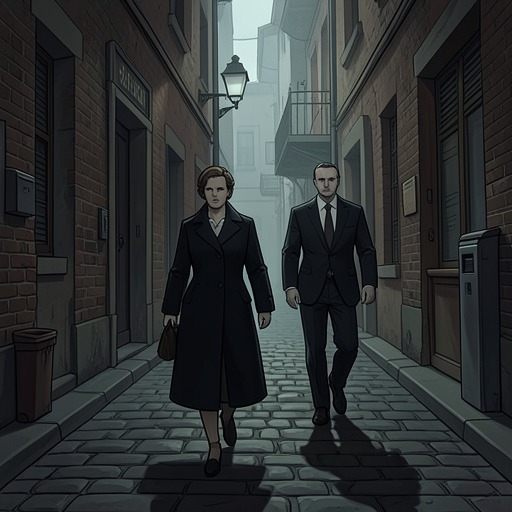
The film is narrated by Molina to Valentin. Its world includes a famous Paris music hall, German police, a German officer, and the Maquis, whose mission is to discover the location of a German ammunition dump. The political setting gives the film a clear connection to Nazi power and resistance to it, while the prison conversation turns the film itself into an object of ideological dispute.
The embedded plot complicates any straightforward account of the film as an uncomplicated celebration of the regime. A blond chorus girl, who belongs to the Maquis, begins an assignment to uncover the ammunition dump’s location. After falling in love with a German lieutenant, she refuses to complete the mission. The group fears that she might expose them, and she is killed before she can denounce them. Later, the Maquis approach Leni, a Frenchwoman, and ask her to continue the unfinished mission. The resistance fighters’ purpose is to help the German forces’ enemies destroy the dump.
Spectacle and Persuasion
Molina’s account lingers on the music hall’s visual transformations. In one chorus number, performers change from black makeup and banana skirts to blonde appearances and glittering strips of costume as cymbals sound. The sequence is described through its stage picture and camera focus: bodies hold together in a line, and a change in viewpoint turns one image into another. The staging makes spectacle itself part of the film’s appeal, while also making the represented bodies and transformations available for critical scrutiny.
The central singer’s entrance is presented as another carefully constructed effect. After the stage goes dark, a light gradually reveals her through layers of tulle, wearing a close-fitting silver gown. She sings first in French and then in German; as she descends, flashes of lightning appear at each step, until horizontal lines of light cross the stage. Molina recounts these details with the attention of someone reconstructing an image sequence, not merely relaying the plot. The film’s craft helps explain why he can admire it even when its political meaning is challenged.
The Resistance Story and Leni
The film’s political stakes become personal through Leni’s connection to the dead chorus girl. German police question Leni because they know she was the dead woman’s friend. She says she knows only that the girl had been in love with a German lieutenant, but the police do not believe her and detain her for several hours. Because Leni is a well-known singer, an order from a voice on the telephone secures her release into custody so that she can perform that evening.
After the performance, Leni finds more flowers from the Alps in her dressing room. As she looks for the card, a young, high-ranking German officer tells her that he brought the flowers himself. The episode places political authority and personal attention side by side: the police have questioned and detained her, while an officer’s gesture draws her into an intimate encounter with someone inside the German establishment. In the later account of the resistance mission, the contrast between Leni’s fear and her attempt to conceal it gives the requested assignment its immediate human stakes.
Art, Propaganda, and Complicity
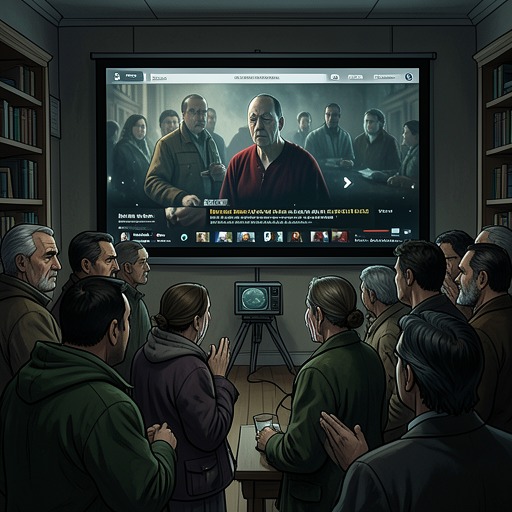
Valentin dismisses the film as a piece of Nazi propaganda and challenges Molina’s apparent failure to recognize its politics. Molina responds that its quality and artistic workmanship matter to his appreciation, rather than claiming that the political objection is impossible. Their disagreement is therefore not simply about whether the film is well made: it concerns whether aesthetic achievement can be separated from the political system with which the work is associated.
The conversation offers a further distinction between propaganda as an object of criticism and a film as a historical document. Valentin says he is interested in it as propaganda and, in that sense, as a document. He also argues that if the director made the film, the director is complicit with the regime. At the same time, another remark in the discussion recognizes the Maquis as heroes. The resistance plot thus prevents the film’s political associations from being reduced to a single uncomplicated message, even as the question of the director’s responsibility remains pointed.
Escape and Critical Attention
For Molina, the film’s beauty also has a practical meaning within the frame of the novel. He explains that, locked in his cell, he is better off thinking about pleasant things so that he does not lose his sanity. The story’s ornate settings and carefully narrated effects offer a mental passage away from confinement. Valentin’s political reading interrupts that refuge, insisting that the film be considered as an ideological object as well as an aesthetic experience.
The novel sustains both uses of the film rather than resolving their conflict. Molina’s detailed retelling makes cinematic images vivid through language; Valentin’s responses make the act of watching and admiring answerable to political judgment. Nazi propaganda consequently functions both as the subject of debate and as a test of how the prisoners listen to one another: a film can console its teller, reveal the mechanisms of spectacle, and still demand scrutiny of the power and complicity attached to its making.