Panther women
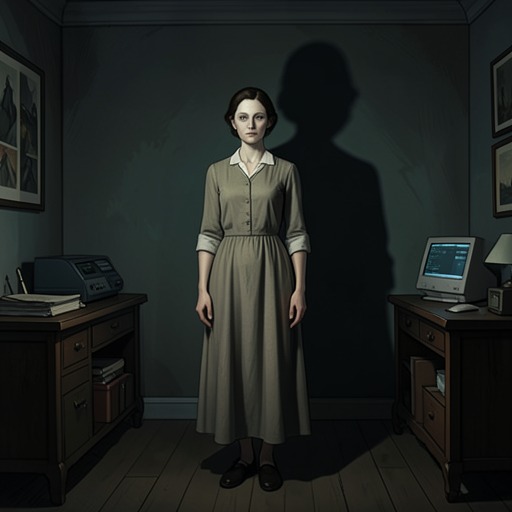
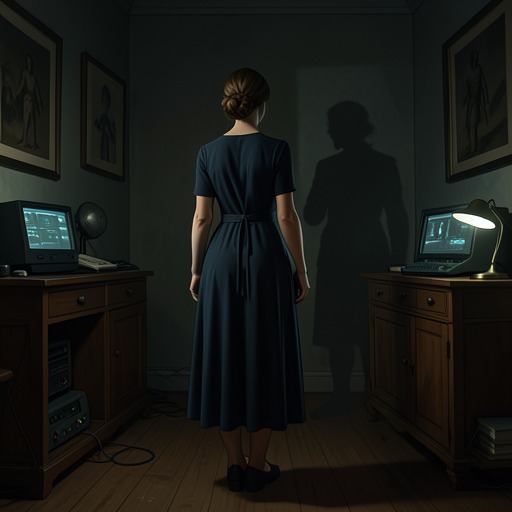
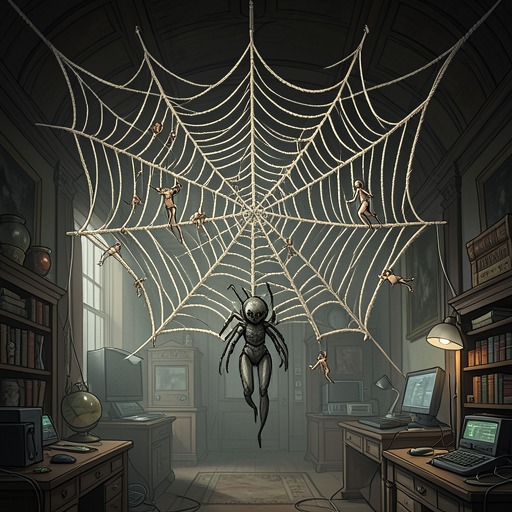
Kiss of the Spider WomanPanther women are the descendants of a woman who, according to a mountain legend, made a desperate pact with the Devil and became associated with a black panther. They appear to be ordinary women, but the story says that a kiss from a man can awaken their animal nature. The legend gives form to Irena’s lifelong fear that she belongs to this hidden lineage; the film’s ending makes that fear appear to be more than an inherited superstition.
The Mountain Legend
The account begins in a remote village during a winter so severe that snow cuts the inhabitants off for months. The people are starving, the men have gone to war, and wild animals are driven close to the houses. The Devil offers food on the condition that a woman come outside to meet him. The bravest woman accepts the bargain, and the tale links her pact with the birth of a daughter whose face resembles a cat.
When the woman’s husband, a Crusader, returns from war, she attacks and kills him. Another Crusader follows her escape into the snow. At first he sees a woman’s footprints; near the forest they become the tracks of a panther. In the darkness, the pursuer confronts the creature and makes the sign of the cross. The panther returns to the form of a woman, while other wild beasts approach. The Crusader escapes and tells the village what he has seen.
The legend’s ending extends its threat beyond that single encounter: the race of Panther women supposedly survives, concealed among ordinary people. Its defining condition is therefore both secret and intimate. A woman may seem entirely human, while a man’s kiss is said to trigger her transformation. The story does not establish the legend as a reliable history; Molina admits that he cannot remember some of its details, but recalls that Irena believed the lineage might still exist.
Irena’s Fear and the Film’s Allegory
Irena remembers being terrified by these stories as a girl and has lived with the possibility that she might descend from the women in the legend. When Valentin asks whether she is one of them, the account offers her fear rather than a settled answer. The myth thus precedes any apparent proof: it has already shaped how Irena understands herself and how she anticipates intimacy with men.
Molina interprets the film as an allegory of a woman’s fear of yielding to a man: in his reading, surrender to sex makes her revert, in some measure, to an animal. He connects this fear to women taught that sex is dirty or sinful, whose upbringing leaves them with an inward barrier to intimacy. This is Molina’s interpretation of the film, not an independent explanation of Irena’s origins. It places the Panther-woman legend at the intersection of desire, fear, and beliefs about sexual restraint, while leaving open whether Irena’s condition is psychological, supernatural, or both.
The Transformation and Its Consequences
The legend’s rule becomes decisive in the scene at the Architect’s home. Irena arrives after the incident at the pool, where her husband and the Psychiatrist have been waiting for her. Feeling abandoned and forsaken by the Architect, she throws herself into the Psychiatrist’s arms. He takes her gesture as evidence of sexual interest and believes that kissing her, and going further, might cure her belief that she is a Panther woman.
The encounter reverses his expectation. Irena’s response combines repulsion and desire; after they kiss, she withdraws into a dark corner of the room. There she transforms into a panther and kills the Psychiatrist before he can defend himself. The Architect’s assistant and the Architect attempt to warn the Psychiatrist after the incident at the pool, but the warning comes too late. The narrative consequently shifts the Panther-woman legend from a feared explanation to the apparent reality of the film: the final scene presents Irena’s transformation as confirmation that she is not merely imagining her animal nature.
Narrative Function
Panther women bind together the film’s folklore, Irena’s private fear, and the plot’s fatal outcome. The changing tracks in the legend anticipate the final transformation: a woman’s ordinary appearance conceals a second nature that emerges under pressure. The kiss is likewise more than a folkloric trigger. In the film’s account, the Psychiatrist treats intimacy as a means of correcting Irena, but his confidence in that cure exposes him to the danger the legend describes.
Because Molina recounts the film to Valentin and acknowledges gaps in his memory, the legend reaches the reader as a story nested inside another story rather than as a detached account of a creature. Its uncertainties matter: Irena’s childhood fear is clear before the ending, while the claim that Panther women exist remains part of the film’s unfolding revelation. The final transformation gives the myth a concrete consequence without erasing its function as an allegory about fear, desire, and the limits of the Psychiatrist’s interpretation.