Psychiatrist
Kiss of the Spider WomanThe Psychiatrist is the doctor Irena consults in the film story Molina recounts to Valentin. Although he is meant to help her confront her fear of becoming a panther, his attraction to her distorts that role. Their encounters move from a treatment relationship that Irena resists to a fatal confrontation, making the doctor’s failure both personal and consequential: his death confirms the reality of the danger at the heart of her fear.
Identity and Introduction
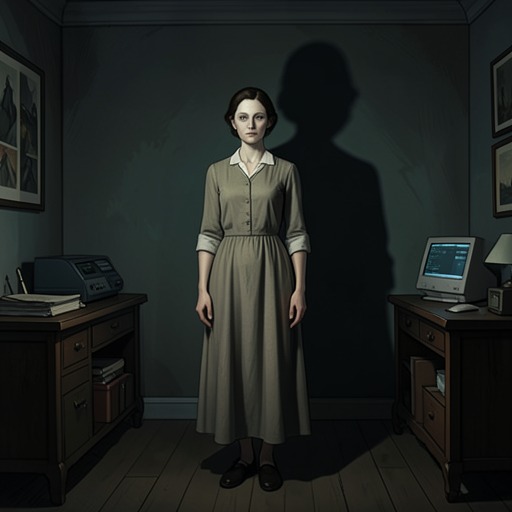
The Psychiatrist enters the story after Irena and the Architect agree that she will seek professional help. Molina presents him as tall, dark, mustached, and distinguished-looking, and emphasizes that he is a flirt. His looks matter to the plot because Irena is attracted to him; the appeal that might draw her toward a doctor instead becomes part of what prevents her from accepting treatment.
The doctor’s role is therefore compromised from the outset by the overlap between professional attention and romantic interest. He is not described as a detached observer of Irena’s fear. Rather, Molina reports that the Psychiatrist’s own desire leads him to pursue a way to kiss her, shaping his response to what she tells him.
Treatment and Misjudgment
At an early consultation, Irena confides that her greatest fear is kissing a man and turning into a panther. The Psychiatrist tries to counter that fear by demonstrating his confidence in her as an enchanting, attractive woman. His proposed reassurance is not neutral: as Molina explains it, the doctor’s desire to kiss Irena is part of what motivates his approach.
Irena responds in a way that briefly seems to validate his reassurance. She takes his confidence as evidence that she is normal, leaves his office satisfied, and heads to the Architect’s studio with the intention of giving herself to her husband that night. But that apparent progress is fragile. At the studio, she sees the Architect and his assistant together, holding hands as they talk. She cannot tell what the gesture means, yet the sight stops her at the doorway. Molina’s account links this moment of uncertainty and abandonment to the circumstances of her later return to the house.
The Final Encounter
That night, the Architect has asked the Psychiatrist to come to the house. The Architect briefly leaves while the assistant contacts him about an incident at the women’s hotel and the police station. The Psychiatrist is left waiting alone when Irena arrives. He has been reading under the light of a table lamp and removes his glasses as he looks at her.
Irena, feeling abandoned and unwanted, throws herself into his arms. The Psychiatrist reads her action as sexual interest and again treats intimacy as a possible means of curing her belief that she is a panther woman. He kisses her. The encounter turns abruptly: Irena withdraws to the darker corner of the room, where Molina’s narration describes her transformation into a panther. The Psychiatrist reaches for a fireplace poker, but cannot protect himself; Irena kills him.
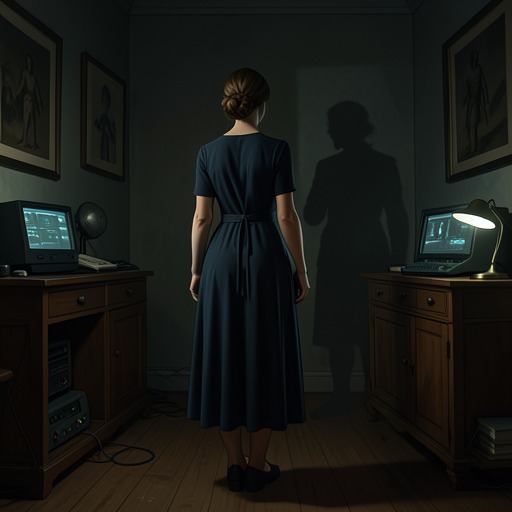
His death follows from the same misjudgment that marked his treatment. He interprets Irena’s distress through his desire for her and believes that physical intimacy can settle the fear she disclosed. Instead, he is alone with her when the threat she described becomes real. The room’s furnishings—the lamp, fireplace, and turn-of-the-century furniture—place the sudden transformation within an ordinary domestic interior, not the clinic where their relationship began.
Discovery and Narrative Significance
The Architect, the assistant, and the police try to reach the Psychiatrist by telephone, hoping to warn him that he may be in danger. When nobody answers, they climb the stairs and find him dead; Irena has disappeared. The Architect knows where she is likely to have gone, and the group heads to the zoo. The sequence makes the doctor’s death a decisive revelation for the other characters as well as for the audience: Irena’s transformation is not simply an imagined symptom.
The Psychiatrist appears within a story Molina tells Valentin, rather than in the prison-room events directly. His scenes are thus filtered through Molina’s spoken account, which pauses and resumes as the two prisoners converse. Within that embedded narrative, the doctor’s role links medical authority to failed understanding: he hears Irena’s fear but answers it through his own attraction, with fatal consequences. His death closes the possibility that his diagnosis or reassurance can explain away the panther, and turns Irena’s private terror into an established reality of the film story.