Revolutionary Commitment and Political Struggle
Kiss of the Spider WomanRevolutionary Commitment and Political Struggle are presented not as abstractions but as forces organizing ordinary speech, intimacy, danger, and care. Coded letters conceal political realities from prison censorship, while comrades restrain their attachments because a loved one’s safety can compete with the risks demanded by action. The same commitment brings loss and secrecy into private life, and reaches into the prison through pressure for renewed interrogation of Valentin Arregui. Together, these details show a movement sustained by shared purpose but lived through individual vulnerability.
Coded Language and Political Knowledge
A letter’s domestic language becomes a political code that Valentin Arregui has to interpret aloud. Its references to growing old and enduring life’s trials do not describe age or hardship in the ordinary sense: he explains that they mean joining the movement and fighting for its cause. The letter also reports the death of Uncle Pedro, a comrade who was only twenty-five. Arregui had not known he had been killed, because another letter had not reached him; he suspects that it was torn up when prison authorities opened it. The delayed news makes censorship more than an abstract restriction: it separates a prisoner from the people and events on which his political understanding depends.
A further passage shows how coded writing can turn a personal account into a report on political commitment. References to a niece beginning a relationship with a decent young man, and to his steady job, conceal the fact that the woman is the letter’s writer and that the man is devoted to the cause. Arregui explains that the supposed relationship with another comrade reflects a decision to avoid intense romantic attachments. The language offers a cover story, but decoding it exposes the movement’s demand that private choices be understood in relation to political work.
Discipline of Commitment
Arregui explains the reasoning behind avoiding intense relationships between comrades: when decisive action may require risking one’s life, attachment can make each person wish the other to remain safe. The difficulty is not simply fear of death. A comrade may also hesitate because a chosen risk would cause someone else to suffer. In this account, restraint is a collective discipline intended to keep affection from obstructing action, even as the need for that discipline acknowledges how deeply comrades matter to one another.
The coded letter’s suggestion that its writer has begun a relationship with another comrade therefore carries two meanings. It protects the political truth from outside readers while disclosing a choice shaped by the movement’s rules of conduct. The passage does not present those rules as emotionally costless: Arregui says that he and his comrade miss one another, and the letter’s indirect language makes the separation legible without stating it openly. Commitment here means both choosing the cause and managing the attachments that the choice places at risk.
Secrecy, Loss, and Care
The costs of clandestine life become especially concrete when Arregui recalls sharing an apartment with a comrade, his wife, and their young son. He had changed diapers for the child, who was no more than about three years old, before the comrade was killed. His concern turns toward the boy’s uncertain future. Political loss is thus also a domestic rupture, measured in the interrupted routines of caring for a child and the unanswered question of what will become of him.
Arregui cannot safely write to anyone about the family. Even a small action might compromise or identify them, and writing to his girlfriend would be particularly dangerous because she is now the head of the group. His silence is not indifference: the passage establishes that he has people he longs to contact, but that communication itself could endanger them. The movement’s secrecy protects its members while also preventing ordinary expressions of grief, affection, and concern. The loss of Uncle Pedro and the killing of the comrade therefore echo beyond the deaths themselves, into the relationships and news that can no longer safely be shared.
Political Pressure in the Prison
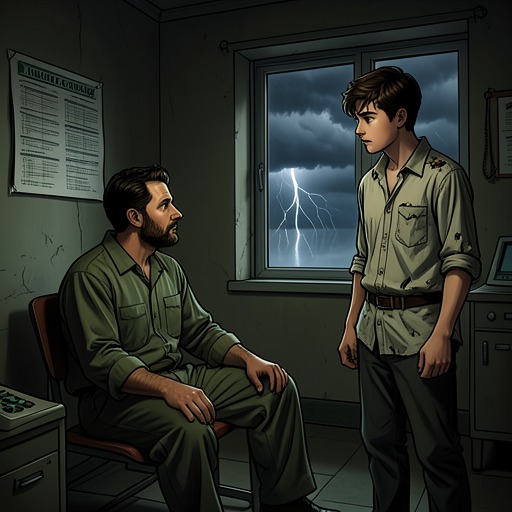
The struggle also appears in the prison’s dealings with Valentin Arregui. The Warden tells Molina that pressure is coming from the highest levels, including the Presidency, and that officials want Arregui interrogated again and thoroughly. This disclosure places the prisoner’s treatment within a broader political chain of command: the Warden presents himself as under pressure, while the demand for renewed interrogation makes Arregui’s body and testimony matters of institutional urgency.
Molina asks for several more days before the interrogation, urging the Warden to say that Arregui is too weak. He warns that it would be worse if Arregui died in the authorities’ hands. The exchange gives political commitment an immediate and precarious consequence: a comrade’s deteriorating condition becomes part of a negotiation with prison authority, while the possibility of death shapes the timing of interrogation. Read beside the coded letters and the movement’s rules about intimacy, the scene extends the same tension into confinement: political struggle depends on solidarity, but that solidarity must operate under surveillance, censorship, and pressure from above.