Second World War
Kiss of the Spider WomanThe Second World War enters the novel not as a continuous account of military history but as a pressure felt inside stories told and retold. It follows the First World War by nearly thirty years in one tale, where a radio announcement turns an old bereavement into a present crisis, and it gives the occupied-Paris setting of another embedded film its atmosphere of fear and spectacle.
A War That Repeats the Past
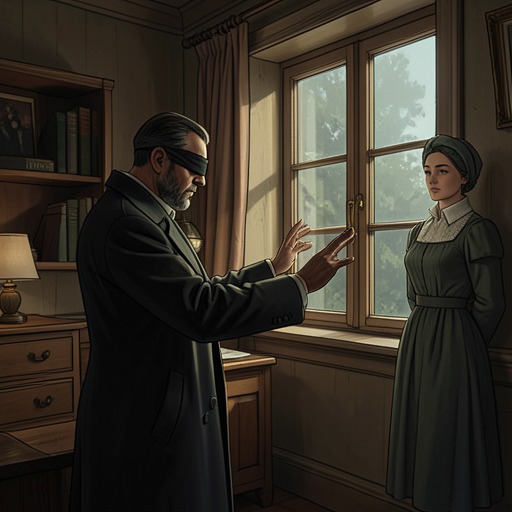
In the story centered on a blind pianist and a house in the forest, the Second World War arrives first as news heard over the radio. The spinster who lives in the house had lost her fiancé at the front in 1914, after preparing a home and a trousseau for the marriage they would never have. Almost thirty years later, the announcement that the nation has entered another war makes yesterday feel present again. Her grief returns with the force of the original departure, and she weeps alone in her bedroom while the little maid is left shivering beside the dying coals in the living room.
The war also alters the prospects of a younger couple associated with the house. Days after the announcement, a letter from the young man says that he has enlisted in the air force and that their wedding must be postponed for the time being. His apology for not keeping his word echoes the earlier broken promise of the spinster’s fiancé, making the new enlistment seem to repeat the older loss before its outcome is known. The war’s consequence here is intimate and domestic: it interrupts courtship and makes the apparently settled past feel capable of happening again.
Occupied Paris on Screen
A separate embedded film is set in Paris a couple of months after the start of the German occupation of France. Nazi troops parade past the Arch of Triumph beneath swastika flags displayed across the city, including on the Eiffel Tower. French women applaud the passing soldiers. The film then narrows from this public spectacle to a small group entering a butcher shop on a side street, where the old butcher is overtaken by fear as the soldiers search the premises.
The sequence shifts from occupation street life to a famous Paris music hall. Its chorus number transforms through costume and lighting: the performers appear first in dark makeup and banana skirts, then turn to reveal blonde hair and sparkling strips of strass. After the stage goes dark, a tall singer emerges through layers of tulle in a silver lamé gown. She sings first in French and then in German, descending a staircase whose steps flash with lightning-like lights; a handsome German officer watches from a box. The war’s presence therefore sits beside theatrical glamour, not outside it: the film places fear, military power, and extravagant entertainment within the same occupied city.
Historical Time as an Embedded Story
These wartime scenes reach the reader through narrated films and remembered losses rather than through a sustained account of battles or campaigns. The Paris occupation sequence moves from the broad image of troops and flags to the butcher’s private terror, then to the music hall’s staged spectacle. The forest-house tale uses a different scale: one radio announcement connects the First World War of 1914 to the later war through a bereaved woman and a young man’s enlistment. In both cases, history becomes legible through its effects on ordinary lives and intimate promises.
The novel’s other narrated films make clear that its storytelling ranges beyond wartime Europe. One later sequence opens at daybreak beside a tropical Mexican coast during the Mardi Gras of Veracruz, then turns toward a masked woman trapped in a web in the jungle. That contrasting setting does not extend the history of the Second World War; it underscores how the characters’ film stories move between historical settings and imagined spectacle. The Second World War matters in this larger pattern because it supplies both a concrete setting of occupation and a recurring historical rupture that unsettles love, security, and the hope of keeping one’s promises.