The Maid Marries the Wounded Pilot
Kiss of the Spider WomanThe Maid Marries the Wounded Pilot is a turning point in the film story narrated by Molina: the maid and the pilot enter a marriage first described as a practical agreement between two people who expect neither love nor joy. The ceremony gives that arrangement a formal shape, while the wedding supper begins to unsettle the assumption that their bond must remain merely contractual.
The Proposal and Its Terms
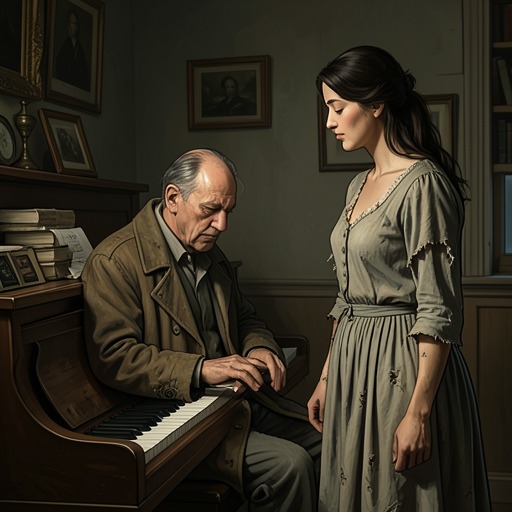
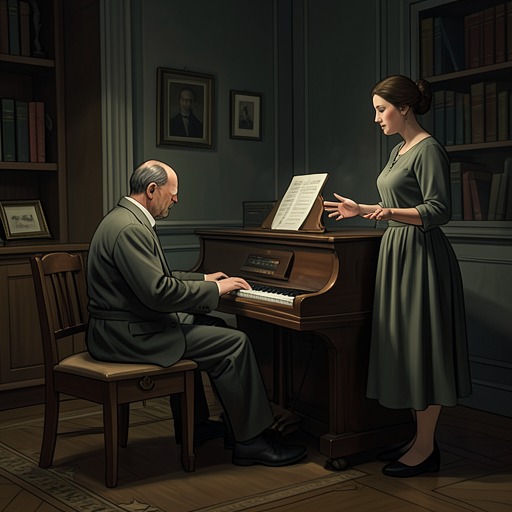
The pilot proposes that the two lonely people join their lives without promising romance. He offers financial security and asks for care as his health continues to decline; in return, he stresses that he does not want to be treated with pity. The maid is likewise presented as sad and alone, making the proposal an agreement between people who believe they can help one another without pretending to feel more than they do.
That practical understanding defines the marriage at its outset. The pilot frames their union as companionship and mutual assistance, not as a declaration of love. The contrast between the modest terms of the proposal and the emotional change that follows gives the wedding scene its central tension: the couple commits to a shared life before either appears able to imagine it as a romance.
The Ceremony and New Household
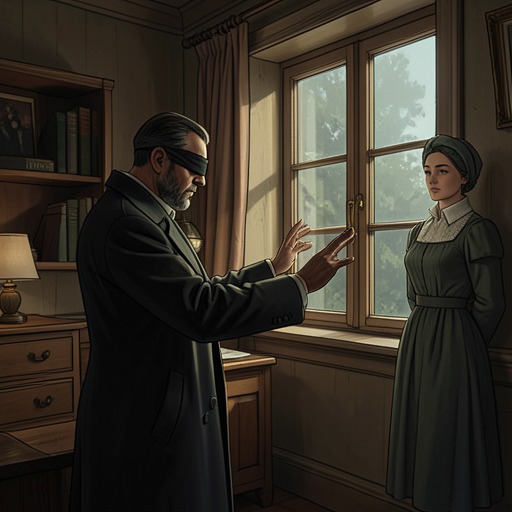
The wedding takes place in a wooden church, with the blind man and the spinster as witnesses. The benches are empty, there are no flowers, and the ceremony is marked by the priest’s blessing and the couple’s departure through the quiet nave. Its austerity makes the marriage private and unshowy rather than a public celebration.
The household arrangements change immediately afterward. The pilot’s bed is moved to his study, and the maid’s bedroom becomes his former bedroom, establishing a new domestic arrangement without suggesting that the couple has already achieved intimacy. The spinster has prepared supper for two in the living room and remains skeptical of what she regards as their imitation of love. Her doubts give the scene an outside measure of the couple’s reserve, even as the wedding has made their connection real in practical terms.
From Formal Union to Tenderness
At supper, the couple initially sit in silence and cannot look at one another. The narration then shifts from that awkward stillness to a change in how they see each other: the maid’s appearance is idealized, and the pilot is perceived as handsome rather than defined by his disfigurement. The contrast does not erase their physical circumstances; it presents perception itself as changing within the newly shared moment.
The scene culminates in a tentative movement toward one another: their hands meet, they look into each other’s eyes, and they kiss. The wedding therefore functions as more than a legal or household arrangement in the film narrative. It begins with an explicit expectation of friendship without romance, but its closing movement makes room for affection that the original terms had not promised.
Narrative Framing and Significance
The marriage belongs to a film story that Molina recounts to Valentin, rather than to the prison’s main sequence of events. Molina’s telling dwells on the church, the rearranged rooms, the quiet supper, and the couple’s changed perception, making the wedding’s emotional development legible through a series of concrete details. The wedding is at once restrained and transitional: an austere ceremony establishes the couple’s commitment, while the supper offers the first sign that their agreement may become a loving relationship.