Bénédicte’s depression after Olivier abandoned her
L'Amour et les ForêtsBénédicte Ombredanne’s depression after Olivier abandoned her was a defining rupture in her early adulthood, not simply a period of sadness following a divorce. The separation shattered her confidence in the principles by which she had understood life, and Marie-Claire described its effects as lasting changes to her sister’s character, bearing, and outlook. Bénédicte was twenty-two; even though the marriage had shown signs of trouble, she experienced its ending as the destruction of something essential to her capacity for happiness.
Background and the end of the marriage
The rupture followed a family decision about the agricultural holding Bénédicte’s father expected eventually to hand on. The family had long assumed that a cousin, raised by her parents as their own son, would take over the farm. At a family meeting in July, that succession was formally announced, with the transfer expected when her father retired five years later. Olivier left the house without saying goodbye. A week later, in August 1992, he abandoned Bénédicte, just after she had passed the agrégation; he requested a divorce in September, and the divorce was completed in December. They had had no children.
The decision did not emerge from a wholly unsuspected crisis. Bénédicte knew that the relationship was taking her in the wrong direction: Olivier saw other women, and she had spent money on evenings out while he went out alone with his friends. Yet recognizing those failures did not make her able to bear the separation. Marie-Claire emphasizes that, at twenty-two, Bénédicte’s future had not objectively been ruined; the shock lay in the meaning she gave the loss, which seemed to have destroyed an irreplaceable part of her.
Withdrawal and the depression
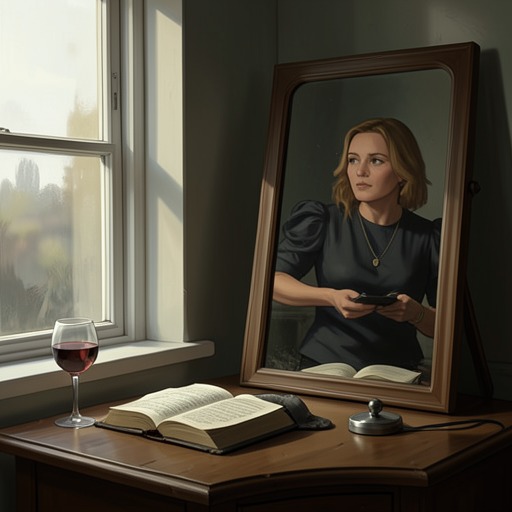
After the separation, Bénédicte returned to Condé-sur-Marne and shut herself in her room for three months. The depression lasted six months. Her retreat is presented not as a brief pause before a quick recovery but as the outward shape of an inward disorientation: her family could see her distress and offer affection, yet Marie-Claire felt that Bénédicte remained beyond their reach. The account compares her to a ship in a storm, alone at sea, while those around her could only watch and fail to calm her.
Bénédicte understood the loss in absolute terms. She told Marie-Claire that she would never be able to believe in happiness again and asked how anyone could come back from such an ordeal. The certainty of that despair contrasts with the practical facts of her situation: she was young, had completed a major qualification, and still had an open future. For her, however, the future’s apparent promise could not undo the injury. The divorce had overturned the conviction that her life was moving along a trustworthy course.
The collapse of a worldview
Marie-Claire interprets the depression as the death of a belief system. Bénédicte had trusted that a person who lived sincerely and conscientiously, without betraying herself or compromising her convictions, would not be deceived by reality. She believed that such a life could bring even secret wishes and ambitious dreams to fulfillment. Marie-Claire calls this a secular, social, and existential form of faith, implicitly tied to the idea that happiness could be earned through deserving conduct.
Olivier’s departure made that faith seem not merely mistaken but brutally exposed. Bénédicte had entrusted herself to the principle without reservation; the shock made her feel that reality had betrayed her precisely when she had followed its supposed rules. In Marie-Claire’s account, the six-month depression was the period in which Bénédicte allowed that entire structure of belief to perish. Scepticism and disillusionment displaced the confidence and energy that had once supported her expectations.
Surrender and the twin relationship
During the depression, Bénédicte told Marie-Claire that she had always been drawn to the word surrender, which she had heard in a popular song, and now understood that attraction as a name for her own capitulation. She also dwelt on the French word Reddition, finding it beautiful, and said that the time had come to give in because happiness had not chosen her despite all her efforts to deserve it. The language turns an abstract loss of hope into a decision to stop expecting life to answer her efforts.
Marie-Claire reacted with alarm and irritation, telling her twin to stop lamenting and to pull herself together. She said that she managed to get Bénédicte to retract what she had said. That exchange shows both the closeness and the limits of their bond: Marie-Claire heard the seriousness of her sister’s despair, but answered it with resistance rather than accepting surrender as an inevitable conclusion. The episode records an interruption of Bénédicte’s declaration, not evidence that her confidence had been restored.
Lasting change and later life
Marie-Claire says the family never again found Bénédicte as she had been before the depression. The change reached her physical appearance, mood, psychology, gestures, and manner. Her spontaneity and a certain anxious boldness disappeared; to those who knew her intimately, the loss had altered her face as well as her temperament. Marie-Claire’s account thus treats the depression as a lasting division in Bénédicte’s life, rather than a temporary illness with a cleanly marked end.
Later episodes in Bénédicte’s life show a markedly constricted domestic world, though they are distinct from the 1992–93 depression and are not presented as its direct result. In her marriage to Jean-François, she described having no mobile phone because he feared she might use one to form a social life; he had her timetable and could track when she should be home. She also described being expected to provide the family’s practical care and emotional reassurance while receiving indifference in return. These later conditions make a striking contrast with the earlier Bénédicte whom Marie-Claire remembered as spontaneous and daring, without erasing the difference between the original depression and the circumstances that came afterward.
The episode’s significance lies in that contrast between an apparently promising future and a private collapse that its external prospects could not prevent. Bénédicte’s retreat to her bedroom, her language of surrender, and the traits her twin says never returned give the separation consequences that extend beyond the legal end of the marriage. In Marie-Claire’s recollection, the loss of Olivier was also the moment when Bénédicte lost faith in the idea that a sincere life would be met fairly by reality.