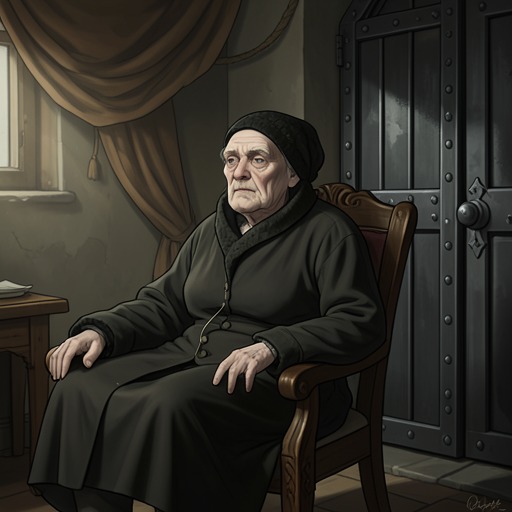
Cancer de Bénédicte Ombredanne
L'Amour et les ForêtsCancer in Bénédicte Ombredanne’s life is presented as both a medical crisis and a struggle over whether her bodily experience will be believed. After an earlier breast cancer and its treatment, she develops a widespread cancer that is diagnosed only after worsening pain and fatigue lead to urgent hospital examinations. Her illness exposes the consequences of Jean-François’s repeated dismissal of her symptoms, while making her dependence on family care increasingly consequential. She dies on January 23, 2011, ten months after the diagnosis.
Course of the illness
The later illness emerges against the history of Bénédicte’s breast cancer. At a family gathering in December, three months before the diagnosis, Marie-Claire finds her looking unusually unwell and notices a small cough when she wakes. Bénédicte reports that her recent medical tests have shown nothing abnormal and attributes her tiredness to a demanding first trimester of the year. Marie-Claire remains concerned, but Bénédicte has not raised the cough with her doctors. The account preserves the difference between the reassuring test results and her sister’s retrospective suspicion that the disease may already have been present; it does not establish that suspicion as a medical finding.
In February, Jean-François takes Bénédicte on a long walk in the Cotentin, treating physical exertion as a way to test and restore her health. This fits a pattern in which he interprets her pain as psychological and urges exercise rather than accepting her account of her limits. Years earlier, she had collapsed during one of these walks and required emergency assistance, yet he continued to insist that her symptoms should be overcome through endurance. By February, she is reporting severe back pain, fatigue, and pain in her legs and joints, and says she does not feel able to make the planned walk. Jean-François refuses to change the plan. She walks for a week despite her suffering; even Lola comes to regard her mother as spoiling the family holiday.
After the journey home, Bénédicte’s pain worsens. At an appointment already scheduled with her phlebologist, she raises both the painful area near her ribs and a lump in her abdomen. The doctor urges her to seek hospital care immediately. Examinations reveal cancer that has spread to several organs, including a lung, the liver, the bones, and the adrenal glands. Results arrive three or four days later. The family is told that there is no treatment capable of reversing the disease, and the account reports Bénédicte’s death ten months afterward, on January 23, 2011.
Symptoms, authority, and care
The illness is narrated through a conflict between what Bénédicte feels and what Jean-François says her sensations mean. He repeatedly treats her pain as an imagined or exaggerated problem and uses walking and physical activity to challenge it. When symptoms intensify during the Cotentin trip, she sees a doctor, who prescribes pain relief and recommends follow-up with her general practitioner on her return to Metz. The subsequent diagnosis overturns the interpretation that she is simply overreacting. The narrative thereby connects medical delay in the household not to a lack of symptoms, but to the repeated dismissal of the person reporting them.
During the later illness, this imbalance also shapes practical care. Jean-François holds the prescriptions and manages the doses of the many medicines Bénédicte must take. Each morning he lays the medication out with water and stays until she has taken it. Marie-Claire understands this arrangement as making Bénédicte more dependent at a time when she is already vulnerable. She urges her sister to take responsibility for her medicines and prescriptions herself, framing control of treatment as part of her remaining ability to direct her own life. The account does not say that Bénédicte carries out this change; its significance lies in the contrast between the autonomy her sister advocates and the dependence established in practice.
Hospitalization and the final decline
As treatment continues, Bénédicte becomes too unwell to remain safely at home. During one chemotherapy course, Marie-Claire finds her confined to bed, unable to keep food down and unable to stand steadily. Bénédicte says she wants hospital care and fears that she may die if she is left at home, but Jean-François has refused to take her. Marie-Claire recognizes the urgency and helps her obtain medical attention. Bénédicte remains hospitalized for three days to regain strength; later, when she can no longer stay at home, she is admitted to the public hospital in Bénédicte’s home city of Metz for the end of her life.
The account makes the difference between temporary stabilization and recovery explicit. Three days in hospital help Bénédicte regain some strength, but they do not alter the terminal course of the cancer. Her family receives an imprecise estimate of the time remaining, and Bénédicte becomes increasingly weak. During a cardiac examination, Marie-Claire has to help her onto the examination table because the clinician does not assist her. The sisters’ exchange of looks, and Marie-Claire’s care in moving her, register how much support ordinary clinical tasks now require. Bénédicte remains aware of those around her, in pain and distress, but sometimes smiles at her sister.
Family life, hope, and significance
Cancer also intensifies pressures already embedded in Bénédicte’s household. After her first cancer, the family stops employing a cleaner because money is short; the help is never restored, even during her later treatment. Bénédicte continues housework and ironing while undergoing chemotherapy and exhausted. Marie-Claire links this burden, together with Jean-François’s standards for the home and the children, to her sister’s mounting fatigue. The disease thus enters not an empty space but a family system in which domestic labor and authority are unevenly distributed.
As Bénédicte approaches death, Marie-Claire conceals how grave the prognosis is, speaking instead of recovery and a future trip to Madagascar that the sisters had long promised themselves. Bénédicte appears to believe her and to prefer thoughts of that imagined future to thoughts of imminent death. Hope here is not evidence that the illness is reversible; it is a form of companionship that gives Bénédicte an alternative to being made to face death at every moment. The account’s attention to her symptoms, her requests for care, and her sister’s practical support keeps the cancer from becoming only a plot mechanism: it is also a changing bodily reality whose meaning and management are contested within the family.