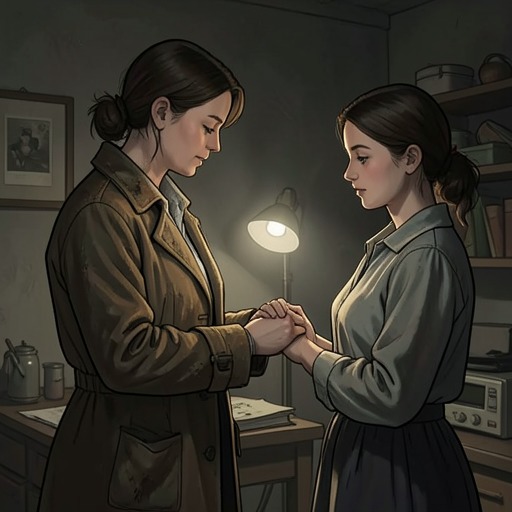
Jean-François refuses to turn on the heat for Bénédicte during her cancer treatment
L'Amour et les ForêtsJean-François’s delay in heating the Ombredanne family home during Bénédicte Ombredanne’s cancer treatment made a basic need dependent on his permission. When her twin sister intervened, he turned on the heating, but his angry departure left Bénédicte distressed and afraid he might abandon her.
Conditions at Home
The incident took place in late September, when Jean-François had not yet turned on the heating and was postponing it as long as possible because the family was struggling financially. Bénédicte, weakened by chemotherapy and spending her days at home without moving, had complained to him several times that she was cold. He told her to put on more clothes, shut her bedroom door, and wait a few more days, insisting that it was not very cold.
The house was cold and damp, with the temperature estimated at sixteen or seventeen degrees. Bénédicte told Marie-Claire that she was shivering through the day and asked her to do something. Although she could physically have turned on the heating, she did not dare do so without Jean-François’s permission; she expected him to be furious when he returned. She also thought calling him at work would provoke him and would not change his decision.
Marie-Claire’s Intervention
Marie-Claire told Jean-François as calmly as she could that it was inhumane to leave a woman with advanced cancer in such a cold house, adding that she herself had felt cold there all afternoon. He did not answer her, but went to turn on the heating, slamming the doors behind him. He then drove away and was gone for two hours.
Marie-Claire waited for his return before leaving for Reims because Bénédicte was upset by his departure. She feared that, this time, he might leave her for good. Marie-Claire reassured her that she would not be alone and could come to live with her in Reims if necessary, but Bénédicte’s fear persisted despite that practical offer of support.
Dependence and Control
The episode sits within a wider pattern in which Bénédicte’s movements and decisions were constrained by Jean-François’s expectations. She explained to Christian that she had no mobile phone because her husband feared she might use one to develop a social life; with the household landline, he had her schedule and could call to check where she was. She described herself as free to run errands, yet also as being constantly tracked, and recognized that her absence for several hours would bring consequences.
After that absence, Jean-François repeatedly questioned and accused her, calling and waking her at night and prolonging the interrogations when they were alone. The account presents the cold-house incident not as an isolated disagreement about household expenses, but against a background of monitoring and sustained pressure that had narrowed Bénédicte’s sense of what she could decide for herself.
Illness and Autonomy
Marie-Claire saw the heating dispute as part of Bénédicte’s broader dependence on her husband. Jean-François also kept her prescriptions and managed the doses of the many medicines she had to take, laying them out with water each morning and waiting until she had taken them before leaving for work. Marie-Claire urged Bénédicte to ask for the prescriptions and manage her own medication, framing this as a way to reclaim responsibility for her body and illness.
The heating was eventually turned on, but only after Marie-Claire intervened; the immediate resolution did not undo Bénédicte’s fear of contradicting her husband or of his leaving in anger. The episode links the practical conditions of her cancer treatment to the emotional dependence that made even warmth at home feel subject to his authority.