Olivier
L'Amour et les ForêtsOlivier is Bénédicte’s first husband, the man Marie-Claire remembers as her first, great, and only love. He enters her life as a dazzling romantic figure, but his hopes of inheriting her family’s farm complicate the love story: when that prospect disappears, he leaves her just after she has achieved a major academic success. The marriage’s collapse becomes, for Bénédicte, not simply the end of a relationship but a shattering loss of faith in the reality she had believed in.
Identity and Background
Olivier was three years older than Bénédicte and studied agronomy. They met through mutual friends at a gathering in Châlons-sur-Marne. He dreamed of managing a farm, and Marie-Claire later understood that he coveted the farm owned by Bénédicte’s parents. She recalls that he associated with other farmers’ children and pursued his agricultural studies with that ambition in view. In her account, his interest in the property became a decisive, if initially unspoken, element of his relationship with Bénédicte.
Marie-Claire presents Olivier through the tension between his romantic effect on Bénédicte and her own skepticism toward him. He could make her sister dream and, in the exhilaration of their love, feel specially chosen; Marie-Claire, by contrast, says his charms had never persuaded her. She describes Bénédicte as a lively, adventurous young woman who attracted men and had previously ended relationships readily. Her unusually long attachment to Olivier therefore stood out to her, even before she knew how much of Bénédicte’s emotional life the relationship had come to occupy.
Courtship, Marriage, and Ambition
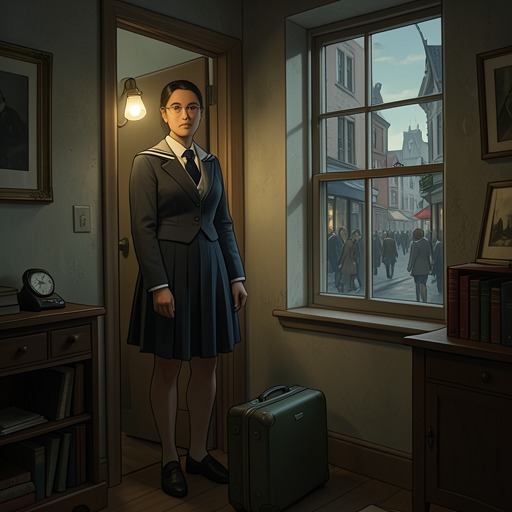
In 1989, while Bénédicte was completing preparatory studies in Reims, Olivier was finishing agronomy studies in Amiens. They were publicly a couple, spending weekends together in Condé-sur-Marne and meeting during school holidays. When Bénédicte was not admitted to the École normale supérieure after her second year, and Olivier found work in Tours, she chose not to repeat the year. She moved to Tours, enrolled in university, and planned to pursue the agrégation after completing her degree.
They married in spring 1990. Bénédicte continued her studies and, after a year of concentrated work, passed the agrégation in July 1992 with an excellent ranking. Olivier had by then become a travelling representative for a food company. Marie-Claire’s account makes the contrast consequential: Bénédicte was building an independent academic future, while Olivier’s earlier dream of running a farm remained bound to the possibility of her family’s land passing to him.
Their finances also carried an imbalance. Before the marriage they had agreed to pool their money, and Bénédicte used funds from her parents to help cover the couple’s expenses, including Olivier’s regular nights out. Because his earnings did not meet his spending, he repeatedly encouraged her to ask her parents for more. Marie-Claire objected to this arrangement and challenged her sister over the money, but Bénédicte continued to support their shared life. The episode gives the romance a material dimension: her family’s resources helped sustain Olivier’s lifestyle while his own income fell short.
Infidelity and the Breakdown of Trust
Bénédicte began doubting Olivier soon after moving in with him. Once he travelled for work and spent nights in other towns, she noticed that shirts sometimes disappeared from his belongings and returned the following week, suggesting to her that another woman had washed them. On one evening she repeatedly called the hotel where he was supposed to be staying. The receptionist eventually told her that, for months, Olivier had left his bag in the room and gone elsewhere, returning in the morning to settle the bill.
When Bénédicte confronted him, Olivier denied having a mistress and insisted that he loved her and had not been unfaithful. She did not believe him; too many signs had accumulated. Yet suspicion did not make leaving straightforward. His denials left her facing a painful uncertainty about whether to end the marriage on evidence he rejected, and Marie-Claire says she learned the full extent of this earlier distress only after the divorce. Bénédicte’s knowledge of the apparent affairs thus preceded the marriage’s end without immediately freeing her from it.
The Farm Decision and Separation
The farm inheritance finally clarified the conflict. The family had long expected Bénédicte’s cousin, whom her parents had raised as their own child, to take over the agricultural business when her father retired. In July 1992, at a family gathering, that plan was formally announced. Marie-Claire says Olivier had privately examined their mother’s accounts to assess whether the farm could support enough staff for him to manage it without investing too much of himself. She also says that Olivier and Bénédicte had never discussed the succession directly; had they done so, Bénédicte would have told him that her father had already promised the farm to her cousin.
Olivier left the family home without saying goodbye and abandoned Bénédicte about a week after the announcement, in August 1992, shortly after she passed the agrégation. He had left once the inheritance he coveted was no longer available to him. He never returned to Marie-Claire’s sight. He filed for divorce in September, and the divorce was finalized in December. The couple had no children.
Consequences and Narrative Significance
Marie-Claire describes the separation as a catastrophe for Bénédicte. At twenty-two, she had a degree of promise and possibility that the breakup could not objectively erase, but she experienced the marriage as a profound misrecognition: she had trusted both Olivier and the appearances through which their life together had seemed enchanted. The discovery that her great love might have been shaped by ambition, followed by his departure when the farm was unavailable, stripped that idealism of its foundations. Bénédicte came to feel that the celebration was over for good and that she would never recover what the betrayal had destroyed in her.
Olivier’s role in the novel is therefore defined less by his presence after the marriage than by the lasting force of its ending. He embodies the gulf between romantic promise and material interest, and between the future Bénédicte thought she was choosing and the one his departure left behind. Marie-Claire’s testimony supplies both the concrete chronology of the marriage and its emotional aftermath, while preserving an important distinction: Bénédicte had already seen reasons to doubt Olivier, but recognizing those signs did not protect her from the devastation of losing him.