
The Conflict Over Bénédicte’s Story
L'Amour et les ForêtsThis flow traces competing accounts of the marriage, the affair, and the meaning of Bénédicte’s death.
increasing Bearing strength in each event
 decreasing
Bearing strength in each eventdecreasingThe Confession Demand

The Confession Demand
A Story Claimed by Force
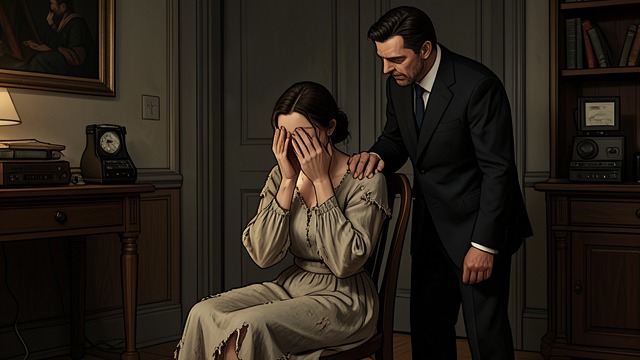
Jean-François insists that Bénédicte tell him where she went and whom she met. Her refusal to confess is treated as proof of guilt, while each attempt to explain only creates further grounds for suspicion.
The demand is not simply for facts. It is an effort to control the meaning of her independent action and to make her accept his authority over her private experience.
The Affair Recounted
The Affair Recounted
Intimacy Turned Against Her
Bénédicte’s eventual account is vivid and defiant, an attempt to reclaim the words he has forced from her. Jean-François later makes those words part of a repeated sexual ritual, demanding that she describe the encounter while he uses her body.
Her story is no longer hers to tell on her own terms. The asymmetry between the remembered tenderness with Christian and the coercion at home makes narration itself painful.
A Sister’s Counter-Account

A Sister’s Counter-Account
Testimony Against Appearances
Marie-Claire tells Éric Reinhardt what Bénédicte could not openly tell most people: the marriage’s control, the illness, and the final humiliations. Her account challenges the image of an exemplary household that Jean-François maintained.
The testimony cannot restore Bénédicte, but it prevents her experience from remaining only inside the husband’s version of events. The novel’s narrative becomes an act of listening after the person who needed to be heard is gone.
March through May 2006
The night of May 6–7, 2006, and the months that follow
After Bénédicte’s death in 2011
