
Bénédicte’s Freedom and Motherhood
L'Amour et les ForêtsThis flow traces the tension between Bénédicte’s claim to a private life and the family’s expectation that she remain endlessly available as a mother.
increasing Bearing strength in each event
 decreasing
Bearing strength in each eventdecreasingThe Invisible Service

The Invisible Service
Labor Without Recognition
Bénédicte describes herself as responsible for protection, comfort, planning, housework, and emotional care for the family. These contributions are treated as automatic, while her needs remain largely invisible.
The image of a restaurant server captures the imbalance: she is noticed mainly when something is missing. The household’s dependence on her labor makes even a small act of self-directed time feel like disloyalty.
The Day Away
The Day Away
A Private Claim
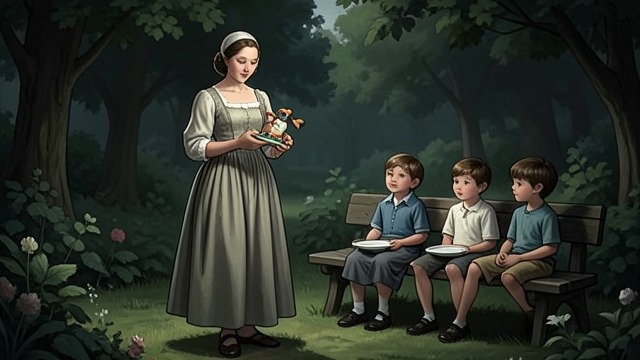
Bénédicte leaves without notice and spends the day with Christian, refusing for a few hours to organize her actions around everyone else’s convenience. She knows the children may be inconvenienced and the household may be angry, but she wants to experience herself as a woman with independent desires.
The act exposes a conflict that daily routine hides: whether motherhood requires permanent availability or can coexist with a self that belongs to the mother herself.
Freedom Judged as Neglect
Freedom Judged as Neglect
The Family’s Verdict
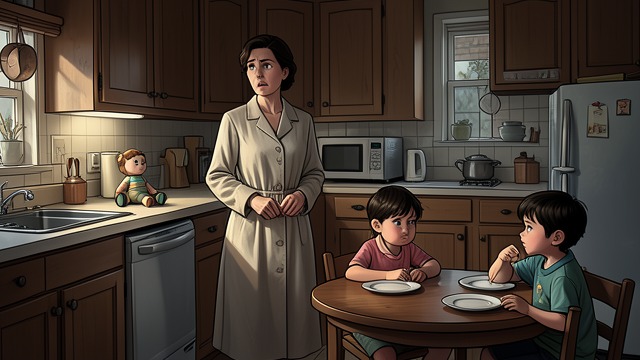
Lola and Jean-François frame Bénédicte’s absence as a failure of maternal duty. Bénédicte initially resists the accusation, but the children’s fear and the husband’s anger make her autonomy feel costly and morally suspect.
The novel does not erase the practical consequences of her departure, yet it asks why her needs become visible only when they interrupt service. Bénédicte’s dilemma shows how responsibility can be used to discipline women into self-erasure.
Before the March 2006 escape
March 9, 2006
The evening of March 9, 2006, and the months that follow
