Bénédicte’s second primary cancer with widespread metastases
L'Amour et les ForêtsBénédicte’s second primary cancer with widespread metastases, diagnosed in March 2010, transformed an increasingly visible pattern of pain and exhaustion into a terminal illness. The novel presents the diagnosis not in isolation but amid Bénédicte Ombredanne’s prolonged illness, her husband’s dismissal of her symptoms, and her sister Marie-Claire’s efforts to help her obtain care. It also preserves a distinction between the medical facts of the cancer and Marie-Claire’s belief that Bénédicte’s suffering was bound up with her marriage.
Diagnosis in the context of illness
Bénédicte had previously been treated for breast cancer; that treatment ended in October 2007. Marie-Claire later describes the cancer diagnosed in 2010 as a second primary cancer, not a recurrence of the first. It was a separate cancer, located away from the breasts. On March 14, 2010, the diagnosis was discovered; after further examinations, the family was told on March 24 that metastases were widespread. The disease had already reached her lungs, liver, bones, and adrenal glands, and the doctors said there was no longer anything to be done.
The speed and extent of the finding make the earlier months consequential. At Christmas in Condé-sur-Marne, Bénédicte had looked unusually tired, and Marie-Claire noticed a slight cough in the mornings. Bénédicte said that recent tests had shown nothing abnormal and attributed her fatigue to a demanding first trimester. She had not mentioned the cough to the doctors following her. Marie-Claire, looking back after the diagnosis, suspected that the cancer was already present in December, though the earlier examinations had not detected it.
Symptoms dismissed and discovery
In February, Jean-François took Bénédicte on a long walking trip in the Cotentin. He treated her complaints as signs of poor fitness or excessive concern about her health, and presented exercise as a way to overcome them. Bénédicte was already experiencing severe back pain, fatigue, and pain in her legs and joints. Despite telling him that she did not feel capable of the walk, she continued for a week while in considerable pain. Lola eventually sided with her father, seeing Bénédicte as spoiling the family holiday.
On the drive home, Jean-François braked to avoid a dog crossing the road. Bénédicte then felt additional pain and thought her seat belt might have hurt her ribs. At an appointment already scheduled with her phlebologist two days later, the doctor found no injury to the rib area. Bénédicte also asked him to examine a lump on her abdomen, which she had assumed was a small nodule. He urged her to seek urgent hospital care. She went that day; a few days later, the examinations established that the cancer had metastasized throughout her body. The sequence shows how a routine appointment and a symptom she had not initially feared led to the discovery of an illness that had not appeared in her December tests.
Care and control
The diagnosis emerged against the background of a marriage in which Jean-François had repeatedly minimized Bénédicte’s physical complaints. Even after she had once fainted during an earlier forced walk and required emergency assistance because of blood clots, he continued to regard her pain as psychological and to prescribe endurance exercise. When her back and leg pain worsened, he insisted on the Cotentin trip rather than accepting that she might be too ill to go. The narrative does not establish that the marriage caused the cancer; it does show how his disbelief affected whether her symptoms were taken seriously and how much control she had over decisions concerning her own body.
As Bénédicte’s illness advanced, Jean-François managed her medication. He kept the prescriptions and prepared the pills she was to take, leaving her only after she had taken them. Marie-Claire objected that this arrangement made Bénédicte dependent on him and urged her to take responsibility for her medication herself. The episode connects the medical demands of the illness with the broader question of Bénédicte’s autonomy: even care could become another domain in which her husband held the practical authority.
Final illness and significance
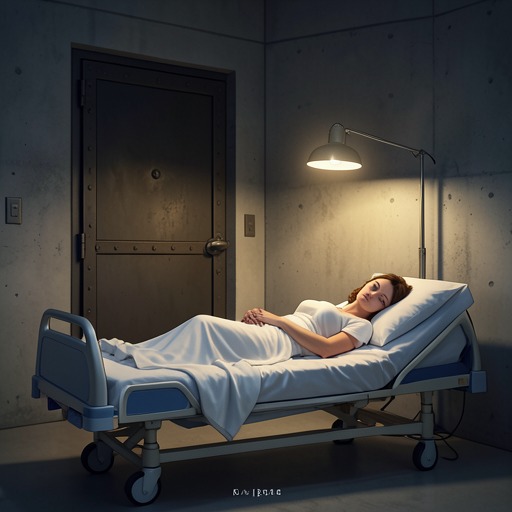
During chemotherapy, Bénédicte became severely unwell and could no longer keep food down. When Marie-Claire visited, Jean-François had said that Bénédicte was merely complaining and did not need hospital care. Bénédicte told her sister that she wanted to go to hospital but that her husband had refused. Marie-Claire recognized the urgency and helped arrange her admission. Bénédicte stayed for three days to regain strength; soon afterward, she would need admission to the public hospital in Metz for the remainder of her life.
Marie-Claire understood the cancer through the accumulated history of Bénédicte’s illnesses and the distress of her marriage. She recalled that Bénédicte had once observed that she had been continually ill since marrying Jean-François, and believed that the strain she endured had contributed to her illnesses. This is Marie-Claire’s interpretation, not a medical finding about the cause of the cancer. Its place in her account nevertheless conveys how she understood her sister’s final years: as a life in which bodily suffering, repeated dismissal, and constrained independence had become inseparable.
Bénédicte died on January 23, 2011, ten months after the widespread cancer was discovered. The diagnosis therefore serves as the turning point between her earlier struggle to have her pain recognized and the final period in which her illness required increasingly intensive care. Its chronology is stark: reassuring tests in December, a forced week of walking in February, the discovery of metastases in March, and death the following January. Through Marie-Claire’s recollections, the cancer is both a specific medical condition and the final crisis in a narrative about what happens when a person’s account of her own suffering is repeatedly discounted.