Cotentin
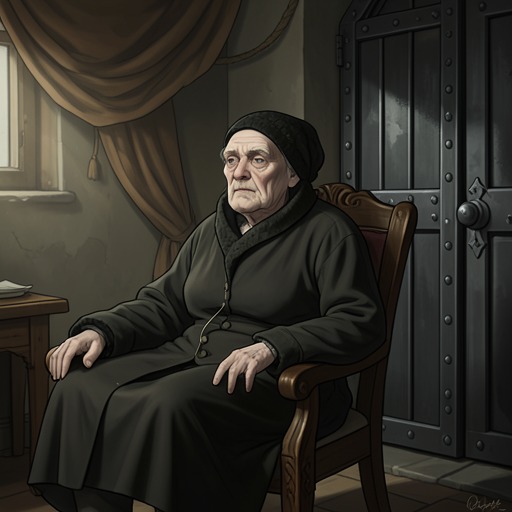
L'Amour et les ForêtsCotentin is the destination of a family walking holiday that becomes a turning point in Bénédicte’s illness. The region is not described through its landscape so much as through what happens there: Jean-François treats a demanding week of walking as a test of his wife’s health, while her increasing pain and fatigue go unheeded. The trip’s consequences extend beyond the holiday, bringing her symptoms into view and leading to the discovery of a second, widespread cancer.
The walking holiday
In February, Jean-François took Bénédicte on a long walking trip in Cotentin. For months she had been complaining of severe back pain, fatigue, pain in her legs, and aching joints. She told him that she did not feel strong enough for the walk, but he insisted that she could manage it and treated her condition as a vague complaint rather than a reason to change their plans.
His insistence belonged to a longer pattern. When Bénédicte reported pain, he had made her walk for hours or complete laps of a stadium, claiming that exercise would restore her fitness and that she was giving too much importance to what she felt in her body. He had continued this approach even after an earlier forced walk ended with Bénédicte fainting and being taken to hospital, close to a pulmonary embolism associated with clots in both legs. Cotentin therefore represents not an isolated disagreement about a holiday, but another occasion on which her account of her physical condition was overruled.
A week of pain and dismissal
Bénédicte walked every day for a full week despite her pain and distress. After the second day, she consulted a doctor, who prescribed painkillers for lower-back pain and advised her to see her regular doctor when she returned to Metz. Jean-François nevertheless continued to deny that anything serious was wrong and treated her complaints as an impediment to the family holiday. Lola eventually sided with her father, adding to the pressure on Bénédicte as she struggled through the trip.
The contrast is consequential: Bénédicte’s symptoms were persistent enough to lead her to seek medical help during the holiday, yet the people closest to her did not respond as if they might signal a grave illness. The narrative makes clear that her pain was real and escalating, even as Jean-François interpreted it as something she should overcome through endurance.
The return and the diagnosis
On the drive home, Jean-François braked sharply to avoid a dog crossing the road. Bénédicte, who was slight and physically fragile, thought the seat belt might have cracked a rib; afterward, the pain became more pronounced. Two days later, at an appointment already scheduled with her phlebologist, she was told that the rib was not injured. She also asked the doctor to examine a lump below it on her abdomen, which she had noticed for several weeks and had assumed was a nodule.
The phlebologist was concerned by the lump and told her to seek urgent hospital care. Bénédicte went that same day. Comprehensive tests led to the diagnosis, three or four days later, of widespread cancer, with metastases in a lung, the liver, the bones, and the adrenal glands. The account places this discovery shortly after a December medical check had shown no abnormalities. Her twin sister later believed the illness had already been present then, recalling Bénédicte’s changed appearance and morning cough, though the precise onset was not established in the account.
Narrative significance
Cotentin matters as the setting of a failed test of endurance. Jean-François presents walking as proof that Bénédicte is healthy, but the journey instead gathers evidence of her declining health: the pain that interrupts the holiday, the medical consultation during the walk, and the worsening discomfort after the return drive. The difference between his interpretation and her bodily experience exposes the danger of treating her symptoms as exaggeration.
The holiday also marks the transition from disputed illness to an urgent diagnosis. The abdominal lump, noticed before the trip’s aftermath but not understood by Bénédicte, becomes the finding that prompts hospital investigation. Cotentin is thus associated not with a cure or recovery, but with the period in which Bénédicte’s suffering is repeatedly minimized before its cause is revealed.