Sainte-Blandine
L'Amour et les ForêtsSainte-Blandine is a private psychiatric clinic in the city center that becomes a temporary refuge for Bénédicte Ombredanne after an overdose and a place where she begins to imagine a life beyond her marriage. Its protected routines and community of residents offer her relief and a sense of belonging, while the limit placed on her stay makes that refuge precarious: she leaves before she feels ready to decide how to change her life.
Setting and Architecture
The clinic occupies a deep U-shaped complex, with its psychiatric service at the far end of the base, opposite the sole access to the outside world. An office block from the 1960s marks the entrance, beneath which pedestrians and cars pass into the interior. The two wings bring together buildings from different periods, including structures probably once associated with a convent and a small chapel. They house services for diabetes, metabolic illness, endocrinology, palliative care, and urology and nephrology, among others.
The open center of the U contains staff parking and two circular planted areas. The psychiatric unit itself is in a 1950s hospital building whose surviving original details include its tiles, doors and window frames, railings, and lights. The clinic’s ordinary medical architecture thus preserves traces of earlier decades even as patients move through it for immediate care. The building’s layout also gives the psychiatric service a particular relation to the outside: physically enclosed at the back of the complex, it nevertheless has a nearby route to the clinic’s public-facing café.
Admission and Daily Care
After Bénédicte takes an overdose of anxiolytics, she asks to remain in hospital because she needs rest, quiet, and distance from her family. The psychiatric emergency service does not consider her condition sufficient to justify a longer stay there. When a psychiatrist asks whether her family environment presents a particular risk, she does not explain her reasons for not wanting to return home. The psychiatrist arranges her admission to Sainte-Blandine for roughly a fortnight, describing a longer emergency-unit stay as inappropriate to the circumstances.
At Sainte-Blandine, Bénédicte remains similarly guarded in her interview with the clinic psychiatrist. She describes profound fatigue following recurrent insomnia but gives little account of her family life, insisting that she has no unusual problems at home. The psychiatrist’s questions about her husband make her suspect that he has serious doubts about him; when he offers to meet Jean-François, she firmly refuses. They are to have daily consultations, and he prescribes medication for anxiety and sleep. Her reticence means that the clinic can offer a protected setting without fully learning what makes a return home so difficult for her.
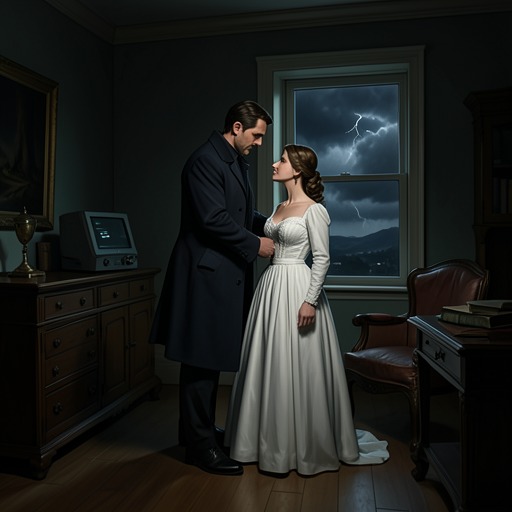
For the first two days, she sleeps and rests in her room. Meals and medication are brought to her, and the psychiatrist conducts their conversations there rather than insisting on a less private setting. The room’s intimacy and shelter suit Bénédicte while she is still fragile. The clinic’s care is therefore conveyed not only through treatment but through the temporary removal of demands: she can remain inside, rest, and meet the psychiatrist in a space where she feels safe.
La Bulle and the Residents
At the base of the U, beside the psychiatric service, is La Bulle, a café built as a prefabricated structure in the 1970s. Though it serves the practical role of a hospital cafeteria, its appearance and open access make it resemble an urban café. A covered gallery and a stairway connect it conveniently to the psychiatric service, allowing residents to reach it without leaving the complex. In practice, patients and their families use it, and psychiatric residents are its most regular visitors.
La Bulle occupies an ambiguous middle ground between ordinary public life and life inside the clinic. Its atmosphere feels partly theatrical: it resembles the outside world while remaining within the hospital’s protective enclosure. Bénédicte is drawn to that dual character. The setting recalls a novel she loves, and sitting opposite Élisa there, she experiences the café as a place where the two sides of her life can briefly meet without one cancelling the other. Élisa brings her there shortly after they meet and introduces her to other residents who gather to relax and buy refreshments.
The café also becomes a place for listening. Among the residents is Aurélie, an elementary-school teacher whose account of persistent stalking conveys how fear and sleeplessness have come to dominate her life. She has been away from work and was advised by her doctor to come to Sainte-Blandine to rest. The other residents respond with sympathy, and Élisa reacts with anger at the man responsible. For Bénédicte, hearing another woman speak openly about her distress helps make the clinic a community rather than merely a site of treatment. The residents’ stories expose forms of suffering that may remain concealed outside, while their attention to one another provides a kind of recognition.
Refuge and Its Limits
Bénédicte grows attached to the people she meets at Sainte-Blandine. After only two weeks, she feels more closely connected to the residents than to many of the people she sees outside. She begins to regard the clinic as a place where people have confronted truths about themselves, in contrast to the compromises and self-deceptions she associates with her former everyday life. Élisa affectionately calls Bénédicte’s nine-square-meter room her poet’s cell; Bénédicte feels that she has finally found a place that is truly hers.
The refuge also opens the possibility of a decisive change. Bénédicte imagines that, if she could stay for months, she might become ready to leave Jean-François, move away from Metz, take her children, and begin again somewhere unfamiliar. She understands that such a decision would require time and a sense of safety; the clinic has made the unknown imaginable, but it has not yet given her the time she believes she needs to act. She later tells Éric Reinhardt that she wanted to remain long enough to make a radical decision. The psychiatrist grants her four additional days, but ultimately tells her that she must go home.
The contrast between the clinic and home is not simply that one is peaceful and the other difficult. During Bénédicte’s stay, Jean-François visits daily and continues to focus on her attempted suicide and his own grievances. She tries to discourage his visits and sometimes feigns sleep, but when he arrives at dinner she has little means of avoiding his questions and reproaches. The clinic can shelter her from some ordinary demands, yet it cannot prevent him from entering her room or resolve the conditions she has kept from the staff. Her discharge returns her to the circumstances from which she had sought escape.
Narrative Significance
Sainte-Blandine functions as both a physical enclosure and a temporary opening. Its U-shaped plan, protected room, and passage to La Bulle give concrete form to Bénédicte’s withdrawal from home and her tentative movement toward other people. The café’s in-between character mirrors her emerging sense that another version of life might be possible, while the limited admission period places a hard boundary around that possibility.
The clinic’s importance extends into the book’s account of how Bénédicte’s story is told. Éric Reinhardt visits Sainte-Blandine to clarify its layout while preparing the chapter, because some details in pages Bénédicte had sent him were unclear. Those pages had been written there between July 6 and July 21, 2006, and reached him later. The place is therefore both the setting of her short recovery and a source of written testimony through which her experience enters the narrative. Its promise is real but provisional: it gives Bénédicte shelter, companions, and an imagined future, yet not the duration or power to secure that future before she is sent back home.