Buenos Aires
La uruguayaBuenos Aires is both the practical starting point and the emotional ground of the narrator’s trip to Uruguay: the city he leaves in pursuit of writing income, and the place he returns to after a day that alters how he understands escape and attachment. Its ports, streets, car, and apartment anchor a journey whose promise of freedom is repeatedly tested against financial pressure, family life, and bodily vulnerability.
Setting and Urban Counterpoint
Buenos Aires appears less as a panoramic cityscape than as a network of ordinary routes and obligations. Before departure, the narrator drives down Billinghurst and turns onto Libertador toward the port. The parking area at Buquebús is full, so he leaves the car across the avenue, beside a disused railway line. The inconvenience becomes a source of unease: on his return, carrying dollars, he expects to cross two dark blocks on foot. Even before the ferry sails, the city’s infrastructure has made the journey feel both possible and risky.
The contrast with Montevideo is especially vivid because Buenos Aires supplies a familiar point of comparison. At Plaza Independencia, the narrator sees Palacio Salvo and recalls its architectural counterpart, Barolo, on Avenida de Mayo in Buenos Aires. Both buildings have towers topped by lighthouses; in his account, the lights once signaled across the Río de la Plata. The connection turns two urban landmarks into a passage between cities, but the narrator’s experience of Montevideo remains bound to Buenos Aires: one is the real home he has left, the other a city partly assembled from memory, images, and desire.
Departure, Money, and the Journey Out
The trip begins as a response to a specifically Argentine financial predicament. The narrator’s book advances, paid from Spain and Colombia, have arrived in Montevideo, where he opened a bank account months earlier. If transferred to Argentina, the dollars would be converted at the official exchange rate and subject to income tax; collecting them in Uruguay and exchanging them in Buenos Aires at the unofficial rate would leave him with more than twice as much. He therefore travels with the intention of bringing back more dollars than the permitted limit, accepting the risk of discovery at customs.
For him, the money represents more than a sum to be collected. He imagines it loosening the accumulated restrictions of daily life: the inability to go out, send a letter, print a form, ask an agency a question, repair the damp, or paint the chairs. As the ferry leaves the port, the visible coast recedes and he feels an immense relief at leaving the country, even temporarily. The ship’s announcement that the duty-free shop is open sharpens the irony: for someone traveling to bring his own earnings across a border, freedom has become entangled with restrictions on commerce and currency.
Buenos Aires in Memory and Imagination
Buenos Aires also belongs to the narrator’s earlier life as a writer. Enzo Arredondo, whom he calls from a public telephone after arriving in Montevideo, recognizes him by a nickname that began at a literary workshop Enzo led in Buenos Aires in the 1990s. The call gives the trip a backward reach: before the narrator can move through the unfamiliar city, he is briefly returned to an older literary relationship formed at home.
The city is also the point from which he measures the pull of Montevideo. Before travelling, he had received videos and songs sent by Magalí Guerra, including images of her city and a performance associated with Palacio Salvo. These fragments had made Montevideo feel intimate before he knew it directly. By contrast, Buenos Aires is where he had watched and listened, imagining the city across the river; the actual streets of Montevideo both sustain and correct that fantasy. The narrator recognizes that he was in love not only with a woman who lived there but with a city he had largely invented.
Return, Home, and Consequence
The return to Buenos Aires reverses the journey’s original purpose. After the assault on the beach in Montevideo, the narrator decides he must go home. At the port, employees search him and inspect his jacket and ukulele, looking for the cash. They find nothing: he has no money left to take from him. He leaves the port without pesos for a taxi and walks more than thirty blocks toward the apartment on Coronel Díaz, crossing the lower railway tracks and Avenida Madero before climbing Córdoba. His car remains near the port; Catalina retrieves it fifteen days later.
That walk is at once punishing and newly unburdened. Injured and exhausted, the narrator no longer fears being followed for the dollars he had expected to carry. He later reflects that, without the money, he feels paradoxically invulnerable. The next day he is hospitalized, and his bruised ribs shape his movement; the ukulele, which Maiko had left at his apartment, becomes a small but sustaining instrument during the year he lives alone. Buenos Aires thus holds both the material aftermath of the trip and the beginnings of a changed routine.
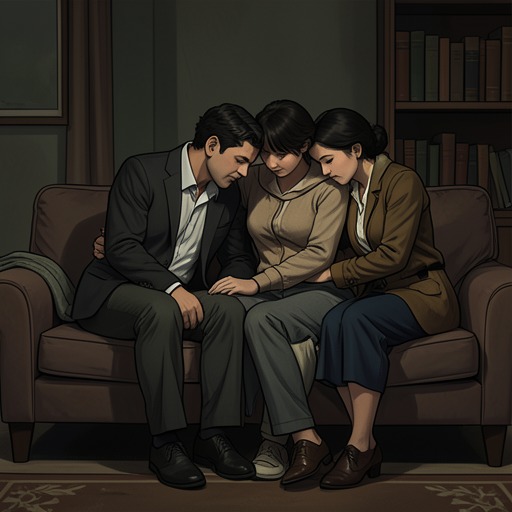
The final return is domestic rather than triumphant. After seventeen hours, the narrator reaches his building looking battered and disoriented, carrying music for his son. The mirror in the elevator registers how far he has travelled from the person who left that morning. Yet the apartment remains bound to family: he thinks of Catalina, Maiko, and the affection that persists despite their separation. Buenos Aires is not simply the place he escapes from or comes back to; it is where the journey’s fantasies, losses, and continuing ties have to be lived.