Dulzura distante
La uruguayaDulzura distante is a song and recurring phrase that connects the narrator’s remembered intimacy with Magalí Guerra Zabala to the aftermath of his robbery. First sung together on a night walk, it returns later through a candy wrapper, turning a shared refrain into a compact chain of memory, surname, and the story he is struggling to tell.
Song and Shared Memory
The narrator describes the pair’s shared mythology as limited to a few anecdotes, but ones they valued. Walking together at night in Montevideo, they sing Dulzura distante badly, forgetting parts while remaining fairly in tune, especially through the final stanza. Its lyric about a fleeting life and the crossing of paths gives the song an intimate resonance for two people whose connection is built from a small store of remembered encounters.
Even that remembered lyric is unstable: at times its final verse overlaps with grillerío constante. The detail makes the memory less like a polished declaration than a jointly imperfect performance, preserved through its errors as much as through its words. In the same scene, the narrator finds a flyer for a tattoo shop in his jacket pocket and points out its offer of genital piercings, another particular object caught up in their night together.
The Refrain Returns
The phrase resurfaces aboard the Buquebús ferry, after the narrator has been robbed and is sitting alone, sore in the side and without his belongings. Searching his jacket pockets, he finds sand and a candy from earlier that day. He unwraps and chews the dulce de leche candy, then reads Zabala on its wrapper, beside the image of a powdered man with a long curled wig and mustache. He identifies the figure, via Wikipedia, as Bruno Mauricio de Zabala, the founder of Montevideo.
The wrapper makes the song’s words recur in an altered register: Zabala is also Magalí Guerra Zabala’s maternal surname. From that coincidence the narrator spins the verbal turn Guerras a bala, joining her name to the violence of the robbery without claiming that the two are literally the same event. A song associated with a shared walk now rises from a cheap, edible object in the aftermath of loss.
Memory and the Unspoken Account
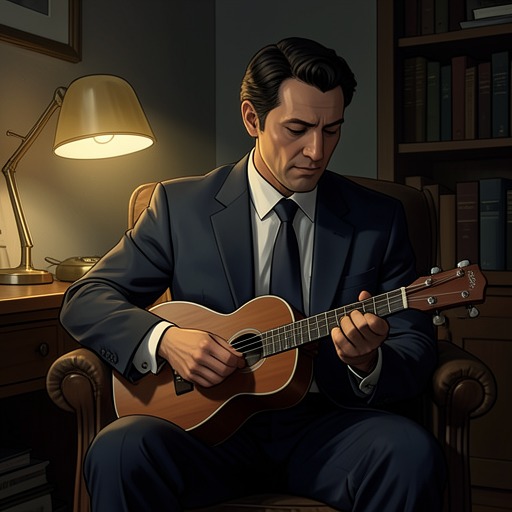
The candy’s return of Dulzura distante leads into the narrator’s imagined explanation to his wife. He considers how he could describe crossing to Uruguay on a ticket she bought to collect money he had finally been paid, only to come back with nothing, a tattoo on his shoulder, and a ukulele. The robbery is real, but he contemplates changing its setting in his account, imagining instead that he was attacked while walking to the car near Dársena Norte.
The expression therefore marks a passage between recollection and attempted narration. Its words first belong to a song the pair sing together; later, the name on a wrapper reactivates the song just as the narrator confronts how to tell what happened. The recurrence does not resolve his account or make the losses sweet. It gives his memory a route back to Magalí Guerra Zabala even as he remains alone with the consequences of the robbery and the question of how to present them.