Enzo Arredondo
La uruguayaEnzo Arredondo is Lucas Pereyra’s former literary workshop leader, literary mentor, and one of the most enduring links between Lucas’s life in Buenos Aires and his return to Montevideo. He is remembered as a writer in constant motion, drawn to books, poets, and cultural projects; when Lucas reaches him again, that appetite for literary activity sits beside jokes about retirement and a candid request for money. Enzo’s importance lies in this combination: he is both an intellectual guide and a companion whose warmth and practical needs resist any idealized image of the mentor.
Identity and Background
Enzo taught a literary workshop in Buenos Aires during the 1990s, which is where he began calling Lucas Pereyra by a Dutchman nickname. Enzo’s explanation was that Lucas looked Dutch, though Lucas considered the resemblance implausible. The nickname remained a private sign of their history: when Lucas phones him in Montevideo years later, Enzo greets him with it, immediately restoring the familiarity of their earlier relationship.
Their connection is framed by an asymmetry of experience. Lucas had once been Enzo’s workshop student, and still remembers him as someone whose artistic life was already in motion: writing, reading, publishing, and bringing other people into literary work. That history gives Enzo the role of mentor without making him distant or solemn. Their exchanges retain the ease of an old acquaintance, including teasing and laughter.
Literary Work and Cultural Networks
In Lucas’s recollection, Enzo is rarely idle. He is always working on a book, has one newly published or nearly ready, or is preparing to travel to Paraná. His curiosity extends to obscure poets and to the connective labor of literary culture: he devises links among Uruguayan, Buenos Aires, and Entre Ríos circles, and takes part in cultural supplements, prologues, presentations, prizes, and festivals. This range makes him more than a solitary author. He moves between writing and the networks that help writing circulate.
Enzo also tries to recruit Lucas into a literary magazine project called N.º 2. Its name carries its own joke: Enzo predicts that it will last for two issues. The proposal captures his characteristic mixture of commitment and self-mockery. He pursues a new cultural venture while already anticipating its brief life, treating the project’s likely failure as part of its appeal rather than a reason not to begin. The episode presents his literary energy as practical and social: he wants Lucas not only to admire his work but to help make something with him.
A Point of Orientation in Montevideo
When Lucas arrives at the Terminal Tres Cruces, he uses a public telephone and an Antel card to call Enzo. The call feels like a return to the past. Enzo cannot receive calls from a mobile phone, so Lucas must call from a landline to Enzo’s landline; despite this cumbersome arrangement, Enzo always answers. Lucas had warned him that he would be coming to Montevideo, but still manages to surprise him. Their reunion is arranged for six in the evening, leaving them time to talk before Lucas’s nine o’clock boat back.
Enzo’s home on Fernández Crespo also serves as one of the few fixed points in Lucas’s mental map of the city. Lucas knows the principal avenue and a handful of districts, plazas, and landmarks; he locates Enzo’s house farther along from the central route. This limited geography matters because Lucas experiences Montevideo as familiar and strange at once. His image of the city has been assembled partly from memories and partly from videos that Magalí Guerra sends him. Enzo belongs to the actual city within that imaginative map: a person Lucas can call and a home toward which he can walk, rather than another fragment of a city he has largely invented.
The contrast between an imagined Montevideo and the city encountered on foot shapes Lucas’s arrival. Commercial streets, banks, and the ordinary movement of a working day begin to displace his fantasies of Brazil and of Guerra’s city. Yet the mental map continues to guide him. Enzo’s address is one of its usable coordinates, grounding Lucas’s roaming in a relationship that precedes his current longing and does not depend on the city’s romantic image.
Counsel After the Robbery
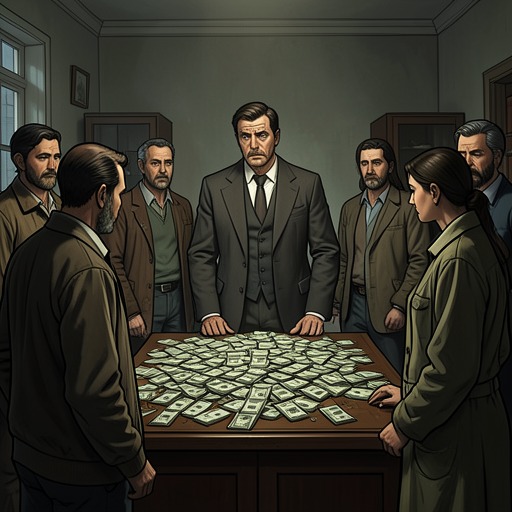
After Lucas has been robbed, Enzo interprets the loss in terms that Lucas resists. He tells Lucas that the money was poisoned and suggests that Lucas let himself be robbed because he did not feel the money was truly his. He then recasts the theft as a kind of release: without that money, Lucas need not write a thousand-page book as if repaying a debt. Lucas tells him not to analyze him. Enzo answers that he is not analyzing, but offering another way to see what happened.
The exchange shows Enzo using literary and psychological language with the familiarity of someone who knows Lucas’s work and its burdens. His image of a huge manuscript written to discharge a debt turns the stolen cash into a question about obligation and writing, rather than merely a financial misfortune. The interpretation remains Enzo’s, not an established explanation of Lucas’s motives; Lucas’s refusal preserves the tension between a mentor’s attempt to make meaning and the other person’s right to reject that reading.
The conversation also makes Enzo’s own financial position visible. When he asks how many Uruguayan pesos Lucas has left, Lucas estimates about five thousand. Enzo then asks to borrow three thousand, promising to return it in fifteen days when he travels to Buenos Aires. Lucas looks at him seriously, and the two begin laughing. Enzo adds that he will repay the loan with interest and says his pension is due the following week. The scene reverses the expected direction of dependence: the former teacher who interprets Lucas’s crisis also needs a short-term loan from him.
Character and Narrative Role
Enzo’s remembered vitality and his present-day vulnerability are not presented as opposites. The same man who pursues books, obscure poets, journeys, and a magazine that may last only two issues can joke about becoming a retiree and ask an old student for money. His literary authority remains real, but it does not make him immune to ordinary financial limits or turn his advice into unquestionable wisdom.
For Lucas, Enzo is at once a link to an earlier artistic life, a guide to a partly unfamiliar Montevideo, and a companion who can answer an emotional crisis with both an elaborate interpretation and a laugh. Their relationship is sustained by concrete habits—the old nickname, the landline call, the planned conversation before Lucas’s boat—and by the freedom to disagree. Enzo’s presence therefore counters the isolation of Lucas’s fixation and the city’s dreamlike strangeness: he gives Lucas a human point of contact, while remaining a distinct person with projects, jokes, and needs of his own.