Lucas Pereyra y Enzo Arredondo: vínculo de maestro y discípulo
La uruguayaLucas Pereyra and Enzo Arredondo’s relationship is a lasting literary mentorship that becomes a friendship of practical support and shared work. It began when Lucas attended a workshop Enzo led in Buenos Aires in the 1990s, and it continues years later through a familiar nickname, a hurried reunion in Montevideo, and an ongoing exchange of writing. When Lucas arrives in distress after being robbed, Enzo’s response is both literary and humane: he listens, offers help, and draws him back toward the work they share.
Origins and Literary Mentorship
Lucas first knew Enzo as the leader of a literary workshop in Buenos Aires. The teacher-pupil bond remains visible in the way Enzo addresses him by the nickname Holandés, which he gave Lucas at the workshop because he thought Lucas looked Dutch. The nickname persists long after the classes, turning an early professional connection into a private mode of recognition.
Enzo’s own literary life is energetic and outward-facing. When Lucas calls him in Montevideo, he understands Enzo to be continually occupied with a book in progress or newly published, a trip to Paraná, an obscure poet, or the many links among Uruguayan, Buenos Aires, and Entre Ríos literary circles. Enzo works across cultural supplements, introductions, presentations, prizes, and festivals. The range of this activity helps define the kind of mentor he is: not simply a teacher associated with a past workshop, but a working participant in the literary world Lucas hopes to sustain himself within.
Enzo also tries to recruit Lucas into a proposed literary magazine, provisionally named N.º 2 because Enzo predicts that it will last for only two issues. The joke combines self-mockery with a genuine invitation to collaborate. Years after the workshop, Enzo still treats Lucas as someone whose writing and participation matter, even while refusing to disguise the precariousness of the project.
A Familiar Voice in Montevideo
On arriving at the Tres Cruces bus terminal, Lucas uses a public telephone and an Antel card to call Enzo. Their unusual arrangement makes the exchange feel like a return to the past: Enzo cannot receive calls from a mobile phone, so Lucas must call from a landline to Enzo’s landline. Enzo nevertheless always answers. Lucas had told him he was coming, but the call still surprises him, and his greeting immediately revives the old workshop-era intimacy through Holandés.
They arrange to meet at six, leaving time to talk before Lucas’s ferry back at nine that evening. Enzo’s place in the city is part of Lucas’s mental map: as Lucas walks through Montevideo, he locates Enzo’s home farther along Fernández Crespo. The city itself is charged with other memories and desires, but a sudden prompt to learn the ukulele turns Lucas’s thoughts toward Enzo. He crosses the street and goes to find him. The movement from wandering alone to seeking out his former teacher gives their relationship a concrete, immediate role in the day: Enzo is someone Lucas can turn to when he needs to re-enter ordinary contact with another person.
Lucas calls up to Enzo’s apartment from the street. Enzo appears at a window, recognizes him, and comes down to let him in. By the time they reach the apartment, Lucas has already told him what happened. Their reunion is warm but not ceremonial; the old nickname, the quick welcome, and the immediate disclosure of bad news make their familiarity evident without requiring a formal account of the years between them.
The Theft and Enzo’s Support
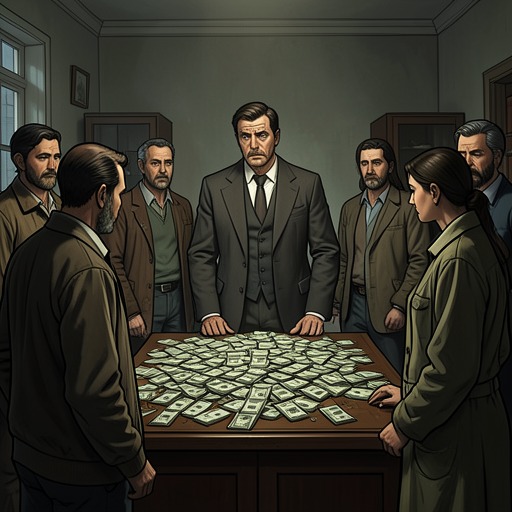
Lucas explains that he has been robbed of fifteen thousand dollars: the advances for two contracted books, a collection of chronicles for Milenio and a novel for Astillero. The money was supposed to cover debts and give him roughly nine months to work. He had not yet begun the novel, which he had expected to write during that period. The theft therefore destroys more than a sum of cash: it takes away the protected writing time he had imagined and leaves him facing obligations to publishers and creditors.
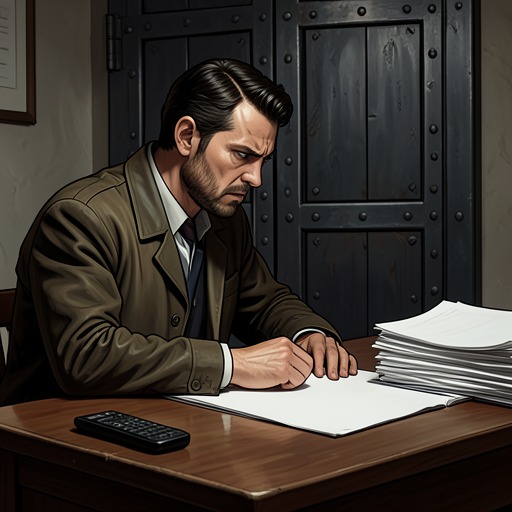
Enzo listens as Lucas explains the scale of the loss and asks whether the novel has been started. When Lucas says it has not, the question brings the unrealized work into the room alongside the stolen money. Enzo’s response is not to offer an easy solution. He warns that Montevideo can be dangerous and invokes the writer Fogwill as an example, a remark Lucas corrects by pointing out that Fogwill died in Buenos Aires. Their exchange allows concern and gallows humor to coexist: Enzo acknowledges the danger Lucas has encountered, while Lucas remains able to answer him with a joke.
The conversation turns from the lost dollars to immediate need. Lucas asks Enzo to lend him three thousand, proposing to repay it in fifteen days when he goes to Buenos Aires. Enzo smiles, accepts the request, and jokes that he will charge interest because his pension is due the following week. The exchange makes the friendship tangible through money, but it also preserves their characteristic levity; Lucas’s request is serious, yet the two laugh together rather than letting the crisis dictate the entire encounter.
Enzo asks whether Lucas has enough for a taxi and tells him to return, sleep, and tell his wife what happened. Lucas asks him not to tell anyone else. Enzo agrees to keep quiet and returns to the magazine they had discussed, predicting that it will be a guaranteed failure. His response joins discretion and practical concern to literary fellowship: even in the aftermath of the robbery, he treats Lucas as a friend to protect and a writer to involve in future work.
Continuing Collaboration
The bond does not end with this reunion. A year later, Lucas reports that he sends Enzo a column for the magazine once a month. The regularity of that contribution turns the earlier invitation into an ongoing working relationship, even though the magazine began as a project Enzo expected to fail. Its modest scale is significant: their connection persists not through a grand literary breakthrough, but through repeated contributions and continued contact.
Enzo’s mentorship is therefore shown through a sequence of ordinary acts rather than a single decisive lesson. He taught the workshop Lucas attended, keeps addressing him by the name formed there, welcomes him into his home, hears the account of his loss, offers to lend him money, protects his confidence, and continues to solicit his writing. Their relationship bridges the formative past and the compromised present, linking Lucas’s ambition to write with the practical, sometimes comic labor of remaining part of a literary community.