The obsessive reconstruction of a day
La uruguayaThe obsessive reconstruction of a day is the narrator’s attempt to revisit, examine, and enlarge a single Tuesday in Montevideo without pretending that memory can restore it whole. After the day has ended, he studies its scattered details as if they might disclose a complete account: songs heard in fragments, banknotes used in payment, streets crossed, and the people whose separate days remain inaccessible. The effort gives ordinary encounters the weight of clues, but its governing tension is that close attention does not eliminate uncertainty. The more he reconstructs, the more plainly he sees the distance between what happened and what he can know.
A day made into an object
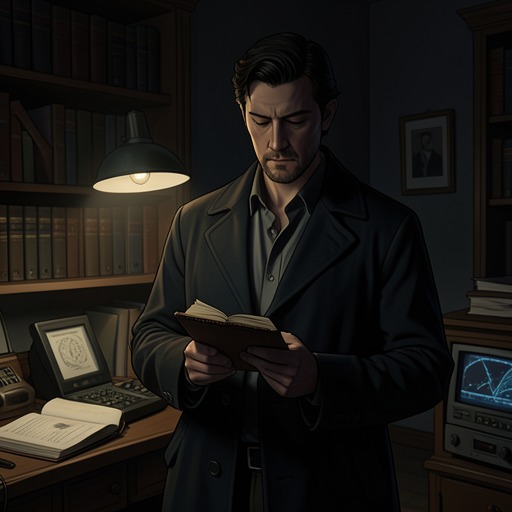
The narrator describes himself as trapped inside the Tuesday, returning to it repeatedly and trying not to add anything that did not happen. He acknowledges that the act of remembering nevertheless supplies new angles and perspectives, details he could not notice while moving through the day at speed. The remembered day is therefore neither a simple transcript nor an openly invented story: it is an experience revised by the effort to look again, with the narrator alert to the difference between recovery and addition.
That effort becomes almost forensic. He learns the songs he heard only in pieces and searches for enlarged images of the Uruguayan banknotes he spent, studying them as though he had to counterfeit them. On the reverse of the one-thousand-peso note he finds the palm tree known as the Palma de Juana, planted on the Pocitos rambla near the last house where the poet lived. He follows the drawn landscape into Google Street View, using the printed image to move back toward a real place. Elsewhere, he recognizes the Universidad de la República as a building encountered inside the blue-ink landscape of a five-hundred-peso note. Money, which had passed through his hands as an ordinary instrument of payment, becomes a map for revisiting the day.
Montevideo between map and memory
The city the narrator walks through is already mixed with a city assembled from remembered visits and videos sent by Magalí Guerra Zabala. His mental map is spare: Avenida 18 de Julio supplies his main orientation, while neighborhoods, squares, familiar cafés, and the direction of a friend’s house mark the limits of what he knows. Yet the city also arrives through periodic emails, songs, and shaky footage of its streets. He recognizes that he is in love not only with a woman who lives there but with a Montevideo partly made from those mediated fragments; he has walked through his imagined city as much as through the actual streets.
Popular video culture gives that imagined intimacy a shared vocabulary. In the weeks he recalls, Tiranos temblad collects small, user-submitted scenes of life in Uruguay, from a bird being removed from a house to a child learning to ride a bicycle. The narrator recognizes a schoolboy’s shouted catchphrase from the series and feels briefly woven into the city’s network of references. The program’s gentle, minor incidents sit in contrast with its grandly patriotic title, making the everyday feel at once local and available for circulation.
Other sights trigger similarly layered associations. At Plaza Independencia, the Palacio Salvo recalls an album-cover photograph Magalí Guerra Zabala had sent him; the imagined viewpoint leads him to the Radisson Montevideo Victoria Plaza Hotel, and his desire rises with the chain of associations. The building is also linked in his mind with its counterpart in Buenos Aires and with the two towers’ lighthouses as a portal between cities beside the Río de la Plata. On another stretch, the Universidad de la República appears both as a street-side building and as the image on a banknote. His route does not merely connect locations: recollection keeps overlaying the city with pictures, reading, music, and desire.
Signs, turns, and the work of association
The reconstruction follows how the narrator’s attention converts incidental objects into personal signs. A flyer for a tattoo shop advertises tattoos, piercings, and genital piercings. Because he knows that Magalí Guerra Zabala has a genital piercing, he wonders about the place where she had it done, whether the tattooist was trusted, and whether the procedure hurt. Their email exchanges had never addressed the subject. He keeps the flyer instead of discarding it, partly because its wording shifts between forms of address. In hindsight he treats this small choice as a possible hinge in what followed, while admitting that he cannot establish that throwing the flyer away would have changed anything. His explanation is not proof but an example of the mind seeking a consequential pattern in a minor decision.
Later, in a dark bathroom reached by a twisting stairway, marijuana makes his theories feel briefly complete and then impossible to retain. He remembers the light switching off on its energy-saving timer and the sensation that he understood something, while qualifying that sensation as possibly greater than the understanding itself. The thought returns to a dance: Magalí Guerra Zabala had liked his slow turn to the left. He recalls a study claiming that women across cultures prefer men who turn more on the left leg, then connects the turn to the staircase spiraling leftward. From there, the chain expands into the possibility of another child, perhaps a daughter, the intrauterine device, generations of ancestors, and the candombe rhythm he associates with Magalí Guerra Zabala. The sequence shows the reconstruction at its most associative: a physical turn becomes a route through attraction, family, ancestry, and sound, without becoming a settled explanation.
What recollection cannot settle
The day’s immediate pressures also return through later interpretation. The narrator realizes that Catalina has seen an email from Magalí Guerra Zabala. Because the email account uses initials and a number, and the messages do not clearly identify Magalí Guerra Zabala by gender, Catalina may not know whether the correspondent is a man or a woman. The narrator has heard himself say the name in his sleep and recognizes why the email would intensify suspicion. He recalls replying evasively that the person belonged to the group that had invited him to Valizas, then losing the chance to continue the exchange when his phone battery died.
As the tattoo is completed, the rubbing cloth begins to hurt more than the needle. The narrator speculates that Catalina may have found his open email on a tablet he had handed to Maiko for videos, but this remains a possibility rather than an established account. At the same time, Magalí Guerra Zabala walks repeatedly along the gallery corridor while talking on the phone. He sees her gesturing, then quiet and red-eyed, apparently listening; he wonders whom she is arguing with but cannot know. These parallel uncertainties resist being resolved by the reconstruction: the narrator can recall what he saw and what he suspected, but other people’s private conversations and knowledge remain beyond his reach.
The ending and the limits of the record
A year later, the narrator revisits Magalí Guerra Zabala’s life through a brief image in Tiranos temblad: her triple wedding with César and Rocío, staged as an unconventional ceremony, with the two pregnant brides and the groom laughing between them. On Facebook he finds photographs of each mother with her child and one of César feeding both children at once, a spoon in each hand. He does not know whether the five live together. He and Magalí Guerra Zabala have stopped exchanging emails, and silence has replaced the correspondence that once fed his imagined Montevideo. He is almost certain she had nothing to do with his robbery, but preserves a small remainder of doubt, which he associates with the silence after the second kick. The unresolved suspicion is not converted into a revelation; it remains a flaw in the memory that he says will not heal.
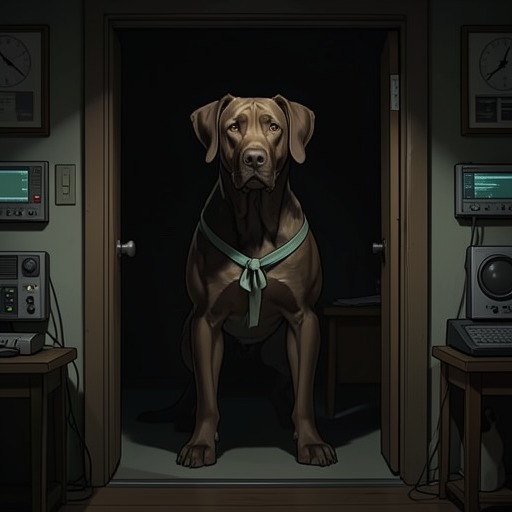
The Tuesday finally ends at the narrator’s apartment door, after seventeen hours. He arrives with music for his son in his hand, looking and feeling altered from the person who left that morning. The happiness he had felt on the bus seems remote. He wonders what the day was like for Catalina, Magalí Guerra Zabala, César, and Cuco, and imagines that knowing every detail of a dog’s day might make someone a great novelist. The thought sets a boundary around his own writing: he writes about what happens to him, not about lives he cannot enter. Yet at the door he is certain that he loves Catalina and will continue to love her, whatever happens. His final exchange with her is brief: she asks who is there, and he answers that it is him. The ending offers a concrete sound and a declaration of attachment, not an explanation of everything the day contained. Reconstructing the day makes its fragments more visible; it does not abolish the unknown.