Uruguay
La uruguayaUruguay is the destination of Lucas Pereyra’s one-day journey for dollars, but it becomes more than a neighboring country on a map: it is a threshold between the financial pressures of home and an imagined escape. The trip begins as a practical errand under currency restrictions and unfolds in Montevideo as a collision between a city he has romanticized and the unpredictable place he actually encounters. By the time he decides he must return to Buenos Aires, Uruguay has made both the attraction and the cost of escape impossible to ignore.
Crossing and economic purpose
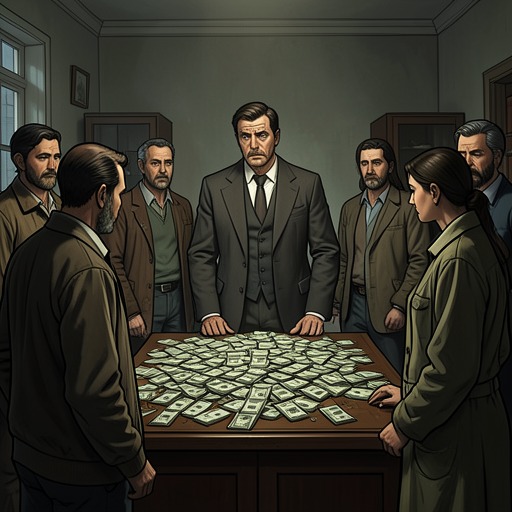
Lucas travels by boat from Argentina to Uruguay at a time of currency restrictions, carrying the expectation that he can retrieve his money as dollars rather than accept the less favorable official conversion at home. His account was opened in Montevideo in April; in September, advances from two book contracts signed months earlier have arrived from Spain and Colombia. A transfer to Argentina would convert the dollars at the official rate and deduct income tax. Collecting the cash in Uruguay and exchanging it in Buenos Aires at the unofficial rate would leave him with more than twice as much, though bringing back more dollars than permitted exposes him to the risk of discovery at customs.
The money has acquired a reach far beyond the transaction. Lucas imagines it paying back the pesos he owes Catalina for the months when he was not working and the household lived on her salary. If he controls his spending, it could buy him about ten months devoted to writing. In his mind, the cash might also break the chain of refusals that poverty has produced: he has not gone out, sent a letter, printed a form, visited an agency, repaired the damp, painted chairs, or applied for work because he has no money. The crossing therefore carries a double promise, of financial relief and of release from the stalled life that money seems to explain.
That promise rests on a household strained by accumulated expenses and deferred repairs. The kitchen sink has come loose and is propped up with cans; the washing machine has broken, the old oven smells strange, and the car’s steering wheel trembles. A dental crown is too expensive, the family has postponed an intrauterine device, and they owe two months of kindergarten fees as well as building charges and health-insurance payments. At a Walmart checkout, both cards are declined; Maiko cries on the floor, and the family must return everything in the cart. The journey to Uruguay is thus connected to an intimate financial crisis, not merely to an advantageous exchange rate.
A country approached through Montevideo
The crossing first offers Lucas relief simply because the boat is leaving. He feels he is getting out of the country, even if only briefly, and takes pleasure in the ferry’s Freeshop: in a period of restrictions, the very word seems to promise an odd, compromised freedom. On the bus from the port, the palm-lined road intensifies that sensation. The repeated palms, bright light, rolling landscape, clouds, and a grazing horse combine into an unanticipated happiness. A sign reading emergency exit against the sky seems to him to suggest escape into nothingness. The land still borders the estuary rather than the open sea, but Lucas experiences the sea as something about to happen.
At Terminal Tres Cruces, his first impressions gather into the book’s defining tension: Montevideo feels close to Argentina in its people, speech, and clothes, yet it is not simply the same place. Unfamiliar brands and words, the use of tú rather than vos, and details that suggest Brazil interrupt the recognition. The city is, in his perception, like a dream in which things are similar but not the same. Uruguay is encountered through that unstable mix of likeness and difference, rather than as an entirely foreign country or a reassuring extension of home.
Lucas’s knowledge of Montevideo is limited and personal. Avenida 18 de Julio gives him a rough mental map: he associates directions along it with Ciudad Vieja, Parque Rodó, Cordón, the banks, and Enzo Arredondo’s home. Yet the map is also emotional. For months, Magalí Guerra has sent him occasional emails and videos of the city, including songs and episodes of Tiranos temblad. These fragments have made Montevideo the place where she lives and, in Lucas’s imagination, the city he loves because he loves her. He recognizes that much of this city is invented, or nearly so, and that he has walked through the imagined version as much as through the real streets.
Walking through the imagined city
The day’s route repeatedly makes the distinction between the two Montevideos visible. On Avenida 18 de Julio, Lucas reads the street through memories, online videos, and cultural references. The ordinary working day and its commercial movement gradually dispel his fantasy of Brazil. Elsewhere, however, small encounters reinforce his feeling of belonging to a local web of references: a schoolboy repeats a phrase Lucas knows from Tiranos temblad, and Lucas understands the joke. The program’s small, tender videos of everyday life have offered him a mediated sense of Uruguay; hearing one of its catchphrases in the street briefly turns that distant familiarity into recognition.
The street also feeds his preoccupation with Magalí Guerra. A leaflet advertising tattoos and genital piercings recalls a detail he has not discussed with her and sets off questions about where and how she had the piercing. He keeps the leaflet in his jacket rather than throwing it away. His attention to it shows how readily desire makes the city seem to address him personally: advertising, songs, and chance details acquire meaning because he is searching for signs connected to her.
At Plaza Independencia, the Palacio Salvo triggers another chain of association. Lucas links the building to an album cover Magalí Guerra had sent him, then to the hotel from which the photograph may have been taken. That sequence of street, image, and memory carries him into the hotel. Later, in Cordón, the pair pass the University of the Republic; Lucas recognizes the building from the blue image on a five-hundred-peso note. The avenue, the plaza, the hotel, and the streets on the way toward the rambla are therefore both actual places and surfaces onto which he projects books, songs, images, and desire.
Desire, danger, and the limits of escape
Lucas’s day in Uruguay is not only a solitary fantasy. He has come to meet Magalí Guerra, and their encounter on the sand begins with intimacy and a proposal that they leave for Brazil together that night. She does not accept. Instead, while they are together, she tells him she is pregnant, in her second month, and unsure whether she will have the child. This disclosure changes the meaning of his invitation: the imagined escape now meets the complicated lives and obligations that neither desire nor a journey can erase.
The moment is violently interrupted when two men attack them. Lucas is struck and pinned face-down in the sand; when Magalí Guerra is pulled away, he tries to rise and is kicked again. The attack leaves him hurt, disoriented, and acutely conscious of his vulnerability. Uruguay, which he had approached as a space of movement and possibility, has also become the setting of an abrupt physical danger. The episode punctures the romantic landscape without making the earlier longing unreal; rather, the same place has held both the promise of departure and the force of an interruption.
In the aftermath, Lucas weeps in Enzo Arredondo’s home and recognizes the care he has received there. He thinks of Magalí Guerra, Catalina, and Maiko, and of Enzo’s hospitality; the kindness around him unsettles the isolation left by the assault. His ribs hurt when he breathes deeply, a physical reminder that the day’s emotional discoveries have not removed its consequences. He reaches a clear decision: he must return to Buenos Aires.
The country as a warning
Enzo Arredondo’s remarks resist the reassuring picture Lucas has partly brought with him. Uruguay, he warns, should not be mistaken for a better Argentine province, a place imagined as free of corruption and political conflict where everyone is good and kind. It has a dangerous other side of the Río de la Plata, and carelessness can have serious consequences. The warning gives explicit form to what Lucas’s day has already shown in experience: the country cannot be reduced to the benign, idealized image that distance and desire have constructed.
Uruguay’s narrative significance lies in this sustained double exposure. It is the neighboring destination where writing fees can be collected, the landscape that briefly lets Lucas feel free of his ordinary identity, and the city made intimate by Magalí Guerra’s messages. But Montevideo’s real streets keep interrupting that private composition, while the disclosure of pregnancy, the assault, the welcome at Enzo Arredondo’s home, and the decision to return place responsibility and vulnerability alongside escape. The journey does not resolve Lucas’s financial or marital circumstances; it brings him back from the fantasy of leaving with a sharper sense of what the fantasy had excluded.