
Industrialism and the Loss of Fellowship
Lady Chatterley's LoverThis flow traces the novel’s account of industrial change as a force that divides communities, deforms labor, and undermines shared human life.
increasing Bearing strength in each event
 decreasing
Bearing strength in each eventdecreasingA Gulf Between Neighbors
A Gulf Between Neighbors
Social separation in one place
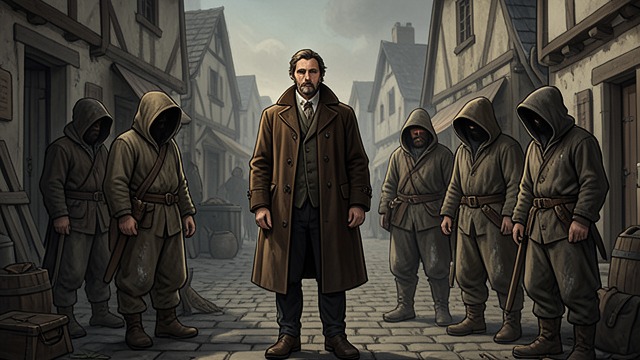
Wragby Hall stands near Tevershall, but the residents of the estate and the mining village behave as though they belong to separate species. Neither side finds a dependable way to cross the boundary.
Connie encounters resentment and reserve where she expects ordinary neighborliness. Clifford treats miners as objects of management, while the miners see the Chatterleys through the distance of rank.
A damaged common life
The novel makes the class divide more than a conflict over manners. It represents a break in the shared pulse of humanity, in which people live beside one another without recognizing one another as equals.
This separation shapes Connie’s later choice of Mellors, but crossing the boundary does not erase it. Their relationship remains exposed to the social order that has made contact difficult.
Bodies Made for Work

Bodies Made for Work
Industrial marks on people
Connie sees miners and industrial workers whose posture and movement bear the strain of labor. She imagines a population whose physical vitality has been shaped and diminished by the demands of the pits and factories.
The narrative presents these bodies through Connie’s distress, and its judgments are deliberately severe. Industrial work appears not only to employ people but to alter their sense of what a human life can be.
Work without dignity
The problem is not physical effort by itself. Mellors values hands-on work, while the novel condemns labor organized solely around money and mechanical production.
This distinction makes the critique more specific than a rejection of all industry. The question is whether work allows people to remain embodied, beautiful, and connected, or treats them as replaceable instruments.
No Simple Political Cure
No Simple Political Cure
Competing diagnoses
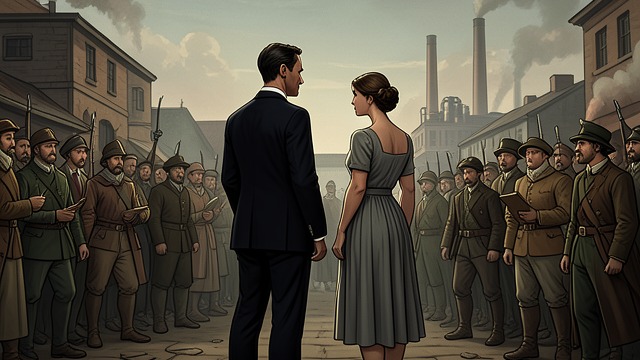
Clifford argues that industry must be managed and that ownership carries responsibility for maintaining work. Mellors distrusts the same machinery and money system, while also doubting that political slogans can solve its problems.
The novel does not present one coherent policy capable of reconciling these positions. Its characters reveal how both managerial reform and revolutionary talk can leave ordinary life untouched.
The human measure
Connie challenges Clifford’s claim that the masses are simply a fixed social function. Mellors, meanwhile, imagines communities in which work and spending no longer define every person’s purpose.
Their arguments remain speculative. The novel measures possible futures by whether they restore human contact and bodily dignity, not by whether they offer a tidy program.
When Connie first lives near Tevershall
During Connie’s journey through the industrial Midlands
In the lovers’ later conversations about the future
