Wragby Hall
Lady Chatterley's LoverWragby Hall is the old Chatterley family seat where Connie and Clifford Chatterley establish their married life after the First World War. Set in a park above Tevershall, it is at once a substantial country house and an increasingly isolated remnant of the landed world: the surrounding mines and industrial town press against its grounds, while its domestic rooms become the setting for Clifford’s dependence and Connie’s growing estrangement. The contrast between estate and industry gives the house significance beyond its role as a residence; Wragby is a contested inheritance whose persistence cannot restore the world that produced it.
House and Estate
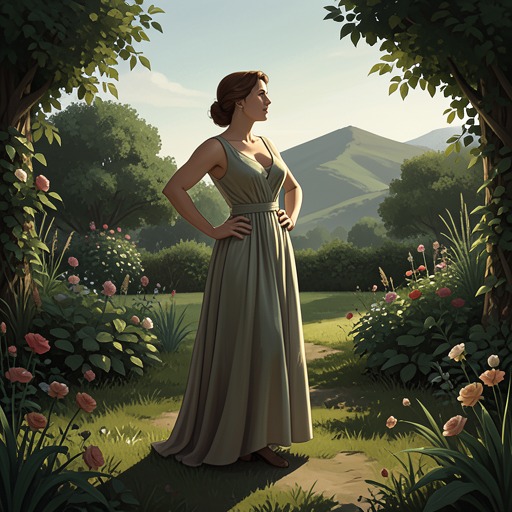
Wragby Hall is a long, low house of brown stone, begun around the middle of the eighteenth century and enlarged over time until it has become an indistinguished, sprawling complex. It stands on higher ground within an old park of oak trees. The estate’s elevation and trees offer the form of a traditional country seat, but do not secure it from the landscape beyond: the chimney of Tevershall pit is visible nearby, and the village stretches close to the park gates. The house’s setting thus places an old estate and a modern industrial settlement in immediate, uneasy proximity.
The park belongs to Clifford’s sense of what must be preserved. He regards the old estate as part of an England that would disappear if those who possess such property did not maintain it. Connie recognizes the sadness in that effort and questions whether preserving the old can withstand the new. Their difference is not simply about taste or upkeep: the house embodies a social and historical order whose survival Clifford claims as a duty, even as the industrial landscape around it demonstrates how precarious that survival is.
Return to Wragby and the Industrial Surroundings
Connie and Clifford returned to Wragby in the autumn of 1920, after Clifford had been permanently paralyzed in the war. His father had died, making Clifford a baronet and the head of the family estate; his elder brother had also died in the war, and there were no children to continue the line. The couple came to begin housekeeping and married life in a home described as forlorn, on an inadequate income. The family seat therefore carries a burden of continuity: Clifford returns not only as its resident but as the person expected to keep the Chatterley name alive.
The approach to the house establishes how little welcome or connection the estate receives from its industrial surroundings. Connie and Clifford arrive by a dark, damp drive through trees to the house on its rise. There are no festivities or public welcome. Between Wragby and Tevershall village there is no real communication: miners stare, while local tradesmen offer Clifford only an awkward nod. Resentment exists on both sides, but the deeper division is one of separation; the Chatterleys and the colliers seem to belong to different social worlds, with no shared everyday understanding to bridge the distance.
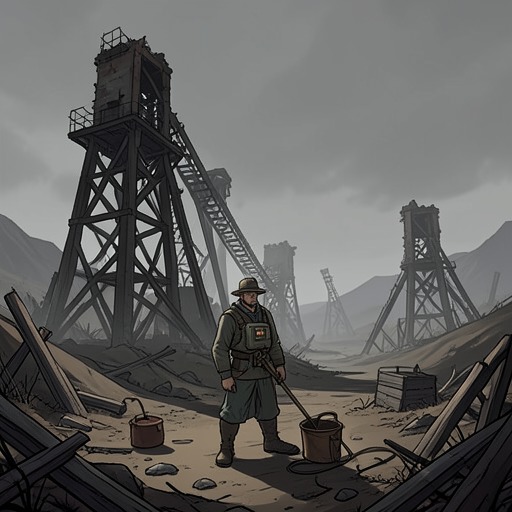
The industrial landscape is not a distant backdrop to life at Wragby. From the house Connie hears the machinery of the pit and colliery railway, and the burning Tevershall pit-bank sends sulphurous fumes across the estate when the wind carries them that way. Soot settles even on the Christmas roses. The park and its cultivated inheritance are therefore repeatedly exposed to the effects of mining: the estate may preserve old trees and an old house, but it cannot keep the industrial present outside its boundaries.
Domestic Life and Confinement
At first, Wragby is the place where Connie’s daily life is organized around Clifford’s needs. When the paths are too sodden for his chair, she nevertheless goes out alone, usually into the wood; on one occasion she offers to carry a message to the keeper because the boy is ill. The house and estate contain both her domestic obligations and a route away from them. Her solitary walks become a recurring counterpoint to the life she shares with Clifford indoors.
That arrangement changes when Mrs Bolton comes to care for Clifford. She helps him to bed, sleeps across the passage in case he calls during the night, assists him in the morning, and eventually undertakes his personal care. Clifford resents Connie’s relinquishing that role to a hired woman, interpreting it as a loss of the intimacy between them. Connie, by contrast, experiences the change as relief. With Mrs Bolton’s help, she gains more time alone, plays the piano and sings in her room, and no longer has to remain continually available for Clifford’s talk. The house’s domestic routine makes their diverging experiences of marriage tangible: what Clifford understands as a severed bond is, for Connie, a loosening of an exhausting attachment.
As Clifford turns increasingly toward industrial work, Wragby also becomes the place where Connie sees the contradiction in his dependence. He needs her presence at the house and appears afraid that she will leave, while his dealings with pit managers, board members, and scientists reveal his command of practical affairs. His authority beyond the domestic sphere does not make Connie feel free within it. Instead, the house holds her in the role of wife even as Clifford’s attention is absorbed by the pits and their economic problems.
A Fading Seat and Connie’s Departure
The changing fortunes of other local estates sharpen the meaning of Wragby. On a journey through the district, Connie sees old houses and landed properties losing their former place as mining, railways, and steelworks transform the region. Fritchley is being demolished despite being in sound repair; Eastwood is gone, and Shipley Hall is threatened. From Uthwaite, Wragby is understood as a whole estate or seat rather than merely a house, but that inherited status cannot insulate it from the same historical pressures. Connie comes to recognize that the old England to which she had clung is being displaced by a new industrial England, and that the change is continuing.
Wragby’s endurance is consequently ambiguous. Clifford identifies the estate with the preservation of the old country, but the house is surrounded by the industry that has made that country’s decline visible. His faith in preservation and Connie’s sense of impending loss meet in the park, where an inherited landscape remains for a time without resolving the conflict between past and present.
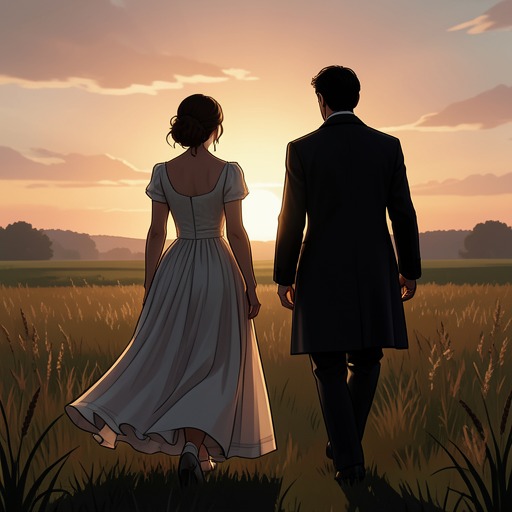
When Connie finally leaves for her journey with Hilda, the departure registers the house’s hold as well as her need to escape it. She looks back and sees Clifford sitting on the steps in his house-chair; Wragby is still her home in the circumstances of their marriage, even though she is leaving it. The familiar drive out of the estate passes through the spinney to the high road, while the colliers are returning from work. The scene brings together the two worlds that have defined Wragby: the family house and the industrial community beyond its gates. The departure does not erase the estate’s emotional claims, but it makes clear that the home which has organized Connie’s life can no longer contain it.