Wragby Wood
Lady Chatterley's LoverWragby Wood is the old, privately owned woodland beside Wragby Hall, a setting that changes from Connie’s temporary retreat into a place of repeated encounters with Oliver Mellors. Its meaning is divided: the trees and secluded paths offer quiet and the possibility of connection, while cut-over ground, mining works, and the sounds and lights of industry make clear that the wood cannot remain separate from the surrounding world.
Setting and Historical Character
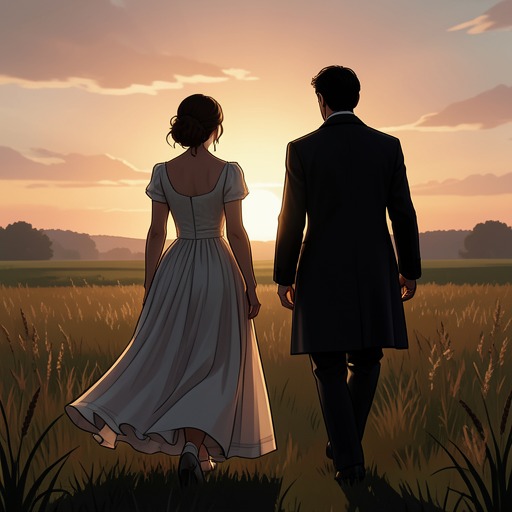
The wood is part of the estate park at Wragby, near Tevershall and its colliery. Wragby Hall stands among old oaks, but the industrial settlement is close: Tevershall village begins near the park gates, and smoke from the pit is visible from the house. The colliery’s effects reach beyond the view. Its noise carries to Wragby, the air can bear the smell of burning coal and other underground materials, and soot settles even on the flowers. The wood is therefore set within a landscape where an old estate and an expanding industrial district exist side by side, rather than in a genuinely isolated countryside.
The woodland is described as a remnant of the great forest associated with Robin Hood. Its broad riding was once an old route across the country, but now passes through private property, while the public road from Mansfield bends away to the north. This layered history gives the path a double character: it retains the shape of a thoroughfare, yet functions as a route through the Chatterley estate. Its private status does not erase the older landscape, but changes how that landscape can be entered and used.
Damage and Industrial Encroachment
The wood bears the marks of wartime cutting. Sir Geoffrey had felled trees there for trench timber, leaving a knoll bare where oaks had stood. From its crown Connie can see beyond the remaining trees to the colliery railway and the new works at Stacks Gate. The opening in the woodland is more than a change in scenery: it breaks the sense of enclosure and brings the industrial world into view. Connie does not tell Clifford what she has seen. Clifford, who regards the oaks as a family inheritance and wants the woodland protected, is angered by the cleared ground and blames Sir Geoffrey; he is having the area replanted.
The industrial presence is also audible and visible after dark. From the denuded knoll, Mellors can see lights at Stacks Gate and Tevershall, as well as the glow of furnaces, while the engines and traffic interrupt the wood’s quiet. His sense that seclusion is only an illusion makes the setting’s conflict explicit: the woodland may still shelter people, but it cannot shield them from the industrial system surrounding it. The text connects that pressure to the danger facing the wood and its vulnerable growth, rather than presenting nature as untouched or secure.
Connie’s Retreat and Return
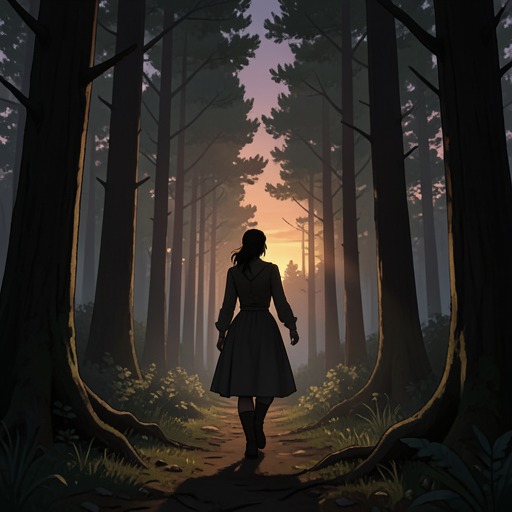
Connie initially uses the wood to escape Wragby. In a period of growing restlessness and physical decline, she rushes across the park, leaves Clifford behind, and lies in the bracken. The wood is her one refuge from the house and other people, but it is not yet a place of communion with nature: she recognizes that she has no real connection to it and treats it chiefly as somewhere apart. That distinction shapes her early visits. The trees provide distance from the household, but do not by themselves resolve the disconnection she feels.
Her solitude in the wood becomes habitual. She walks there alone, especially when the paths are too sodden for Clifford’s chair, and at first sees nobody. On one such walk, a gunshot startles and angers her; hearing a child cry, she changes course toward the sound and finds Mellors with a little girl. On another visit she goes to the keeper’s cottage to deliver Clifford’s message, but finds the door shut and receives no answer. The wood brings her near Mellors before she has formed a relationship with him, while its paths allow encounters to happen outside the routines of Wragby.
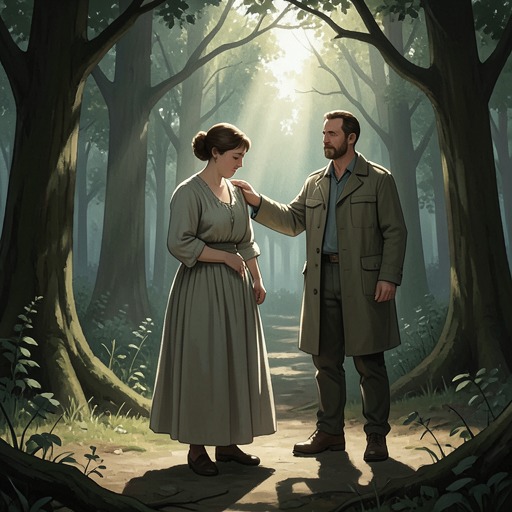
In spring, Mrs Bolton urges Connie to walk through the wood and see the daffodils behind the keeper’s cottage. The suggestion draws her out of a period of withdrawal and back toward the place and the keeper she had forgotten. Later, following the sound of hammering along a narrow track between young firs, Connie discovers a secluded clearing and the gamekeeper’s pheasant-rearing hut. Mellors is working there, and his evident wish to preserve his solitude makes the clearing a private working space as well as a place Connie has found. The hut and the surrounding paths become significant not because the wood is simply idyllic, but because their relative seclusion permits contact beyond the household’s view.
Paths, Clearing, and Meetings
The clearing becomes a destination for Connie. One evening, despite having guests at Wragby, she crosses the park and arrives as Mellors is closing the coops for the night. The small chickens give her a reason to speak, while the meeting also shows how strongly the place now draws her. On a later visit, she finds the cottage open and Mellors at home; after tea she leaves, but walks away troubled by their exchange and returns to the hut. When she goes with him, it is dark and he makes a small light in a lantern. These visits establish a recurring movement from the estate and its social obligations into the wood’s more private spaces.
The woodland’s layout affects who can enter and how. During an outing with Clifford, Connie accompanies his chair along the broad riding, but the narrow track leading to the hut is too small for it. As the chair continues toward the well, Mellors approaches Connie on foot with his dog behind him. The difference between the broad, navigable route and the restricted track gives the wood distinct zones: one accessible to Clifford’s chair and the other available only by leaving that route. Later, after tea at the cottage, Connie crosses back through the wood, aware that Mellors is watching her from the doorway. The path carries her away from him physically, but the meeting leaves her divided between resentment and a desire to make peace.
The wood also provides the route for a concealed nighttime visit. Connie prepares to leave Wragby while Clifford and Mrs Bolton are occupied, slips out after Betts has yet to lock up, and crosses the park in a dark-grey coat. The half-moon offers some light without making her conspicuous. Near the park gate she hears the latch click and realizes Mellors is there. The scene makes the boundary between house, park, and wood part of the practical circumstances of their meetings: reaching the woodland requires passing out of the controlled household and across the estate.
Narrative Significance
Wragby Wood gathers together the novel’s tension between refuge and exposure. For Connie it offers a way out of Wragby’s confinement, but her early retreat there is still marked by estrangement; only through repeated visits and encounters does it become associated with a developing bond. For Mellors, the woodland and his work in its clearing are bound to solitude, which Connie’s arrival both interrupts and changes. The setting thus carries a relational history as well as a physical one: paths and thresholds repeatedly bring the two characters into contact, while departures leave their connection unsettled.
At the same time, the damaged knoll and the visible and audible works at Stacks Gate prevent the wood from becoming an uncomplicated pastoral sanctuary. Its old trees, seasonal growth, and secluded tracks persist alongside private ownership, wartime felling, mining, and mechanized activity. The contrast is especially sharp when the secluded wood is set against the lights and engines beyond it. Wragby Wood offers the characters a place to meet and withdraw, but its exposed edges show that privacy and natural continuity remain vulnerable to the forces surrounding the estate.