
Mellors Between Classes
Lady Chatterley's LoverThis flow traces Mellors’s movement among working-class origins, military experience, and a chosen return to rural work, shaping his independence from class convention.
increasing Bearing strength in each event
 decreasing
Bearing strength in each eventdecreasingA Tevershall Childhood
A Tevershall Childhood
A working-class beginning
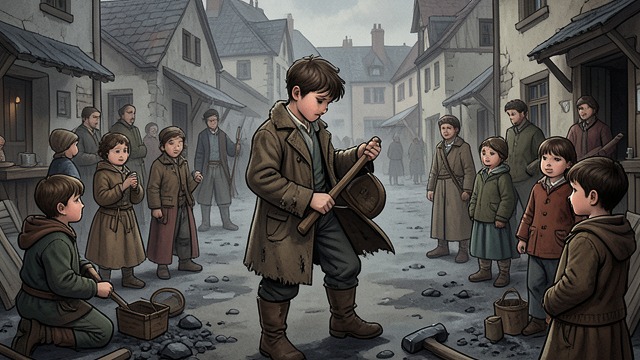
Oliver Mellors is born to a collier’s family and grows up in the Tevershall community. He shows intellectual promise, but his practical work and local identity remain tied to the mining district.
His early adulthood includes work as an overhead blacksmith and a marriage to Bertha Coutts. These experiences give him neither a settled social place nor lasting domestic peace.
The limits of belonging
Mellors is at ease with neither the local working-class habits he finds distasteful nor the manners of the upper classes. His judgments come from experience across more than one social environment.
This unsettled position later lets him resist simple class expectations. It also leaves him without the security that a stable place in either class might provide.
An Officer Returns Home
An Officer Returns Home
A different station
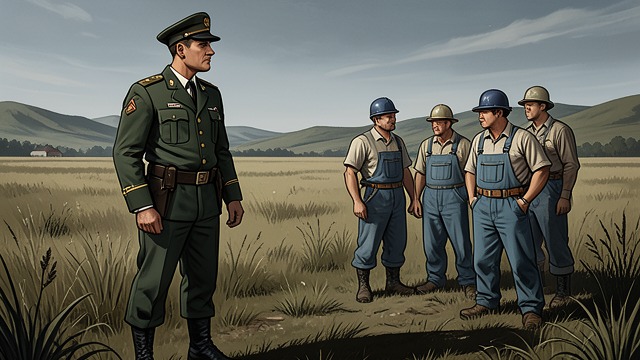
During military service, Mellors is favored by a colonel and receives a commission. He learns that he can lead men and is capable of moving beyond the position expected of a collier’s son.
After illness and the colonel’s death, he leaves military life and returns to England. He does not treat advancement as a permanent escape from the social world he knows.
Choosing a lower rank
Mellors returns to working life and becomes gamekeeper at Wragby. His broad dialect can be a deliberate choice, not proof that he lacks education or command of standard English.
The return gives him work and a measure of independence, but not a secure home or freedom from class judgments. His divided experience is central to his distinctness from a conventional working-class stereotype.
Work Without Advancement
Work Without Advancement
Building a practical future
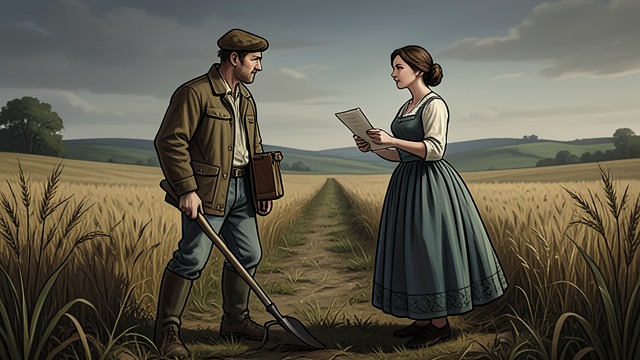
After losing his gamekeeper’s position, Mellors finds employment at Grange Farm. He learns agricultural work and earns wages while trying to arrange a divorce from Bertha.
The farm gives him a way to support himself rather than live entirely on Connie’s income. His practical labor is part of his effort to preserve dignity within a relationship marked by economic inequality.
A future held open
Mellors writes to Connie about his work and his fears for the industrial population. His hopes remain personal as well as political: he wants them to live together without surrendering their integrity to money.
The ending leaves his plans incomplete. He has found work and expressed commitment, but the future depends on legal and social conditions still unresolved.
Before Mellors joins the army
During Mellors’s wartime service and return to Tevershall
After Mellors leaves Wragby
