
Connie’s Changing Sense of Nature
Lady Chatterley's LoverThis flow follows Connie’s changing relation to the woods, from temporary refuge to a setting where bodily life and mutual recognition become possible.
increasing Bearing strength in each event
 decreasing
Bearing strength in each eventdecreasingA Refuge Without Belonging
A Refuge Without Belonging
Escape from the house
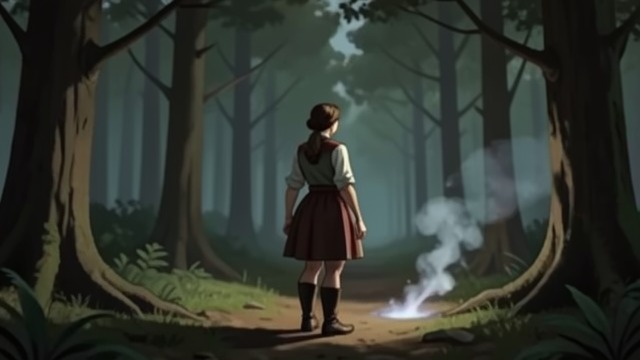
Connie walks into Wragby Wood to get away from Wragby Hall and the demands of Clifford’s daily life. The trees offer quiet, but at first she does not feel truly connected to them.
Her walks therefore provide distance rather than renewal. The wood is a place outside the house, not yet an answer to her inward disconnection.
A world under pressure
The woods bear their own marks of ownership and damage. Clearings cut for wartime timber expose the industrial world that Clifford would rather keep beyond his inherited sanctuary.
Nature is neither a simple cure nor a protected ideal. Its vulnerability anticipates the novel’s larger struggle over what can remain alive within a mechanized society.
The Hut and the Hens
The Hut and the Hens
A small refuge becomes vivid
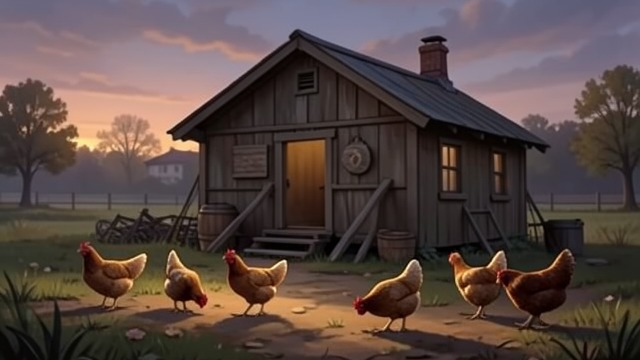
Connie returns to the keeper’s hut and watches the hens brood over eggs. Their concentrated bodily care moves her because it expresses a warmth missing from her life at Wragby.
When a chick appears, she experiences its fearless new life as an intense contrast to her own feeling of desolation. The clearing begins to represent living processes rather than mere solitude.
A relationship takes shape
Oliver Mellors shares her attention to the chicks, and their guarded distance begins to soften. His care for the birds becomes one of the first forms of intimacy they experience together.
The hut is still his private workplace, and Connie’s presence can intrude on it. Their growing closeness arises through negotiation as well as desire, preserving the tension between her rank and his independence.
The World Enters the Wood
The World Enters the Wood
A fragile intimacy
Connie and Mellors find a temporary space for tenderness in the wood and the cottage. The natural surroundings make their contact feel restorative, but they do not place the lovers beyond social reality.
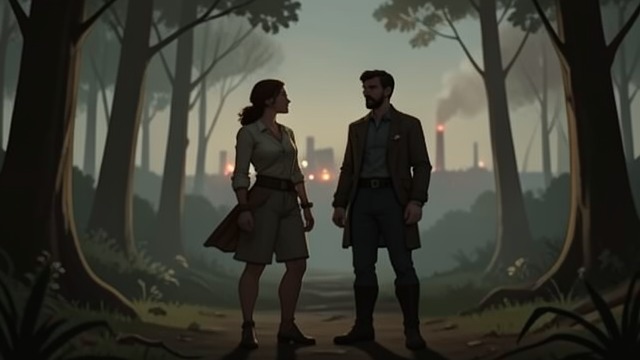
Mellors repeatedly notices industrial lights, engines, roads, and the noise of work. The supposed solitude of the forest cannot fully exclude the world that threatens it.
Nature without escape
Connie wishes that the world would disappear so the two of them could live together undisturbed. Mellors answers that it will not disappear, bringing their private hope back into contact with practical conditions.
The landscape offers renewal without guaranteeing protection. Their challenge is to carry bodily warmth into a world that continues to pressure both people and place.
During Connie’s early years at Wragby
In spring, after Connie receives a key to the hut
Near the end, when Connie and Mellors discuss separation and the future
