
Tradition, Authority, and Social Function
Lady Chatterley's LoverThis flow follows the novel’s competing accounts of inherited authority, from Clifford’s defense of hierarchy to Connie’s refusal to treat rank as moral entitlement.
increasing Bearing strength in each event
 decreasing
Bearing strength in each eventdecreasingClifford’s Theory of Rule
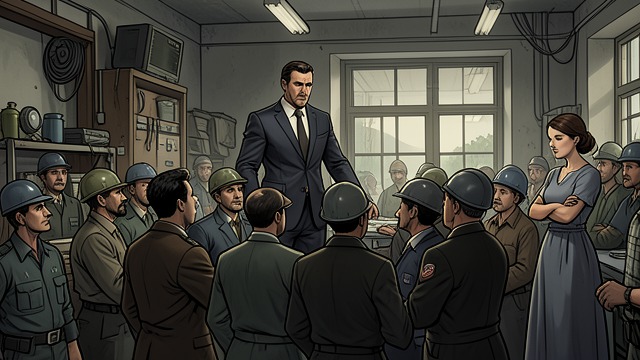
Clifford’s Theory of Rule
A defense of hierarchy
Clifford argues that society depends on people performing different functions and that ownership gives industrial leaders responsibility for directing work. He regards the masses as unfit to govern themselves.
His position combines paternal duty with a belief in permanent social division. He sees industrial management as a way to maintain order and employment, even when workers have little power over the terms.
The limits of his authority
Connie questions whether Clifford’s rule gives anything genuinely generous to the people whose labor sustains him. She challenges the claim that class difference is simply fate.
The debate exposes a gap between authority and moral legitimacy. Clifford can possess property and command resources, but those powers do not prove that he understands or serves the people he governs.
Mellors Defies the Rank
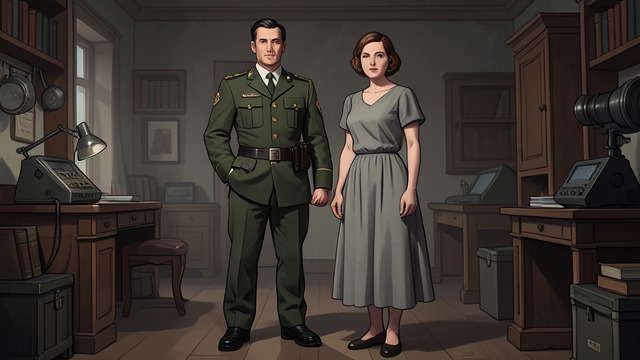
Mellors Defies the Rank
A refusal of deference
When Hilda questions Mellors’s conduct and language, he refuses to perform the humility she expects from a working man. He insists that he has his own continuity and does not exist merely as an instrument of Connie’s social world.
His confidence unsettles Hilda because he does not accept her political sympathy as a reason to grant her authority over him. He judges her through the same independence she expects for herself.
Class crossed, not erased
Mellors’s education and military experience complicate any simple division between gentleman and servant. Yet his employment and origins still make him vulnerable to dismissal and public judgment.
The confrontation reveals that personal distinction can challenge a hierarchy without abolishing its material power. Mellors can refuse deference, but he cannot prevent Clifford from ending his job.
A Breakdown of Rule
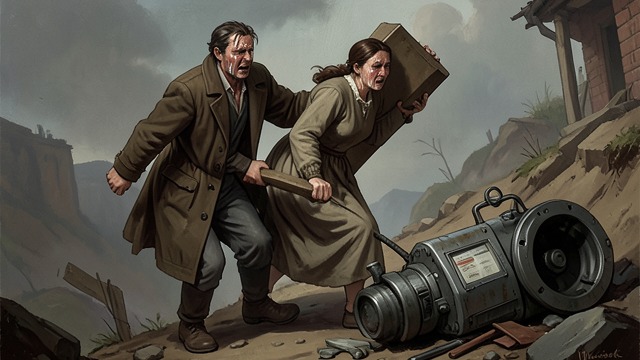
A Breakdown of Rule
Dependence made visible
Clifford’s chair cannot climb the hill without Mellors’s physical help. Clifford orders him not to push, but the machine’s failure makes dependence on the keeper unavoidable.
The scene turns social theory into action. The man who claims to rule the workers cannot make his own movement possible without their labor.
Connie rejects the performance
Connie sees Mellors strain under the chair and joins him in pushing. Her anger at Clifford’s lack of sympathy becomes a direct judgment on the social role he claims.
The broken machine does not reverse the class order. It briefly reveals its material basis and its human cost, strengthening Connie’s willingness to oppose Clifford rather than protect his dignity.
During Clifford’s walk and conversation about the mines
During the conversation with Hilda at Mellors’s cottage
During the chair’s failure on the wooded slope
