Grange Farm
Lady Chatterley's LoverGrange Farm is a working farm in Old Heanor that becomes a provisional home and training ground for Oliver Mellors after Connie leaves Wragby. Owned by a colliery company rather than run as a private concern, it joins the industrial district’s economy to the agricultural labor Mellors hopes will sustain a shared life with Connie.
Setting and Ownership
In a letter dated 29 September and headed Grange Farm, Old Heanor, Mellors explains that the farm belongs to Butler & Smitham Colliery Company. The company uses it to raise hay and oats for pit ponies, though the property also keeps cows and pigs. The farm therefore sits between agriculture and mining: its fields supply the collieries, while its daily work gives Mellors a route into farming.
Mellors describes the surrounding area as a colliery district like Tevershall, but prettier, and notes that its pits are working badly. The farm is not an escape from the industrial world so much as a different vantage within it. Its agricultural purpose is bound to the mines, even as its animals and seasonal work offer a contrast to the district’s failing pits and unsettled prospects.
Mellors’s Work and Training
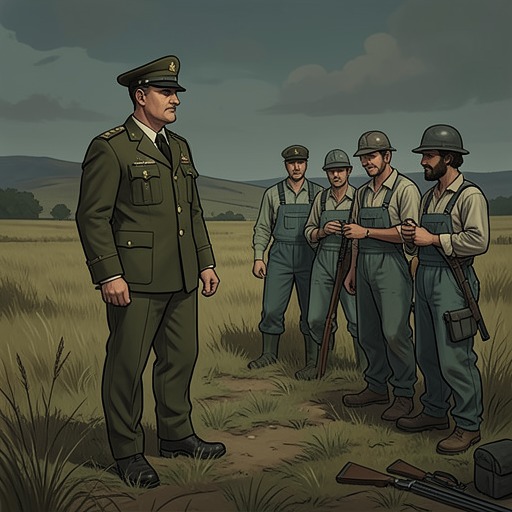
After Connie leaves Wragby with Hilda for Scotland, Mellors goes into the country and takes farm work. The arrangement is explicitly preparatory: he is to spend six months farming, learning as much as he can before the following Easter. He gets the position through a former army acquaintance, Richards, now an engineer for the company. The farmer, Rowley, gives him as many different jobs as possible so he can gain practical experience.
Mellors earns thirty shillings a week as a laborer. The wage makes the arrangement more than an experiment or a period of leisure: he is earning his own living while developing the skills he expects to need. His plan is that he and Connie may eventually have a small farm of their own, with her capital helping to establish it but his own labor and energy essential to its upkeep.
Animals and the Seasonal Round
Mellors finds farming agreeable without expecting it to inspire him. He is already accustomed to horses, and he takes particular comfort in working among the cows. While milking, he rests his head against a cow’s side and feels solaced. The farm’s living routines provide a bodily ease unlike the strained social and industrial settings he describes elsewhere.
The farm has six fine Hereford cattle, alongside cows and pigs. The oat harvest has just ended by the time Mellors writes; he enjoyed the work despite sore hands and considerable rain. These details give the farm a calendar of tangible labor—milking, tending animals, and bringing in the crop—rather than the abstract promise of a new life. The work is neither effortless nor romanticized, but its physical demands are part of what makes the proposed future possible.
A Temporary Base for a Shared Future
Grange Farm is a staging point, not the couple’s intended permanent home. Mellors is working there to learn farming and prepare to make a living independently, while he and Connie wait for spring, the birth of her baby, and the possibility that he can obtain a divorce. Whether Connie obtains her own divorce or not, the plan is for Mellors to seek his; the farm work gives their uncertain future a practical shape and timetable.
The farm’s significance lies in this combination of dependence and preparation. It belongs to a colliery company and serves the needs of pit ponies, yet Mellors uses its work to imagine a livelihood outside his former position at Wragby. Its ordinary labor—crops, cattle, rain, wages, and learning—makes the hope of a small farm concrete without resolving the legal and personal uncertainties the couple still face.