Mellors Works on a Farm to Prepare for a Life with Connie
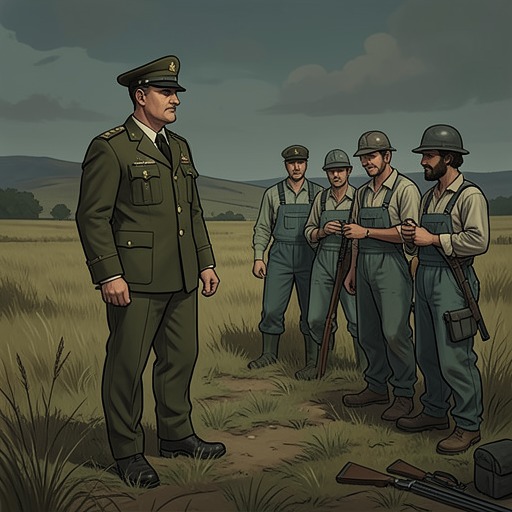
Lady Chatterley's LoverOliver Mellors’s farm work is the practical answer to the separation imposed on him and Connie Chatterley as they prepare to make a life together. While Connie waits for the birth of their child and the possibility of divorce, Mellors earns a living, learns agricultural work, and imagines a small farm they might run together. The plan makes their future depend not on romantic intention alone but on work, patience, and uncertain legal and economic conditions.
Separation and a practical plan
After telling Mrs Bolton that she cares for Mellors and asking her to let her know if Sir Clifford Chatterley might agree to a divorce, Connie leaves Wragby with Hilda and goes to Scotland. Mellors goes into the country and takes work on a farm. Their separation is therefore also a period of preparation: he is to seek his own divorce if possible, whether or not Connie secures hers, and spend six months learning farm work. The proposed end point is a small farm of their own, with Connie’s capital helping to establish it and Mellors supplying the labor and earning his own living.
The arrangement is deliberately provisional. They expect to wait until spring, the baby’s birth, and the return of early summer before they can be together. Mellors does not present the farm as a guaranteed solution or as an effortless escape. He expects to have work to do, even hard work, and treats self-support as part of the future they are trying to build. The relationship’s promise thus takes material form in a job, a period of training, and a plan that must survive both time apart and the unresolved question of divorce.
Work, wages, and lodging
In a letter dated 29 September from Old Heanor, Mellors explains that he secured a position through Richards, a company engineer he had known in the army. The farm belongs to Butler & Smitham Colliery Company, which uses it to raise hay and oats for pit ponies. It is not a private farm, though it also keeps cows and pigs. Mellors earns thirty shillings a week as a laborer. The farmer, Rowley, gives him as many different jobs as possible so that he can learn before the following Easter. The seasonal limit makes the work a defined apprenticeship as well as immediate employment.
Mellors lodges in an old cottage in Engine Row. The household includes a tall, bearded engine-driver who is very chapel, his wife, who is fond of superior manners and formal English, and their long, gawky daughter, training to be a schoolteacher. They lost their only son in the war, a bereavement Mellors says has left a hole in them. He sometimes helps the daughter with her lessons, and describes the people as decent and kind to him. The lodging gives his working life a temporary family setting, but it does not displace Connie: he remarks that he seems more coddled there than she is, while insisting that his purpose is to prepare for their life together.
Learning a different kind of labor
Mellors says he likes farming, although he does not expect it to inspire him. He is accustomed to horses, and the cows have a soothing effect. He describes milking with his head against a cow’s side as consoling. The six Herefords are among the specific features of the new work that give his account its settled, physical character. The oat harvest has just ended; he enjoyed it despite sore hands and considerable rain. These details make the training more than an abstract plan: it is repetitive bodily labor, learned through contact with animals and the discomforts of a wet harvest.
The account also distinguishes this work from the industrial world Mellors has left behind. The farm is tied to a colliery company and supplies pit ponies, so it is not outside the mining economy. Yet its animals and seasonal tasks offer a different rhythm from the pits. Mellors says he gets on with people while generally not paying them much attention, and the letter does not suggest that he has found a permanent community. The job is useful precisely as a means of learning and earning while he waits, not as proof that the surrounding economic order has improved.
Industrial decline and the meaning of waiting
Mellors compares the district to Tevershall, though he considers it prettier, and reports that the pits are working badly. In the Wellington he talks with miners who complain but, in his view, are unlikely to change anything. Their proposals include nationalizing royalties or the whole industry, and finding new uses for coal, as Sir Clifford Chatterley is attempting to do. Mellors doubts that new uses can solve the general problem: whatever is produced still has to be sold. He sees apathy among the men, little conviction in young speakers who invoke a Soviet, and a pervasive sense that the industrial order is doomed. His farm employment therefore unfolds not against a stable background but amid the insecurity of a mining district whose workers seem to have no persuasive route forward.
In his letters, that social pessimism sharpens the emotional stakes of the separation. Mellors fears the force of money and collective acquisitiveness, which he imagines as a threat to anyone trying to live beyond money. Against that threat he holds to the possibility of living with Connie and to what he calls the little flame between them. He presents their time apart as a chastity that follows intimacy, not as the end of their bond; the image gives patience an active, sustaining meaning. His longing is not concealed: he says that if he could sleep with his arms around Connie, he would have no need to write. Yet he believes the separation may be wiser and asks them not to become agitated by uncertainty.
The farm plan remains conditional at the point the account ends. Mellors has work, lodgings, and a course of practical learning, but he has not established a farm with Connie. He has not heard from Bertha Coutts, does not know why she failed to appear at the divorce, and supposes that keeping quiet until March may leave him free. He likewise expects that Sir Clifford may eventually want to cast Connie out, but cannot make that happen in advance. The future is held between legal uncertainty and deliberate preparation: Mellors works toward an independent livelihood while maintaining that the relationship, rather than the farm itself, is what gives the waiting its purpose.