The social-function theory of ruling and serving classes
Lady Chatterley's LoverThe social-function theory of ruling and serving classes is Clifford Chatterley’s account of why hierarchy should persist: society, he argues, depends on opposed roles, with some people directing industry and others serving within it. He presents those roles as functions shaped by upbringing and environment, not as proof of aristocratic blood. Connie Chatterley tests the theory against the material conditions of Tevershall and the authority exercised over its workers. Their exchange exposes the divide between Clifford’s language of responsibility and Connie’s insistence that industrial power has helped produce the conditions it claims to manage.
Origins in Clifford’s Social World
The theory grows out of a circle in which Clifford’s intellectual contemporaries treat mental life as the principal measure of a person. Their discussions place work, marriage, and sexual affairs among private matters that need not concern outsiders. That separation of public thought from ordinary life provides a context for Clifford’s later argument: social functions can be discussed as an organizing principle while the intimate and material consequences of those arrangements are kept at a distance.
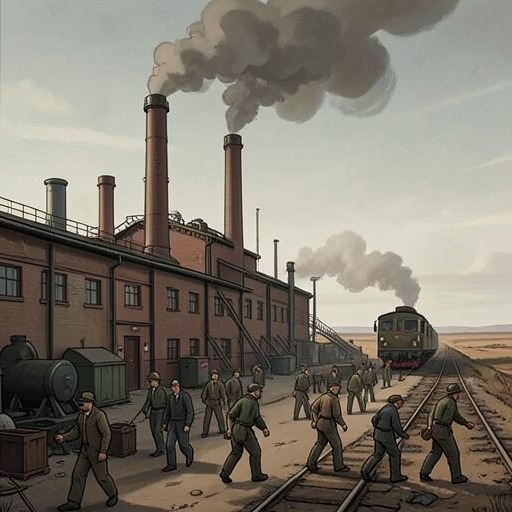
Clifford’s interest in industry gives the theory practical force. Under Mrs Bolton’s influence, he turns toward the mines and begins to feel that he belongs to the enterprise. He visits a working, descends in a tub, and studies a coal seam by the light of the underground manager’s torch. He then returns to technical books, government reports, and German writing on mining and coal chemistry. The practical work restores his sense of agency: he questions managers and engineers and imagines ways to pull Tevershall out of its difficulties. In this setting, authority is not merely a social title; it is the power to direct production and its workers.
Ownership, Work, and Responsibility
In conversation with Connie, Clifford argues that ownership should be used to sustain industry and provide employment, rather than simply surrendered in the name of helping the poor. He treats poverty as an undesirable outcome, not a virtue, and says that someone must direct the industrial system. When Connie challenges the disparity between people, he describes it as part of the way things are; when she questions who should lead, he identifies the owners and managers of industry. His position casts hierarchy as practical necessity and stewardship at once: the ruling class is entitled to direct the system, but is also meant to take its responsibility seriously.
Clifford makes that responsibility hereditary in social function rather than biological descent. He says a child born to any healthy, normally intelligent man could be made into a competent Chatterley if raised among the ruling class. Conversely, the children of kings and dukes, placed among the masses, would be shaped by that environment. In his account, upbringing adapts individuals to a role; the aristocracy exists through its collective function, just as the working population is made by its own. He therefore rejects the idea that ruling status rests on superior blood, while retaining a sharp distinction between those who rule and those who serve.
Connie’s Challenge and the Industrial Evidence
Connie questions whether ownership is necessary to help people and whether the owners actually meet the obligations Clifford assigns them. She points out that Wragby and Shipley sell the services and benefits he describes at a profit. In her view, a commercial transaction is not the same as generosity or sympathy. She also connects workers’ circumstances to the owners’ industry: the miners live through the coal mine’s demands, and their lives, like those of their employers, have been industrialized. Clifford, by contrast, maintains that people are not forced to work for him and compares their choices to creatures finding their own food. Their disagreement is thus not only about who should rule, but about whether economic dependence can be treated as freely chosen.
The changing condition of the collieries gives that disagreement a local scale. Tevershall and New London are the two pits under discussion. Tevershall, once a famous and profitable mine, has passed its best days; New London is struggling in the bad times. Workers have left for Stacks Gate and Whiteover, where newer works offer different prospects. Mrs Bolton describes Stacks Gate’s chemical works and reports that chemical by-products may bring in more money than coal. She also describes mechanized extraction and the fear that machines will displace men. The account makes Clifford’s promise of employment difficult to separate from the changes that threaten existing jobs and communities.
Connie also asks who made Tevershall ugly and its inhabitants’ lives hopeless. Clifford answers that the people built their own town and must live their own lives. She counters that the mine organizes those lives. This dispute gives the theory its central weakness: Clifford speaks of distinct social functions as though they were natural arrangements, while Connie asks how ownership, work, and industrial change have helped create the conditions being defended as fate.
Rule, Service, and the Test of Conduct
Clifford’s account becomes most explicit when he calls for rulers rather than popular self-government. He regards the masses as requiring rule and claims that his physical impairment does not prevent him from doing his share. Connie asks whether he can rule well; his answer is tied to his confidence in his mind and will, not his ability to walk. He describes political liberty, education, sanitation, health conditions, books, and music as things the great houses have provided for the colliers. Connie replies that these provisions are now sold for profit and asks whether the ruling class can claim responsibility while disavowing its role in producing industrial misery.
The practical test arrives when Clifford’s motorized chair breaks down in the wood and a keeper is called to help. Clifford treats the keeper’s assistance as a paid service, citing the man’s wages and house. Connie objects to his inconsideration toward the keeper, who has been ill and is not strong, and questions what Clifford thinks wages purchase. The moment brings the abstract division of ruler and servant into an immediate relation between two people: Clifford expects service as an entitlement of employment, while Connie insists that payment does not erase the worker’s humanity or the employer’s obligations.
The novel also places these ideas beside the redistribution of care within Wragby. Connie had performed Clifford’s intimate daily care willingly, but the arrangement burdened her, and she felt that her own body and freedom were being taken for granted. Mrs Bolton eventually takes over much of that work, including helping Clifford dress and shave him. He becomes more comfortable receiving such services from her than he had been from Connie, while privately resenting Connie’s withdrawal from the former intimacy. Mrs Bolton’s practical authority over his daily needs unsettles any simple division between a ruling gentleman and a serving woman: she is employed by him, yet her competence gives her influence over his routines and dependence.
Significance and Limits
The social-function theory offers Clifford a coherent justification for his renewed industrial authority. He can regard himself as an able manager whose role is to preserve production and direct other people, even as the mines face decline and mechanization. His argument rejects inherited blood as the basis of aristocracy but does not reject hierarchy; instead, it relocates hierarchy in social function, upbringing, and the organization of work.
Connie’s objections prevent that account from standing as a neutral description. She questions whether ownership serves workers or profits from them, whether employment is genuinely voluntary under industrial conditions, and whether the ruling class accepts the consequences of the system it controls. The broken chair makes the argument concrete, while the miners’ changing prospects show its economic stakes. The theory therefore exposes a tension rather than resolving it: Clifford speaks of rule as duty and service as social necessity, but the evidence of labor, care, and unequal power leaves open whether his version of responsibility can justify the hierarchy it preserves.