Corwin Correspondence
Lady in the LakeThe Corwin Correspondence is the exchange of letters between Maddie Schwartz and Stephen Corwin, the man who was the last person to see Tessie Fine alive. What begins as Maddie's audacious, almost reckless, attempt to insert herself into a murder case becomes the instrument of her transformation from a separated housewife into a journalist at The Baltimore Star. The letters are both a key that unlocks a career and a mirror reflecting the dangerous intimacy that grows between a woman desperate for purpose and a man accused of a terrible crime.
Origins and Maddie's First Letter
The correspondence begins with a single, bold act. After finding the body of Tessie Fine, Maddie feels a profound and unsettling connection to the man who saw her last. On her way back to her apartment, she gets off the bus two stops early to visit a stationer's on Charles Street, where she buys a box of simple cream vellum stationery. She drafts the letter several times in a notebook before committing to the page, covering it with her fine, bold handwriting. The letter is direct and personal: "Dear Mr. Corwin, I am Madeline Schwartz, the woman who found the body of Tessie Fine. As a result, I feel connected to you, for better or worse. You were the last person to see her alive, I was the first person to see her dead." She walks to the main post office to ensure its swift delivery, and it never occurs to her that he might not write back, because men almost always did what Maddie wanted them to do.
Stephen Corwin's Response
Stephen Corwin's first letter arrives with a photograph of her. He sees her as "a nice lady" who wants to know his side of the story, and he is struck by her interest in him. His response is shaped by his own fraught circumstances: he insists he didn't really confess, that he just stopped talking after his arrest. He reflects on the aquarium sand and the fact that people knew she had gone into the store, details that made silence his only defense. When he was finally allowed a phone call, he didn't waste it on a lawyer but called his ma, knowing she would make the arrangements. His mother told him he was stupid, as she did almost every day, though he insists she doesn't mean it, that she's just high-strung and has to take pills. He reveals that he wasn't a man who loved fish and snakes, but a guy who needed a job, hired by a store owner who needed someone to work Saturdays because Jews aren't the only people who buy fish and snakes.
The Letters as a Career Lever
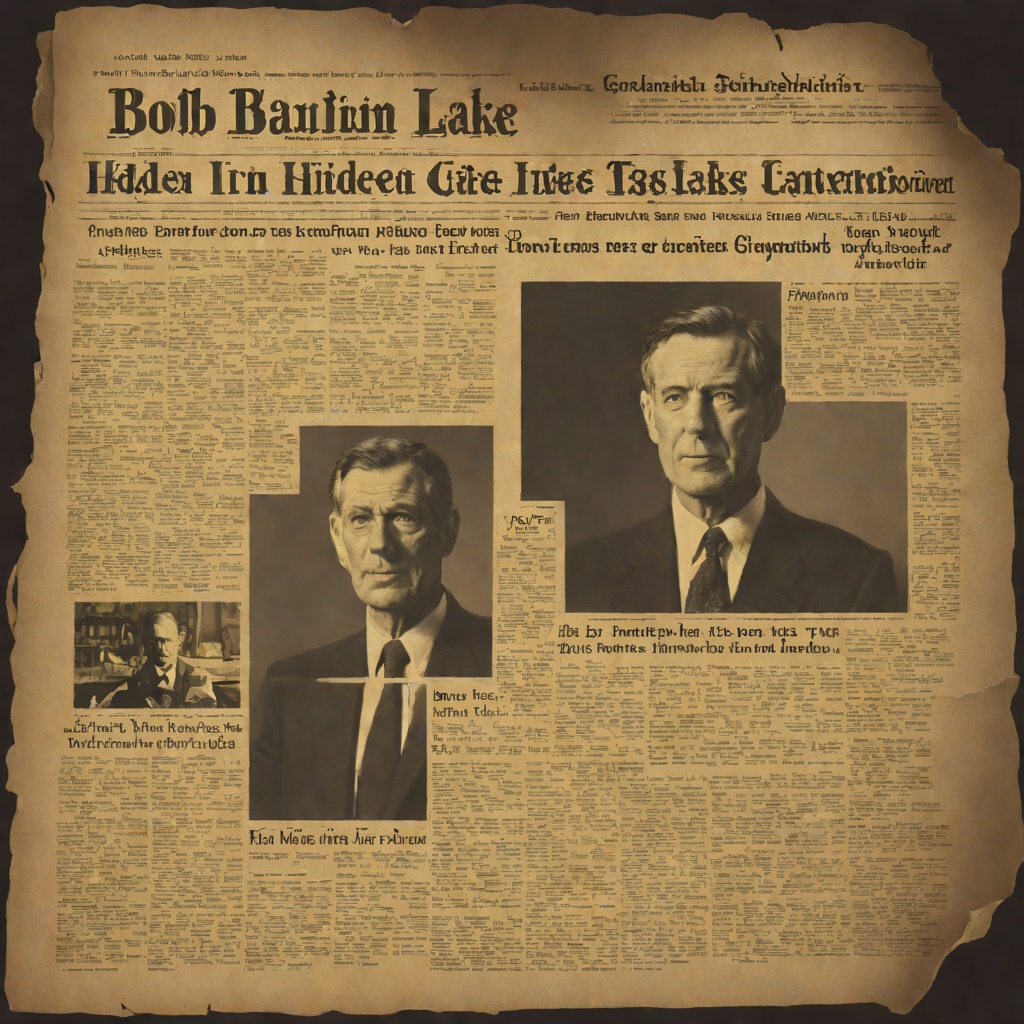
The correspondence becomes Maddie's most powerful tool. When she seeks a job at The Baltimore Star, she presents her credentials to Bob Bauer: a sheaf of papers tied with string, the letters from Stephen Corwin. She tells him, "These are letters. From Stephen Corwin. I wrote him about the murder of Tessie Fine and he wrote me back. Twice." The room does not go quiet, but something shifts; other people begin listening. Mr. Bauer notices and asks her to take a walk with him, leading her to a corridor and down a back staircase to ask if he may see them. The letters are the proof that Maddie is not merely a curious housewife but someone who can reach the people at the center of a story, someone with the audacity and persistence that journalism demands.
The Correspondence's Place in Maddie's Transformation
The letters are inseparable from the larger arc of Maddie's reinvention. They are born from the same restless energy that led her to stage a false burglary, shoving her engagement ring into the dirt of a potted African violet before running into the street screaming for help. They belong to the same period in which she began a clandestine affair with Ferdie Platt, a Negro patrolman who would call before coming so she could sneak down and leave the lower door unlocked, arriving after dark and disappearing in the early morning hours, always wearing his uniform. The correspondence is another kind of risk, another bid for a life beyond the apartment on Gist Avenue where the neighbors snubbed her. It is the intellectual and professional counterpart to her physical and emotional gambles, the one that finally gives her a place in the world.
The Correspondence's Dark Echo
The letters also foreshadow the violence that surrounds the case. The same impulse that led Maddie to write to a murder suspect—the belief that she could connect with anyone, that her interest was a kind of power—is echoed in the attack by Angela Corwin, who stabs Maddie with a steak knife while hissing, "Stupid, stupid, stupid. I was being kind, helping him put that girl out of her misery. I'm trying to be kind to you." The correspondence, which began as an act of connection, is part of a web of obsession and violence in which kindness and cruelty are indistinguishable. Maddie's letters to Stephen Corwin opened a door, but they also revealed how easily the desire to know another person's story can become a dangerous entanglement.