John Diller
Lady in the LakeIdentity and Introduction
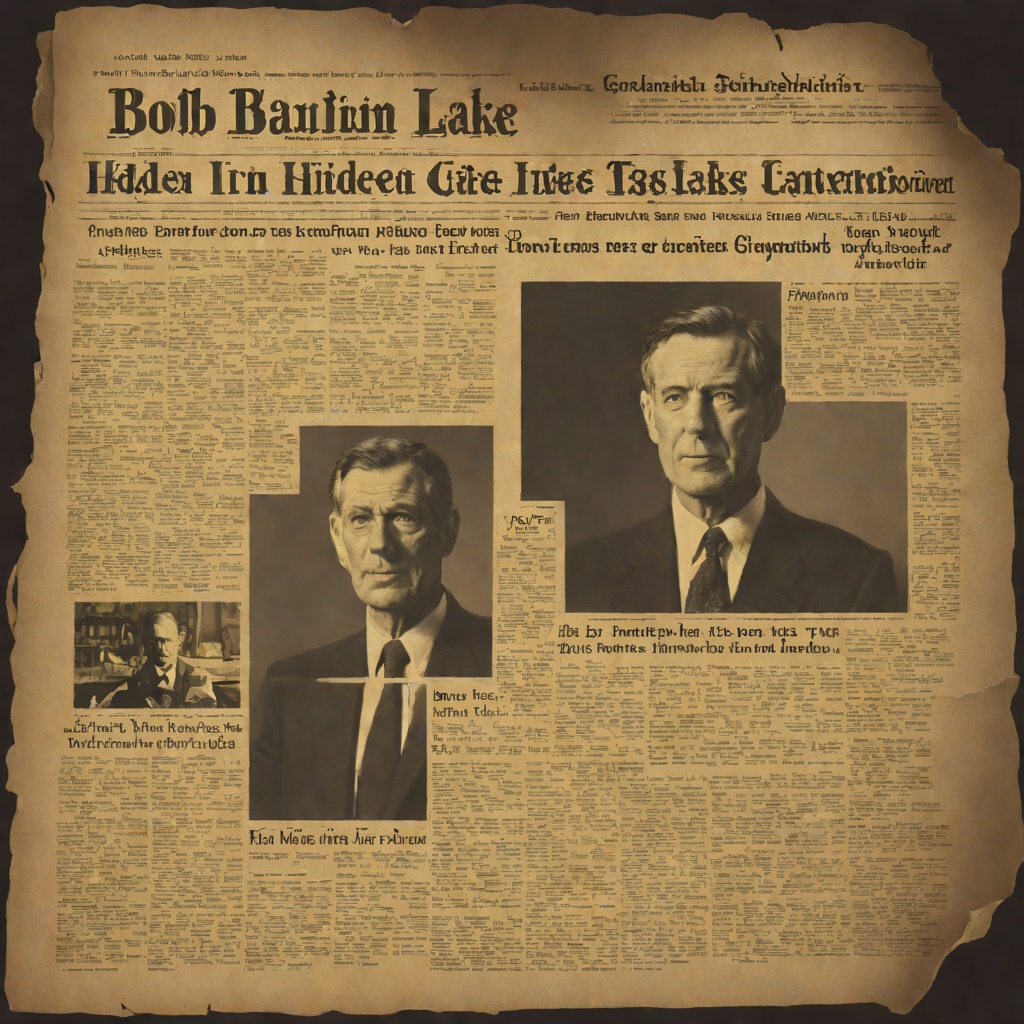
John Diller, sometimes called Jack Diller, is the veteran police reporter for The Baltimore Star, a man so deeply embedded in his beat that he has become "more cop than reporter." He has covered the police beat for thirty years, a tenure that his coworkers mock behind his back with the nickname Deputy Dawg, suggesting he has "gone native." Diller himself is acutely aware of this reputation; he knows his colleagues say he cannot "write his way out of a paper bag," which is precisely why he remains on the cop beat after three decades. In the newspaper hierarchy, the cop beat is supposed to be a way station, a place one passes through on the way to a more serious career, and Diller's permanence there marks him as a figure of the old guard, someone who has chosen the gritty immediacy of the crime scene over the prestige of a byline in the features section.
The Cop Reporter at Work
Diller's professional identity is defined by his intimate, almost proprietary relationship with the police and the streets they patrol. At the scene where Tessie Fine's body is discovered, he walks down the street with the ease of a man who belongs there, and when the officers tell him to get back, he is amiable, asking only, "But is it Tessie Fine? Just tell me that." He manages to get confirmation, though not from the officers directly, demonstrating his deep network of sources and his ability to work the system. His presence at the scene is a reminder of the beat's daily reality: the red-and-blue lights visible for miles, the reporters kept at the end of the street, and the grim task of identifying a child's body. Diller's casual professionalism in the face of such horror underscores his long familiarity with the worst of the city.
A Mentor's Skepticism
When Maddie Schwartz first arrives at the police headquarters press room, it is Mr. Bauer who drops her off "like a careless parent taking his child to the first day of kindergarten," but it is Diller who represents the world she is entering. He insists that there is one female cop reporter, Phyllis Basquette, who works for the other afternoon paper, The Light, a detail that both acknowledges the possibility of a woman in the role and underscores how rare it is. Diller's skepticism toward Maddie's ambitions is blunt and revealing. He watches her, a "little filly," thinking she is going to make a career writing about "some dead Negro," and he does not believe she understands the game. He contrasts the Star with the "fancy-pants Beacon," with its foreign bureaus and eight-man staff in DC, making clear that even at a working-class paper, the cop beat is a place to pass through, not a destination. His warning is not malice but the weary wisdom of a man who has seen many young reporters come and go, and it frames Maddie's determination to prove him wrong.
The Clash Over the Confession
Diller's most significant conflict with Maddie comes over her handling of Thomas Ludlow's confession. When the city editor treats them like "two squabbling schoolchildren," Diller is furious, fuming and sputtering "like Rumpelstiltskin, on the verge of tearing himself apart." He confronts Maddie directly, claiming to know who told her about the confession and dismissing the source as "no source," accusing her of risking the paper's integrity by trusting him. Maddie defends herself, insisting, "Except I was right. Tommy Ludlow did confess." The city editor sides with her, noting it was a holiday weekend, she had a tip, she ran with it, and it is good. The exchange reveals Diller's deep-seated fear: that a young reporter's ambition and a questionable source could undermine the very credibility he has spent thirty years building. His anger is not just about the story but about the erosion of the old rules of the trade, where a reporter's word and a source's reliability were the only currency.
The Man Behind the Badge
Beyond the newsroom, Diller's personal life is a study in the same contradictions that define his professional one. He is the brother of Judith Weinstein, who describes him as a sweetheart, unlike their brother Jack, whom she calls "a bit of a jerk." Judith tells Maddie that Donald is a bachelor, "content to be one," and that he is very active in politics, working as the hard-driving chief of staff for a man who could be governor in eight years. Diller himself reflects on his life with a mixture of pride and resignation. He tells people he is married to his job, too hard-driving for a romantic life, and he admits this is "truer than most things you could say about me." He would not have time for a family even if he wanted one. Yet his private thoughts reveal a deeper truth: he is a gay man living in a world where his preferences are known but never spoken of, where people make jokes about "Baltimore bachelors" and ignore the obvious. He has two friends, Ron and Bill, who share a house in an out-of-the-way neighborhood, and everyone thinks they are just two swinging single guys. Diller reflects on how careful he has to be, noting that he was in his teens before he figured it out and in his twenties before he dared to act on his desires, while men like Ezekiel Taylor just have to avoid embarrassing their wives. His life is a constant performance, a burden that lifts only in a discreet place like Leon's, where he can finally be himself, "in total." He dreams of having a nickname like Harry "White Shoes" McGuirk, as long as it is not "fagalah." This hidden self, the man who must hide his identity to survive, gives his professional caution a personal edge; he knows what it means to live with secrets and to protect them at all costs.
Change and Legacy
Diller's trajectory in the novel is one of stasis against a backdrop of change. He remains the cop reporter, the Deputy Dawg, even as Maddie rises from a newspaper clerk to a columnist at The Beacon, one of its first female columnists with license to write about the world at large. His warning to her about the cop beat being a way station proves both right and wrong: she passes through it, but she does not leave it behind entirely. The novel's later years show Maddie as a grandmother, still looking good, with a daytime arrangement with a pompous old judge and a nighttime one with a forty-year-old gardener. Diller, by contrast, is a figure of the past, his world of police headquarters and crime scenes giving way to a new era of journalism. Yet his impact lingers. His insistence on the integrity of sources, his fear of a young reporter's recklessness, and his own hidden life all contribute to the novel's meditation on the cost of secrets and the price of ambition. He is a man who has spent his life reporting on others' stories while carefully guarding his own, and in that, he is a mirror to Maddie herself, who also learns to keep her own counsel and to let some lies lie.