Tessie Fine
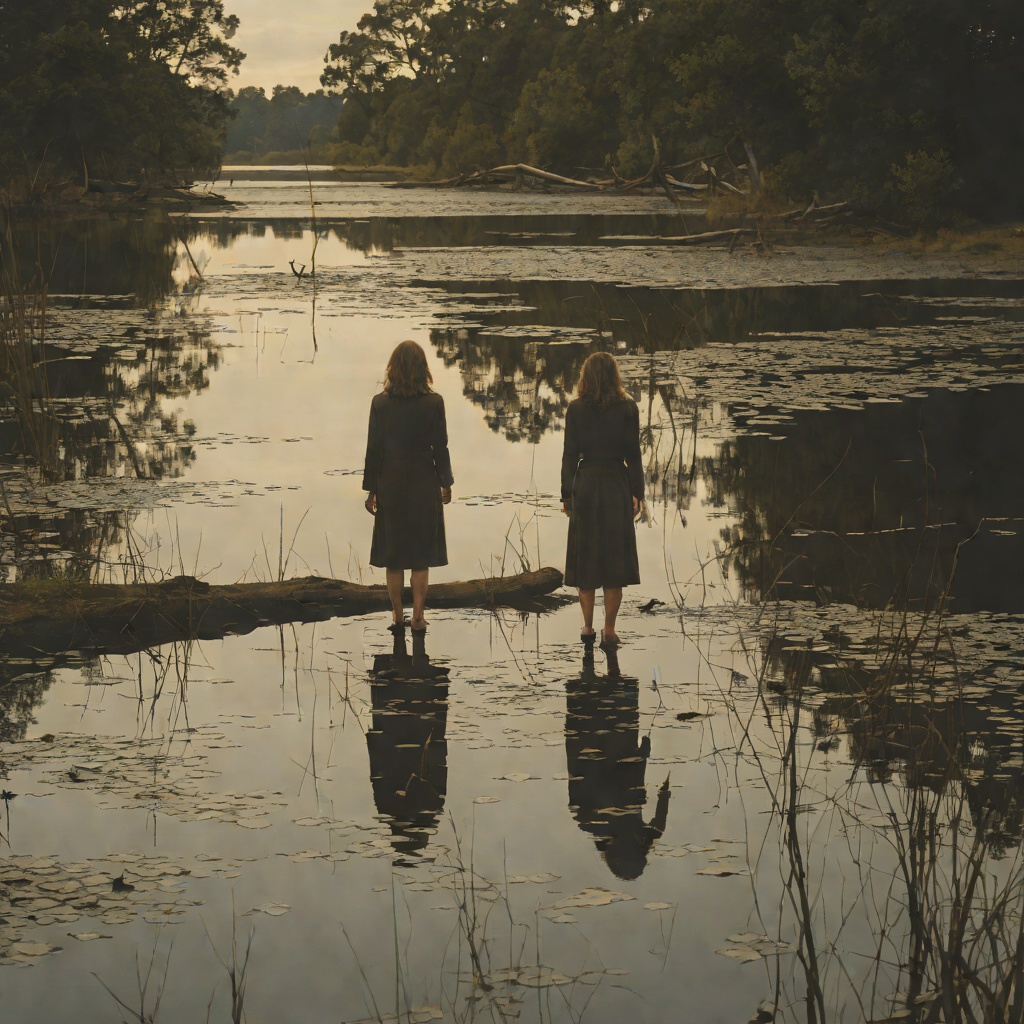
Lady in the LakeTessie Fine is the eleven-year-old white schoolgirl whose disappearance and murder in Baltimore in February 1966 set the novel's plot in motion and expose the racial double standard that governs whose deaths matter. She is the first victim whose loss is registered immediately and loudly by the city, in stark contrast to the fate of Cleo Sherwood, the Black woman whose disappearance goes almost entirely unnoticed. Tessie's case becomes Maddie Schwartz's first taste of investigative journalism, the moment that transforms a restless housewife into a woman who will eventually become a newspaper columnist. Her death, and the disparity between how it is treated and how Cleo's is ignored, frames the novel's central moral question: are you really missing if nobody misses you?
Identity and Background
Tessie Fine was eleven years old and white, a fact the narrative makes pointedly explicit when contrasting her case with that of Cleo Sherwood. She was pretty and young, described with the kind of admiration that would later be deployed against her memory. Her family was part of Baltimore's German Jewish community, with deep roots in the city's Jewish social world. Maddie's mother, Tattie Morgenstern, knew Tessie's grandmother; they had been children together and classmates at The Park School when it was still located on Auchentoroly Terrace. The Park School, although nonsectarian, was the preferred institution for German Jewish families whose children had not been welcome at the city's older private schools at the time. As the neighborhood around Druid Hill Park "changed"—the preferred euphemism for integration—the families and the school migrated to the northwest. Maddie herself had attended Park at its Liberty Heights location, and her son Seth was a third-generation student. Maddie had even had a date or two with Tessie's father, Bobby Fine, when they were young teens.
Tessie's father, Bobby Fine, was more conservative than his own parents. He chose to live within the eruv in Park Heights, an embrace of Orthodoxy that his mother blamed on his wife. It was one thing, the grandmother's circle felt, to have two sets of dishes and eschew shellfish and pork, but Bobby's wife took Judaism too far. This family context, relayed through Tattie Morgenstern's relentless opinions about religion—she considered Conservative Judaism the correct one and used "Presbyterian" as a pejorative for all things Protestant—situates Tessie within a specific, insular world that would mobilize quickly when she vanished.
Disappearance and the Search
The circumstances of Tessie's disappearance were strange from the start. She had told the mother who dropped her off that she was going to buy food for her brother's fish. But her brother had no fish. The man in the tropical fish store where she was last seen said she had walked in but left five minutes later without buying anything. He said she had been rude to him. Family and friends said, with evident admiration, "Yes, that's our Tessie." The detail of the nonexistent fish, the invented errand, the reported rudeness—these fragments would become the texture of the mystery, the small, inexplicable facts that made her case so haunting.
Baltimore had been aflame with the story. The synagogue sent volunteers who met at a parking lot and went out in pairs to walk assigned routes in an ever-expanding perimeter around the tropical fish store. Maddie's mother, Tattie Morgenstern, insisted that Maddie participate in the search, telling her she would go to the parking lot, be paired up, and walk her assigned route. The "you" was specific, not general. Tessie was missed right away, the narrative notes with pointed irony, in a way that Cleo Sherwood would never be. Her disappearance was noted almost immediately, and Maddie certainly noticed. That was her first taste, the little girl.
Discovery of the Body
Maddie found Tessie's body on a hunch. She and her partner walked down a final trail to the fence line along the avenue, where the land dipped to create a gully. The fence was broken, torn open, but the bottom of the gully could not be seen from the street; one had to be on the hill, above it, to see what Maddie saw. She caught a glimpse of something shiny, too shiny, in the gray-green wintry underbrush: a bright silver crescent on the heel of a shoe. The shoe was attached to a leg, the leg to the body, the body to a head, a face. A face that was too composed, too still. No child's face was ever this still.
With her loden-green coat and brown tights, Tessie Fine had almost disappeared into the landscape. But her red tresses flamed like out-of-season wildflowers, and her shoes shined on, catching the last rays of light. The image is one of near-invisibility and startling visibility at once: the girl who almost vanished into the winter brush, saved from complete disappearance only by the unnatural brightness of her hair and the gleam of her shoes. It is a scene that will haunt Maddie and the reader, the first corpse she has ever seen, and the one that sets her on her path.
The Racial Double Standard
The aftermath of Tessie's discovery exposes the novel's central injustice. When Maddie, now working at The Star, asks why the paper is not covering the disappearance of Cleo Sherwood with the same urgency, she is met with a blunt answer. One colleague tells her, "She's colored." Another, Ferdie Platt, the Black patrolman who has become her lover, laughs at her and explains, "Because she's a Negro, Maddie. That's why it wasn't a big deal when she went missing." Maddie insists she is not naive, but she is hurt; she had thought her anger over the callousness of the men at the Star was a kind of tribute to her lover.
The contrast is stark and deliberate. Tessie Fine, eleven and white, was missed right away; her disappearance was noted almost immediately, and the city mobilized. Cleo Sherwood, a Black woman, vanished and no one came looking. The narrative voice of Cleo—who speaks from beyond death throughout the novel—asks the question directly: "Are you really missing if nobody misses you?" Tessie's case, precisely because it was treated as a tragedy, becomes the yardstick against which the neglect of Cleo's case is measured. The little girl's death is not just a mystery to be solved; it is the occasion for the novel's most damning observation about the world it depicts.
Narrative Significance
Tessie Fine functions as the novel's inciting incident and its moral touchstone. Her murder gives Maddie Schwartz her first real story, the first taste of the investigative work that will define her. It is through Tessie that Maddie begins to understand the machinery of news, the way some deaths are deemed worthy of attention and others are not. The discovery of Tessie's body in the gully is the moment Maddie crosses from passive observer to active seeker, the moment she realizes she can see what others cannot or will not.
But Tessie's significance extends beyond her role as catalyst. Her death, and the city's response to it, establishes the novel's central thematic opposition: the white girl who was mourned and the Black woman who was not. The narrative repeatedly returns to this contrast, using Tessie's case as the standard of care that Cleo Sherwood was denied. In this sense, Tessie Fine is present throughout the novel even after her body is found—not as a character but as a reproach, a reminder of the arbitrary value assigned to human life. The little girl with the red tresses and the shining shoes, who almost disappeared into the winter landscape, becomes the measure of what the city was willing to see, and what it chose to ignore.