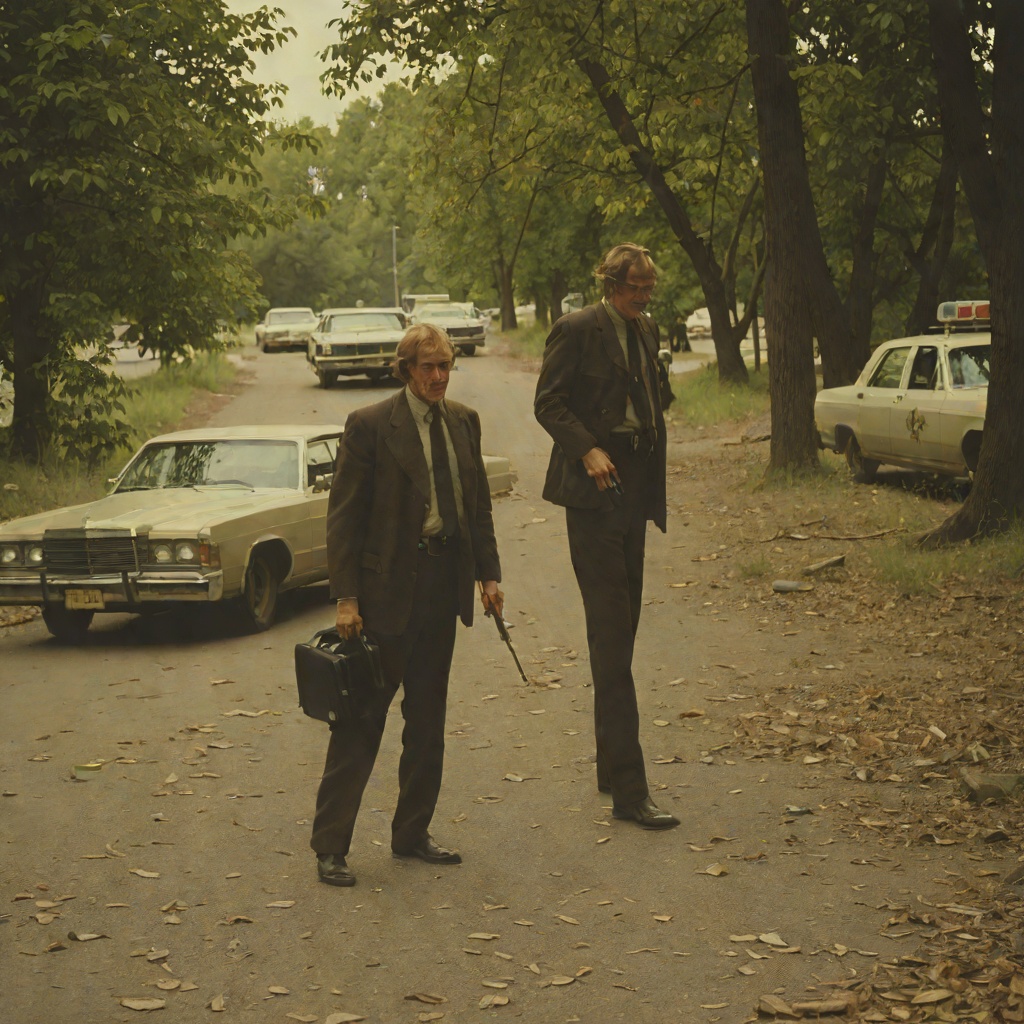
Thomas Ludlow's Confession
Lady in the LakeThomas Ludlow's Confession is the event that ostensibly closes the case of the Lady in the Lake, the name given to Cleo Sherwood after her body was dragged from the Druid Hill Park fountain. The white bartender from the Flamingo Club, known as Spike, walks into Baltimore Police Department headquarters to confess to her murder, providing the official story that a white man killed Cleo Sherwood for the very everyday crime of not loving him. The confession is a sensation that Maddie Schwartz, a reporter for The Star, breaks to the city, and it appears to be the ending to the tantalizing tale that had gripped Baltimore. But the confession is a fabrication, a manufactured story designed to stop Maddie's investigation, and its true nature is only revealed months later, when the real circumstances of Cleo's fate come to light.
The Tip and the Call
The confession does not come to Maddie as a surprise; it comes to her as a tip. Ferdie Platt, her source and confidant, tells her that a man is going to walk into headquarters that night and confess to the murder of Cleo Sherwood. Ferdie explains that the man who told him did not realize it was a tip, that to him it was gossip, a way to feel big and plugged in. The man is the bartender from the Flamingo, the white guy, Tommy something. Ferdie recounts the story that Ludlow will tell: he told Cleo he was in love with her, she laughed at him, and he killed her. Ferdie advises Maddie to wait an hour, take a cab to the office, and make the call from there, but she keeps the promise to wait and breaks the others, calling from home. She dials Homicide, and the detective's silence confirms that Thomas Ludlow has arrived without an attorney to confess to the murder of Eunetta "Cleo" Sherwood. She then dials the city desk and says, as if she had said it a thousand times before, "Cal, this is Maddie Schwartz. Please put me through to rewrite. I've gotten a big break on the Cleo Sherwood story."
The Story Breaks
By ten o'clock the next morning, most of the city knows that a white man has killed Cleo Sherwood for the very everyday crime of not loving him. The story is not a page one story, and Maddie understands the calculus that determines that: the dead woman was a Negro, she was killed for love, or for lack of love more accurately. But it is a story good enough for the metro page, the ending to the tantalizing tale of the Lady in the Lake. Maddie goes about her usual tasks with her usual efficiency, waiting for the moment she will be summoned to the boss's office. She understands and accepts that she will not continue to report the story, that Tommy's arraignment will be covered by someone on courts or cops, that John Diller will look for a folo out of the cop shop. That is fine. She does not want to be a cop reporter.
The Manufactured Confession
The confession is not what it appears to be. Months later, in a moment of intimacy and confession, Ferdie Platt reveals the truth to Maddie. He tells her that he and Shell Gordon told Tommy Ludlow he had to confess, to make her stop. The confession was a device, a manufactured story designed to end her investigation. Ferdie admits, "I told you about Tommy Ludlow because we thought it would make you stop. Shell told Tommy he had to confess, to make you stop." Maddie says she knows, but she hadn't. The confession, which she had broken to the city as a scoop, was a lie engineered by the men around her to protect themselves and to silence her. The official story of Cleo's death, the story that would remain the official story, was a fabrication.
The Real Story
The manufactured confession obscures the real story of Cleo Sherwood's fate. Cleo did not die at the hands of Thomas Ludlow on New Year's Eve, although that will always remain the official story. She faked her own death, walking out of a hospital and saying goodbye to Cleo Sherwood forever, saying goodbye to her parents, her babies, to Baltimore. The last person who saw her alive, the actual her, was Maddie, in her hospital bed, ten months after the supposed murder, when Maddie was too groggy and overwhelmed by her own drama to pay close attention. Cleo reveals this to Maddie years later, speaking to her in her head, explaining that she was dead and Maddie had made a good run at it. The confession, the story that Maddie broke to the city, was the lie that allowed Cleo to escape, to live a rich, full, happy life, to see her boys go to McDonogh and on to college, while the official story of her murder remained the cover for her freedom.