Jakes Ruiz de Infante
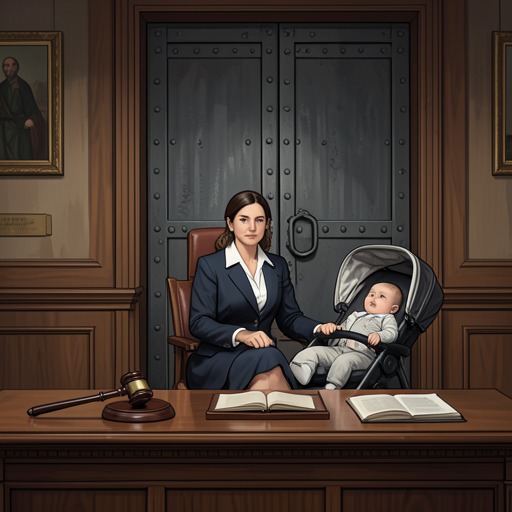
Las madres noJakes Ruiz de Infante is a newspaper journalist whose role in the account is to observe, judge, and report on Alice Espanet’s trial. He first appears during a courtroom break, beside The Narrator at a bar with coffee and a pincho of tortilla, speaking with the confidence of someone who believes the case is clear. Later, he becomes the person who finds The Narrator after she misses the jury’s verdict and conveys the news that the defense of exemption from criminal responsibility has been accepted. His presence connects courtroom chatter with the public record, while his sharp opinions expose how readily the case is reduced to rival stories about Alice.
Identity and Introduction
Jakes enters the narrative not through a formal introduction but through a voice at The Narrator’s left. He is sharing the bar with her during a break in the proceedings, and his first comments reveal an emphatic view of the trial: when an accused person has been caught in the act and the facts seem beyond dispute, he argues, the defense has only one strategy left—to plead insanity. He dismisses psychiatric terminology as jargon and treats the recourse to experts as a sign of desperation. The bluntness establishes him as a confident, skeptical presence before The Narrator knows his name.
He introduces himself as Jakes and identifies the newspaper he works for. The Narrator has come to the trial from a university context, but does not correct him or feel that she has lied. The exchange leaves Jakes’s professional identity clear while also showing that he is trying to place her. He is not merely an anonymous spectator: he is a reporter attentive to who is present, and his curiosity about The Narrator will later lead him to identify her.
Views of the Case and Alice
Jakes’s certainty about the insanity defense sits alongside his recognition that the case is unusual because the accused is a mother and the victims are her own children. His skepticism is therefore not a complete dismissal of the case’s emotional force. Rather, he initially approaches it through familiar legal and psychiatric categories, mocking the language used to explain conduct while acknowledging the exceptional nature of the crime.
After a witness has testified, Jakes comments on the poor impression she has made. The Narrator points out that what the witness has said also reflects badly on Alice. Jakes turns the exchange into a pointed choice between two sharply drawn portraits: a wealthy, artificial woman associated with expensive handbags and massages, and Alice as profound, mysterious, and tragic. The contrast is deliberately loaded. It shows how courtroom judgments can become judgments about taste, class, and femininity, and how the image of Alice may be shaped as much by the people describing her as by the evidence itself. Jakes’s wit makes the choice vivid, but the stark alternatives also reveal the limitations of the framing: the case is being pulled toward opposed characters rather than a single settled account.
The Narrator and the Verdict
Jakes is intrigued by The Narrator’s presence at court from the beginning, and even more so after she abruptly disappears. Her face seems familiar to him; by checking a few details with a colleague in the culture section, he works out who she is. The colleague has her phone number from an interview conducted a couple of years earlier, and Jakes obtains it from her. His route to The Narrator is practical and journalistic: recognition, cross-checking, and a contact already held in a professional address book.
He calls while The Narrator is travelling between the Uribitarte and Pío Baroja stops. She does not recognize the unknown number and has grown reluctant to answer her phone, but eventually picks up. Jakes immediately tells her that she has missed the jury’s verdict; when she asks him to get to the point rather than explain how he found her number, he reports that the exemption from criminal responsibility has been accepted. The call makes him the bearer of a consequential courtroom outcome, arriving after The Narrator has removed herself from the immediate scene.
Reporting and Narrative Role
Jakes’s work continues beyond the call. He interviews Carmela Basaguren, Alice’s defense lawyer, and the interview is published. Basaguren describes the case as a possible turning point in public discussion of mental illness and its treatment under criminal law. She points to the system’s failures not only in material resources but also in sensitivity and preparation, and characterizes the handling of mentally ill people who commit crimes as improvised and provisional. Jakes’s interview preserves that argument in the public record, extending the trial’s stakes beyond the verdict itself.
As a character, Jakes is defined by the movement between certainty and inquiry. At the bar he treats the insanity defense as a predictable last card and derides the psychiatric vocabulary surrounding it; elsewhere he acknowledges that the mother-child relationship makes this case exceptional, and his interview gives space to a broader challenge to the legal system. He also helps bridge the public trial and The Narrator’s more private investigation: he notices her, discovers her identity, and reaches her with the result she missed. His comments do not settle Alice’s story. Instead, they make visible the competing frames through which the case is judged—and the reporter’s role in carrying those frames from the courtroom into public debate.