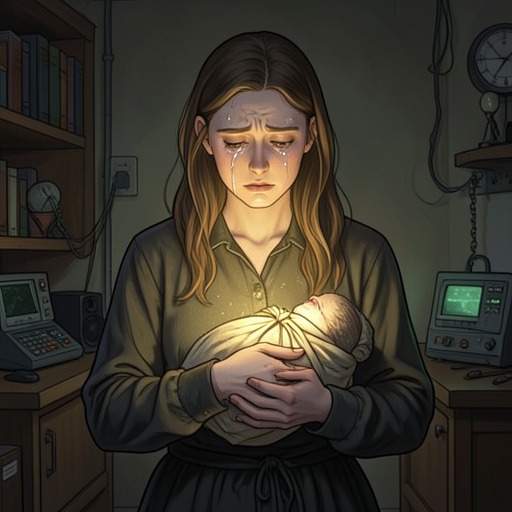
Ambrosia
Last ChristmasAmbrosia is the golden substance offered to Lilliana as part of a gift meant to make her immortal and keep her with Malphas. Its significance lies not in immortality alone, but in the conditions attached to it: Ambrosia must be taken with Nectar, it does not eliminate the possibility of death, and Lilliana accepts it only after asking what it will do to her and whether the gods will object.
The Gift and Its Presentation
The substance arrives in a small clay pot that Myone holds out to Malphas, explaining that Xev has brought it for the two of them. Malphas does not immediately take it; Myone nudges it into his hands and reassures him that it is a gift. The gesture catches him off guard. He had not expected generosity from his brother and Myone, the woman who had tried to kill him. In that history, the pot is more than a container: it makes an unexpected offer of care tangible, placing reconciliation and attachment in Malphas’s hands before he knows what the gift contains.
When Malphas lifts the lid, the narration describes his shock at finding a cobra inside. The exchange that follows, however, turns to the golden-colored substance in the jar: Lilliana asks what it is, and Malphas identifies it as her immortality. He explains that the substance is Ambrosia. The passage thus presents the gift first through the small vessel and the surprise of opening it, then through the explanation of the golden substance and what it is meant to do. Its material form gives the scene a domestic intimacy: immortality is not bestowed through a public ceremony but offered from a pot passed between people who have fought, loved, and chosen to make a future together.
What Ambrosia Does—and Does Not Do
Ambrosia is not presented as sufficient by itself. Xev holds up a small skin of Nectar and explains that Ambrosia and Nectar taken together will ensure that Lilliana never ages or dies. The two substances therefore form a paired gift: the pot contains the food she is asked to eat, while the skin holds the drink that completes the promise. The scene names their combined effect rather than suggesting that either one alone grants immortality.
That promise is qualified immediately. Malphas tells Lilliana that immortals can still die, and Xev specifies beheading as a way to kill them. Lilliana rubs at her neck as she considers the danger. Immortality here changes the terms of vulnerability rather than abolishing vulnerability altogether: the gift prevents aging and ordinary death, but leaves a fatal weakness that can be stated plainly. The contrast matters to the decision before her. She is not being offered invincibility, and the people who give her the substances do not conceal that limit.
Lilliana’s Decision
Lilliana hesitates before eating. She asks whether taking Ambrosia will change her, and Malphas reassures her that he would not give it to her if it did; he loves her as she is and does not want her to change. His response makes the intended effect personal as well as supernatural. The offer is meant to extend her life without replacing the person he loves, and her question registers the distinction between living forever and remaining herself.
She also asks whether accepting the gift is permissible and whether the gods will be angry. Xev describes the matter as a gray area, tells her she will not be in trouble, and jokes that he will be in no more trouble than usual if they discover what he has done. He adds that the consequences would be less serious than if they discovered he was not really serving his mother’s army. His explanation makes the gift an act taken despite divine uncertainty, not a straightforwardly sanctioned blessing. He then urges Lilliana to eat before Malphas guts an innocent human, bringing the scene’s cosmic and military stakes back to its immediate, darkly comic exchange.
Lilliana dips her fingers into the clay pot, scoops out the Ambrosia, and eats it; she finds it delicious. Malphas then offers her the Nectar. She drinks and responds even more favorably to its taste. The acceptance is enacted through ordinary gestures—fingers in a pot, a drink from a small skin—rather than through a formal rite. The substances’ extraordinary promise enters the story by way of eating and drinking, and Lilliana’s hesitation gives way to willing participation.
Meaning in the Scene
The gift reverses the scene’s expectation of hostility. Myone and Xev bring the means to preserve Malphas and Lilliana’s life together, although Malphas had not anticipated receiving anything from them and Myone had once tried to kill him. Myone’s stated reason is that no one should be separated from the person they love. Ambrosia therefore belongs to a larger act of care: its purpose is not merely to transform Lilliana’s lifespan, but to prevent death from separating the couple.
The scene also places that promise beside Malphas’s declaration that he is done with war and is a farmer. Xev initially laughs at the claim, then realizes Malphas means it. Against that change of direction, Ambrosia points toward a future whose defining concern is shared life rather than continued battle. Yet the stated possibility of beheading keeps the gift from becoming absolute security. Its meaning rests in both halves of the exchange: the substances offer Lilliana a life without aging, while the characters acknowledge that immortality does not make her untouchable.