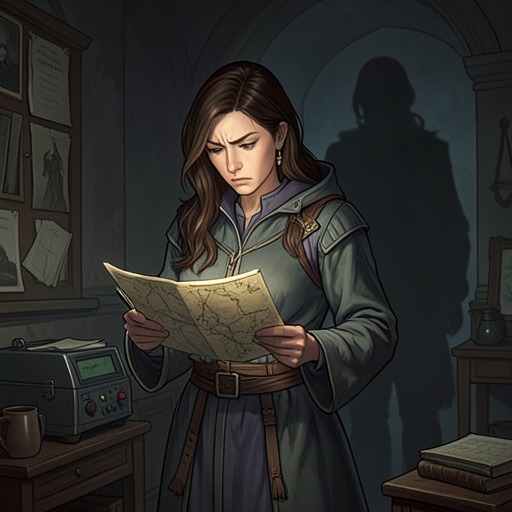
Caleb (Malphas) and Azura
Last ChristmasCaleb (Malphas) and Azura are former allies divided by his defection to the Kalosum. Their conflict is not only a change of military allegiance: Azura responds to his disappearance and return on the enemy side with fury, then seeks the person she believes made him vulnerable through love. Caleb, by contrast, is shown recoiling from violence against children attributed to Azura’s orders and promising to protect Lilliana. The relation turns on this opposition between Azura’s punitive pursuit of power and Caleb’s growing attachments, which she interprets as liabilities to be destroyed.
Former Allegiance and Defection
Azura’s reaction to news of Malphas’s defection establishes that he had been one of the most vicious soldiers on her side. When a demon reports that Malphas had fought with the Kalosum, Azura’s fury is immediate. Later, she tells Noir that they have lost Malphas and demands that he bring back Malphas’s heart or head. The language makes his departure sound, to her, like an intolerable loss and a problem to be settled through violence rather than a choice to be understood.
Noir interrupts that reflex with the question Azura has not yet considered: why Malphas defected. He reasons that a soldier who once fought for them, stopped fighting, and years later appeared among their enemies may have been changed by love. Azura accepts the possibility and moves at once from explanation to retaliation: whoever caused the change should be destroyed. Her response suggests that she sees the relationship not as a bond that might reveal something about Malphas, but as the source of a weakness she can attack.
Violence and Opposed Loyalties
The contrast between them is also framed through the treatment of human children. Faced with carnage and humans unprepared for the demon horde, Caleb asks why the attackers are going after children and what purpose the slaughter serves. The answer given by a demon is that the children are favored by the enemy and that Azura wants them wiped from the planet. Caleb’s reaction places him against the campaign’s indiscriminate cruelty; the violence is presented as a policy associated with Azura, even though the exchange does not establish that she is present at the scene.
In a separate moment, Caleb promises Lilliana that he will keep her safe. The promise gives concrete form to the attachment that Azura’s side comes to identify as his weakness. These moments do not show Azura directly confronting Lilliana, nor do they establish that the children targeted in the attack are connected to her. Instead, they set the two sides of the relationship in sharp relief: Caleb’s protective commitment and Azura’s willingness to use violence against those favored by her enemies.
Azura’s Pursuit of Malphas
Azura’s demand that Noir find Malphas’s heart or head shows how she initially responds to his defection: by treating the former soldier as a target to be recovered or killed. Noir points out that Malphas is a son of Verlyn, but Azura dismisses the relevance of his parentage, reasoning that Verlyn does not care about his children. The exchange emphasizes her impatience with any consideration that might restrain the pursuit.
The possibility of love redirects that pursuit without softening it. Noir suggests that someone has tamed their former soldier and that they need to identify that person. Azura’s immediate agreement to destroy the person shows that her concern is not simply to locate Malphas or reverse his allegiance. She is prepared to punish the bond she believes explains it. Her response makes intimacy legible within her world as an exploitable vulnerability, and turns the search for the cause of defection into a threat against whoever Malphas cares for.
Family, Power, and the Meaning of Weakness
Xevikan later tells Malphas that his mother knows he has a weakness. He explains that Azura and the King of All Darkness had little difficulty working out why Malphas vanished and later appeared on the wrong side. The revelation connects Azura’s earlier suspicion about love to a broader understanding of the defection: she has recognized that Malphas’s attachments can expose him to harm. In this account, what makes his change intelligible to Azura’s side also makes him easier to threaten.
Xevikan’s account of Azura’s treatment of her own child deepens the hostility between her and Malphas. He believes she would throw him to their enemies even faster than she would betray Caleb, and says that power is all that matters to her. The narration then qualifies that judgment: power is not her only motive. Azura wants to kill her good siblings and punish those who held her back, a drive presented as more consuming still. Her relationship with Malphas therefore belongs to a larger pattern of domination and vengeance; neither kinship nor former loyalty guarantees mercy.
The available scenes leave the relationship defined chiefly by reversal and pursuit. Malphas’s move from Azura’s side to the Kalosum makes him a former asset and present enemy; Azura’s response turns the unexplained change into a hunt for the love she suspects behind it. Caleb’s protection of Lilliana and his objection to the attack on children provide the moral contrast, while Azura’s willingness to destroy a perceived weakness shows the cost of that contrast. Their conflict is both military and intimate, even when the two characters are not shown confronting one another directly.