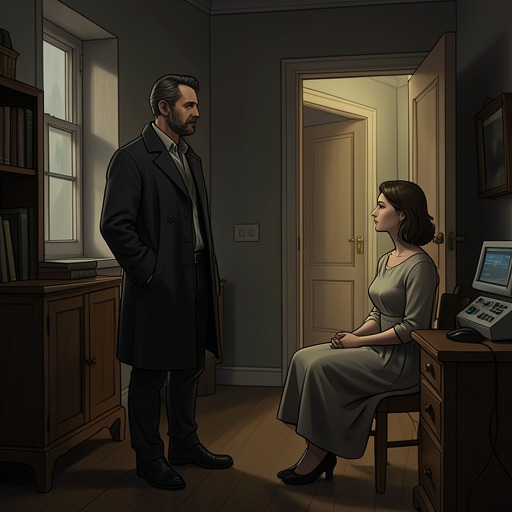
Caleb and Lilliana's farmhouse
Last ChristmasCaleb and Lilliana's farmhouse is both a place of work and the domestic refuge Caleb helps build with Lilliana and her father, Ophelos. Its barn, cottage, and garden give visible form to Caleb’s movement from destruction toward creation; later, when danger threatens the people around them, the home he has helped improve becomes too exposed to remain safe. The farm’s importance lies not in a single dramatic episode, but in the everyday labor, intimacy, and protection that gather there before circumstances force the couple to leave.
Farmstead and domestic setting
Lilliana’s home is presented through its working spaces rather than through a formal description of the farmhouse itself. The barn is where Caleb lives when he first stays with Lilliana and her father, while the cottage is the household’s intimate center: Lilliana brings Caleb a cup there, and later Caleb sees her baking inside. A garden adds another routine obligation, as Caleb thinks about finishing the weeding before abandoning the task to go to his wife. Together, barn, cottage, and garden establish the farm as a lived-in place maintained through practical work.
Caleb has been helping Lilliana and Ophelos with chores for more than two months, and he sleeps happily in the barn. Ophelos had intended that Caleb’s stay there would motivate him to fix the roof. Caleb exceeds that expectation: the barn becomes markedly improved, and an addition provides him with a bedroom. The account emphasizes both the usefulness of the work and the fact that the new space is made through effort rather than magic. The barn is therefore not merely his lodging; it is the first clear evidence of the kind of life he is making on the farm.
Work and transformation
Caleb’s renovations matter because he undertakes them without resorting to his powers. He discovers that he likes working with his hands, and the physical labor changes what creation means to him: the improved barn stands as the result of his own effort. His distinction between tearing something down and creating something expresses the value he attaches to the work. The farmhouse setting gives that distinction a concrete measure. Rather than demonstrating power through destruction, Caleb contributes a useful room to a household that has given him shelter.
The farm’s building work continues beyond Caleb’s improvements. A year later, Ophelos proudly shows Caleb an addition to the cottage that he has spent month after month building. Ophelos has refused help from anyone, making the structure a product of his persistence as well. This second addition places Caleb’s earlier work within a broader pattern of construction at the home: the barn and cottage are both being adapted by the people who live there, through their own labor and choices. The house consequently records more than Caleb’s personal change; it also reflects the household’s ongoing capacity to make and maintain a life together.
Home, intimacy, and family
The farmhouse becomes a setting for the growing ease between Caleb and Lilliana. She watches him come down from the roof and is still astonished that he is there; by then, his presence and humor have become part of what she anticipates in daily life. She values him as a listener who does not judge her, even when her thoughts are unorthodox. Their affection is expressed in small exchanges alongside the work: Caleb hands her the cup she brought, jokes about returning to his task before Ophelos accuses him of making eyes at her, and watches her head back toward the cottage.
A year later, the farm is also the home Caleb shares with his wife. He looks toward the cottage where Lilliana is baking, then toward the garden he has not finished weeding. He chooses to leave the weeds and go inside to see her. This modest interruption of work balances the earlier scenes of building: domestic life consists not only of the labor that improves a place, but also of choosing the person who makes it home. Ophelos’s cottage addition further situates the couple within a household shaped by Lilliana’s father as well as by Caleb’s relationship with her.
Danger and departure
The farm’s security is tested when an unexpected rider approaches. Because visitors are rare, Caleb runs to the door so he can place himself between the rider and Lilliana. After learning of danger, he agrees to take her to their cave, where she can hide for a few days. His response makes the contrast between the two places clear: the farmhouse is their established home, but the cave is the refuge he considers safer in the immediate crisis. He makes a fire there with his powers and holds Lilliana tightly, admitting that he does not want to let her go.
After Caleb has helped others, he tucks his wings into his back and proposes that they stay where they are rather than return to the farm. Lilliana objects that she has not brought enough supplies; Caleb answers that he can gather what they need and that the farm is too great a risk. The decision changes the farmhouse from a place of shelter into a place they cannot safely rely on. Its garden, cottage, and improved barn remain the material signs of a life they have built, but protection now requires distance from that life. In this way, the home’s narrative significance rests on both sides of Caleb’s transformation: it is where he learns to create and belong, and what he must be willing to leave when staying would endanger Lilliana.