Immortality
Last ChristmasImmortality in the novel is a gift that promises freedom from aging and death, not absolute invulnerability. Lilliana is offered it through Ambrosia and Nectar, but Caleb (Malphas) immediately qualifies the promise: immortals can still be killed. The difference between enduring indefinitely and being impossible to destroy shapes both the gift’s meaning and its later role in Lilliana’s survival.
The Gift and Its Means
The gift arrives through an intimate act of reconciliation. Caleb has declared himself finished with war and a farmer; Xevikan initially laughs at the claim, then recognizes that Caleb means it. Myone presents a small clay pot and explains that she asked Xevikan to bring it for the two of them. When Caleb hesitates, she nudges the pot into his hands and reassures him that it is a gift. His surprise is personal as well as practical: he had not expected a gift, least of all from his brother and from Myone, who had once tried to kill him. Immortality thus enters the story not as a prize seized in battle but as something offered across relationships marked by conflict.
When Caleb shows Lilliana the golden substance in the jar, he identifies it as her immortality. He explains that it is Ambrosia, while Xevikan holds up a small skin containing Nectar. The two substances together, Xevikan says, will ensure that she never ages or dies. The distinction matters: the gift is not described as a single potion or as a quality she already possessed, but as the result of two named substances given together. Caleb hands her the jar and encourages her to eat it. Later, the story refers to Lilliana as someone who was supposed to be immortal, establishing that this offered gift bears directly on her status and fate.
The Promise and Its Limits
Caleb interrupts the apparently complete promise as soon as Xevikan describes its effects. Immortality does not mean that nothing can kill its bearer. Caleb points to his own wound in the cave as an example: he had been wounded despite being immortal. He tells Lilliana that certain weapons and circumstances can end the lives of immortals, making vulnerability part of the explanation rather than an exception concealed from her.
Xevikan supplies the starkest limit. Before Caleb can answer Lilliana’s question about what circumstances could be fatal, Xevikan says that beheading will kill most things, immortal or not. Lilliana rubs her neck, a small physical response that makes the abstract qualification immediate. The scene sets the reach of the gift beside a blunt bodily weakness: the substances may prevent aging and ordinary death, but they cannot make the body beyond destruction. The novel therefore distinguishes longevity from invulnerability, and treats knowledge of that distinction as part of receiving the gift.
Immortality and Lilliana’s Survival
The distinction becomes consequential after Lilliana’s apparent death. When Caleb learns that she is alive, he objects that she was supposed to be immortal. Jaden confirms the connection, explaining that Lilliana survived because the attackers did not know she was immortal. Their ignorance did not make her safe in itself: Jaden says they would have killed her out of spite. He contrasts her with Myone, who is not human, underscoring that Lilliana’s human identity remains relevant even after the gift changes her relation to aging and death.
Jaden’s response was to place Lilliana in a sleeping trance. Her survival consequently depends on more than the promise of immortality. The attackers’ mistaken understanding, Jaden’s intervention, and the concealment of her living body all matter. Immortality is not presented as a shield that automatically prevents violence; it is a condition whose usefulness can depend on what others know and what allies do. Jaden explains that he could not wake her while Caleb remained enslaved to Malachai, because waking her under those circumstances would have exposed her to what Malachai might do to her. The trance preserves her life, but postpones her return until that danger changes.
Survival, Continuity, and the Ending
The account of Lilliana’s sleeping trance revises what her immortality can guarantee. It helps explain why she was not simply killed, but it does not remove the peril around her or give her an immediate return to life. Jaden’s explanation that she was supposed to be immortal, together with his insistence that the attackers did not know it, places the gift inside a chain of vulnerability, concealment, and rescue. The protection is real, yet incomplete; survival requires both the unusual condition and deliberate action by someone who knows the danger.
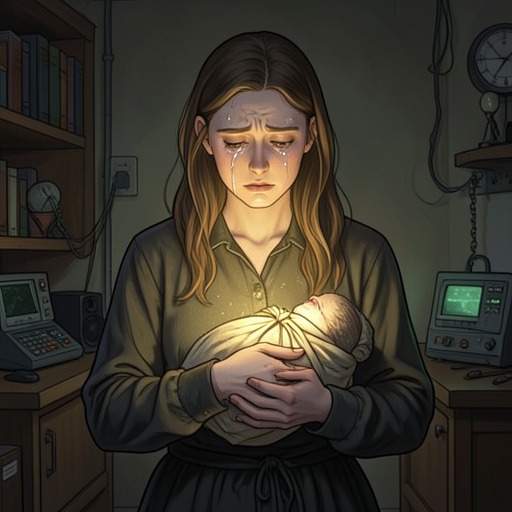
The final revelation of a coming child gives that survival a forward-looking consequence. Lilliana tells Caleb that they are going to have a baby, which she hopes will look like its father. The scene confirms their reunion and opens a future beyond the period of suspended life. It does not establish that the child will be immortal, nor does it settle every limit of Lilliana’s condition. Instead, the novel links the gift to the possibility of continued shared life while preserving the earlier warning that immortality is not immunity from death. Its decisive significance lies in that tension: Lilliana can endure beyond ordinary human limits, but her safety remains dependent on circumstance, knowledge, and care.