Kalosum–Mavromino War
Last ChristmasThe Kalosum–Mavromino War marks a reversal in Malphas’s allegiance and values: the demon who once sought to become more feared than the gods eventually risks himself to stop a demon army from killing humans. Its battles expose both the violence of the conflict and the personal cost of Malphas’s change from a feared combatant into a protector who can grieve the dead.
Battle and Reputation
An early battlefield scene, dated 998 years before recorded time, places Malphas beside Itzal as their side routes its opponents. Malphas spreads his wings and prepares to let no enemy survive. He has been called one of history’s deadliest demons and takes pride in that reputation; his ambition reaches beyond battlefield victory to becoming more feared than the gods themselves.
That appetite for fear sets the measure of his later reversal. The war’s conflict is not simply between opposing forces: Malphas’s own conduct changes from merciless participation to resistance against the violence he once embodied.
Human Ties and the Risk of Discovery
Malphas’s connection to humans makes his position precarious before his defection becomes open. He wants to marry Lilliana, but fears that Itzal or another of his demon brethren will find him with her. Their discovery, he believes, would be disastrous for the humans, especially if the demons learned why he was absent. His private attachment therefore carries a military danger: a relationship could expose the people around him to his former allies.
His human identity also brings his lineage into view. When Orus challenges his claim to be a demigod, Malphas names Verlyn—the name humans use for his father, Jaden. Those nearby gasp. Malphas insists that he would not claim the connection falsely, noting that Jaden is not merciful to impostors and has been known to punish them brutally. Later, after Malphas saves the humans, the priest approaches him first and recognizes him as Verlyn’s son. The recognition reverses the expected response: Malphas had tensed for an attack, but the survivors approach him with gratitude.
The human community is not merely a population he protects at a distance. At his wedding to Lilliana, the priest places wreaths of dried greenery and holly berries on their heads and calls the witnesses forward to behold a sacred union. Malphas jokes that the statue of his father looks unlike Jaden, whose long hair and sharp features he imitates, and calls himself Jaden’s least favorite child. The ceremony’s ordinary intimacy stands in sharp contrast to the danger he fears from his demon family and the violence that later tests his allegiance.
Defection and the Fight for the Humans
When Malphas encounters the demon assault, he finds the humans badly unprepared and sees children among its targets. He challenges Itzal over the attack and asks him to withdraw his forces. Itzal explains that Azura wants the children wiped from the planet because they are favored by the demons’ enemies. Malphas orders Itzal to pull back and warns that refusal will make them enemies.
Itzal does not yield. Malphas declares that they are at war and moves toward him, but Itzal flies away. Once Malphas joins the fighting, the Sephirii attack him as well. He refuses to harm them, taking their blows while trying to reach his former brethren. The reversal is costly: he faces violence from both sides, yet will not answer the Sephirii’s attacks with violence of his own.
Malphas returns to the battle with allies. The fighting is difficult, but they eventually rout the demons. Itzal survives, leaving Malphas to anticipate that he will report the defection to Azura. The immediate military outcome is therefore mixed: the humans are safe, but the betrayal has been witnessed by a surviving commander who can carry news of it back to the opposing side.
Loss, Change, and Aftermath
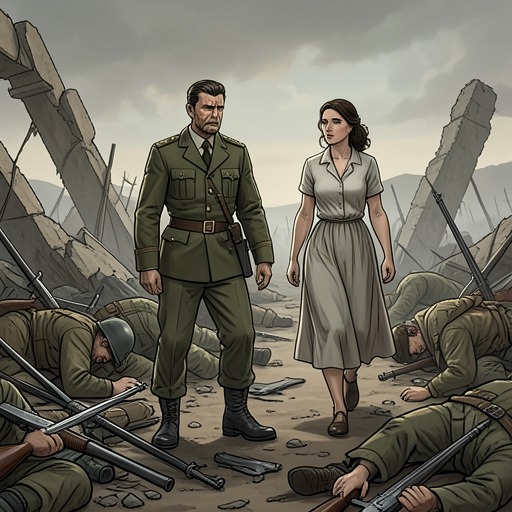
Victory does not undo the casualties. Malphas is bloody, bodies lie everywhere, and the dead include people he knew—people with whom he had laughed and celebrated the solstice and other holidays with their families. For the first time, he feels their loss. The pain is searing, and he recognizes that Lilliana has changed him: he now cares about human lives, a feeling he experiences as both prophetic and painful. He even misses the numbness that once made death inconsequential to him.
The war thus changes what Malphas can lose as well as what he is willing to defend. His later grief over Lilliana makes the knowledge of love’s absence burn deeply, while her death drives him to vow vengeance against everyone responsible, without mercy. The account does not make that later bereavement a consequence of the war; rather, it shows how the capacity for attachment that the human conflict brings into focus leaves Malphas exposed to a grief that his former indifference could not have allowed.