Lilliana's childhood cave
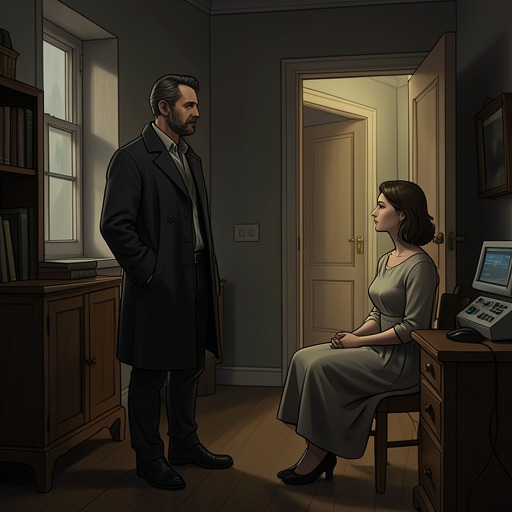
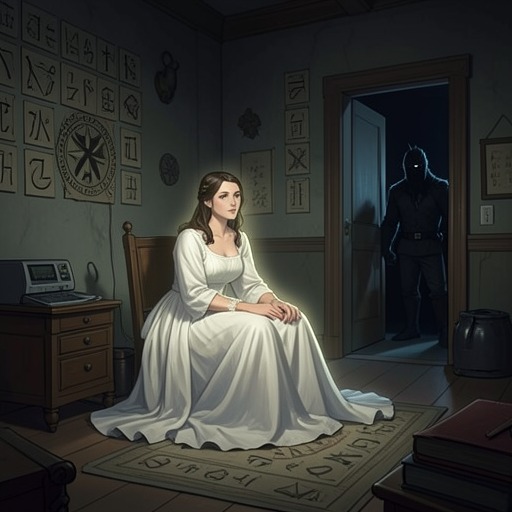
Last ChristmasLilliana's childhood cave is both a literal refuge and the recurring setting through which the story marks the changing meaning of Caleb and Lilliana's bond. First offered as shelter for a wounded stranger, it is a place Lilliana knows by touch and habit, despite its reputation as haunted. When Caleb later returns to it in grief, its familiar darkness has become an absence; in a subsequent scene, the cave where the two met becomes the setting of a confrontation and a revelation about Lilliana's survival.
Childhood Refuge and First Shelter
The cave lies just over a hill from where Lilliana finds Caleb injured. She explains that she played there as a girl, that no one goes there, and that the villagers believe it is haunted. Those circumstances make it useful as a hiding place: she offers its shelter so he can rest, and promises to tend his wound and bring him food. Her proposal is an act of care made concrete through the cave's seclusion and her knowledge of it, rather than through any promise that the danger beyond it has disappeared.
Lilliana helps Caleb to his feet, and her hand brushes his black wings as she supports him. He is overwhelmed by this kindness. When he asks why she would help him, she answers that he needs it. The cave thus becomes the first setting for their relationship, where his suspicion and astonishment meet her uncomplicated offer of aid. Its importance begins not with its haunted reputation, but with the choice to make an avoided place hospitable to someone in need.
Familiarity in the Dark
On entering, Lilliana moves through the dark cave with confidence. Caleb's sight adjusts quickly, and he watches her go to a corner and uncover a small tinder box. Her ease briefly seems uncanny to him: she moves as if she can see plainly in darkness. The explanation is ordinary and specific. She knows the cave and where its things have been put. Childhood familiarity, rather than supernatural sight, lets her navigate a place other people avoid.
She strikes a flintstone to light a small tallow candle, uses it to light several more candles set into the cave walls, then puts the first candle into a small makeshift sconce she has created. The sequence transforms the cave without erasing its darkness: a portable flame becomes several points of light, and an improvised fixture gives one of them a place. Once she can see, Lilliana kneels beside Caleb to inspect his injury. He catches her hand with his claws and asks what she is doing; she explains that she means to examine the wound and asks whether he truly thinks she would harm him. The scene makes the cave a place where vulnerability is negotiated through small physical actions: light, an offered hand, a startled restraint, and the intention to tend an injury.
A Refuge Under Threat
The cave's privacy is not absolute protection. Later, Lilliana worries that people still searching for her demon might stumble upon it. She wants to believe Caleb would not harm the people she knows, but fears seeing their blood on his sword. Her return to the cave is therefore cautious, shaped by the danger that her refuge could expose others as well as shelter him. The place sits between two responsibilities: protecting Caleb and preventing harm to the people outside it.
When she enters, Caleb has not started a fire. Lilliana wonders whether he does not know how, then considers that perhaps he does not need one. The uncertainty gives the earlier candlelit scene a quiet contrast: she had made light so she could tend him, but his presence in the cave does not necessarily depend on the human comforts she supplied. The cave remains familiar to her, yet his needs are not fully legible to her. Its shelter brings them together without dissolving their differences.
Return, Memory, and Revelation
Much later, Caleb flies to the cave because he needs to see Lilliana. The distance seems interminable, though it had once seemed much shorter. On arrival, he finds it quieter and darker, without any light, and the darkness makes his gut clench. The physical description is spare, but its contrast with Lilliana's earlier candles is decisive: the place she made visible for him now offers no light. His changed experience of distance and silence registers how profoundly the refuge has altered in meaning for him.
The cave also returns as the place where Caleb and Lilliana first met. In a later scene, after fury rises in Caleb and Lilliana touches his cheek, he is taken from the street where they stand to the cave where they met, with his father waiting there. The scene binds the cave to a confrontation rooted in their shared past; it does not simply repeat the first meeting, but brings the memory of that beginning into contact with present danger.
There, Jaden explains that Lilliana is alive because he placed her in a sleeping trance. He could not wake her while Caleb was enslaved to the Malachais, because they would have harmed her; unlike Myone, she was human. This revelation gives the cave's return a further narrative consequence, while not establishing that Lilliana's sleeping body was physically kept inside it. The cave is instead the remembered setting of meeting and recognition, a place through which the story connects Caleb's present confrontation to the hidden circumstances of Lilliana's survival.