Lilliana's village
Last ChristmasLilliana's village is where Malphas first follows Lilliana to meet her father, where the couple enter a temple together, and where later scenes associate their marriage with smoke, death, and battle. The place moves from awkward family encounter to sacred ceremony to a landscape of violence; its importance lies in how closely the lovers’ private life is tied to the danger threatening the people around them.
Setting and First Encounter
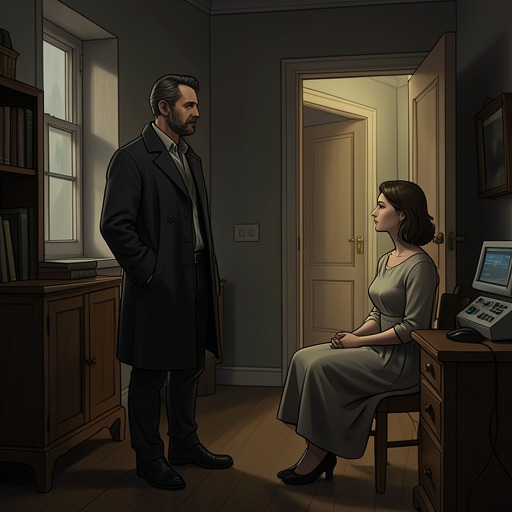
The village is introduced through a personal errand rather than a broad description of its streets or people. Malphas follows Lilliana home because she is afraid of her father. There, he meets an old, gray-haired man with piercing blue eyes, who regards the much taller stranger with a sneer and asks Lilliana where she picked up a stray. Malphas answers that he had been peeing on a tree when she passed him. The crude joke meets her father’s suspicion without easing it: the older man asks him to explain himself, then suggests he keep passing through.
That exchange establishes the village as a place where Malphas must encounter Lilliana’s family and the ordinary social judgments that come with it. The father sees a disreputable stranger, while Malphas knows that the man has no idea whom—or what—he is addressing. The contrast gives their introduction an edge of comedy, but the welcome is not secure. When Lilliana suddenly screams for her father, Malphas runs past him to find her in the yard, surrounded by men. A sorcerer stands among them, conspicuous by his height and slender build, while the men shout at her. The yard, initially the setting of a domestic confrontation, becomes a place of immediate threat.
Temple and Marriage
The village also holds the couple’s religious ceremony. As Malphas and Lilliana enter the temple, they are laughing and stumbling together. Their levity stops when the priest gives them a stern look and asks whether they know where they are. Caleb answers quietly that it is his father’s temple. The moment places playful intimacy inside a formal religious setting: the couple arrive in high spirits, but their surroundings demand reverence.
The priest’s response changes when Myone approaches. Myone tells him that the young couple have the blessing and benediction of their lord, that they are special to him, and that he will look kindly on their ceremony. She asks the priest to take care of them. His face lights up at the news. The village temple is therefore not merely a building associated with the couple’s private vows; it is also where their ceremony receives public religious recognition and the priest is asked to protect and guide them.
A Place of Return and Loss
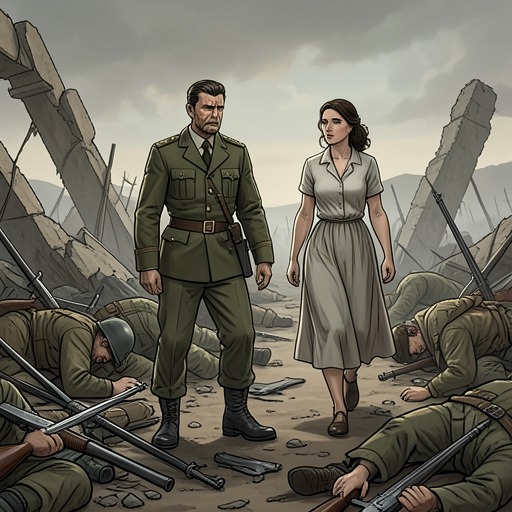
Later, the village is identified as the place where Malphas and Lilliana married. After leaving her, he feels uneasy and does not want to be gone long. He spreads his wings and flies back toward the village. Before he has gone far, he sees smoke and smells death. The rancid smell catches in his throat, and he wonders how he could ever have forgotten it. The change is stark: the place associated with marriage is now marked by destruction, and Malphas’s return brings no reunion or comfort.
The account links that devastation to his decision to fight alongside others. He returns to battle with allies, and although victory does not come easily, they eventually rout the demons. Itzal survives and may be the first to report Malphas’s defection to Azura, but the human population is safe. The aftermath is not clean or celebratory: Malphas is bloody, and bodies are everywhere. The village’s danger thus belongs to a wider conflict, whose immediate consequence is both the rescue of humans and the visible cost of fighting.
The Village Under Attack
A later alarm makes the connection between the village and Lilliana’s safety still more direct. During battle, a Sephirii calls Malphas by name; the messenger’s speed and expression tell him that something is wrong. He learns that Lilliana is in danger and abandons the battle to race home. At his arrival, the evidence is immediate and physical: the stench of burning flesh, victims’ screams, smoke, and carnage. He sees blood and mangled bodies wherever he looks. The sequence turns the village from a place to which he willingly returns into a homeward destination that may already have been devastated.
Together, these scenes give the village a distinctive narrative role without making it a fully described map. The evidence locates a family yard, a temple, and the home to which Malphas rushes, but does not specify the village’s geography or extent. What it does establish is a recurring contrast: a father’s wary reception, a couple’s laughter and ceremony, and the smoke and bodies left by violence. Malphas’s returns bind those contrasting scenes together. The village is where his relationship with Lilliana enters family and religious life, and where threats against her and the humans make his loyalties consequential.