Malphas’s god-forged sword
Last ChristmasMalphas’s god-forged sword is at once a weapon, a liability, and a reminder that Malphas’s freedom can be threatened through the things he carries. Forged by gods for gods, it is more immortal than its bearer and cannot be destroyed. Malphas can conceal it, but cannot safely abandon it: in the wrong hands, it could become a means of enslavement.
Nature and First Appearances
The sword is established as an extraordinary object through its divine manufacture and the limits this places on Malphas. When he explains why he cannot simply destroy it, he describes it as more immortal than he is. Hiding it is therefore not a temporary precaution that can be replaced by disposal; concealment is the only option he identifies.
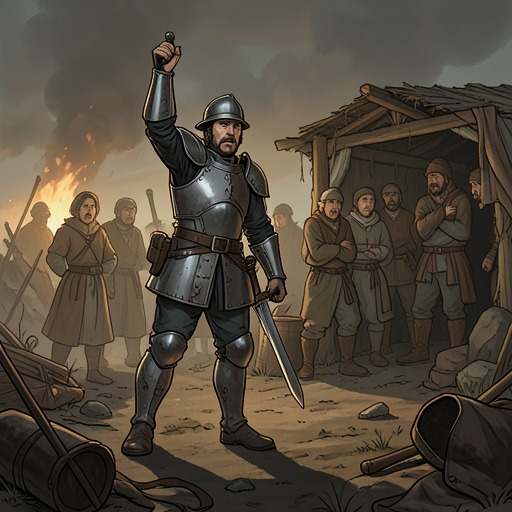
The weapon also makes Malphas’s identity legible to others. When challenged to prove that he is a demigod, he draws the sword from his back and lifts the Enchanted cloak. The group recoils in awe; when he runs fire along the blade, the sorcerer who had approached to inspect it steps back in fear. The scene presents the sword not merely as evidence of power, but as a display that can turn doubt into alarm.
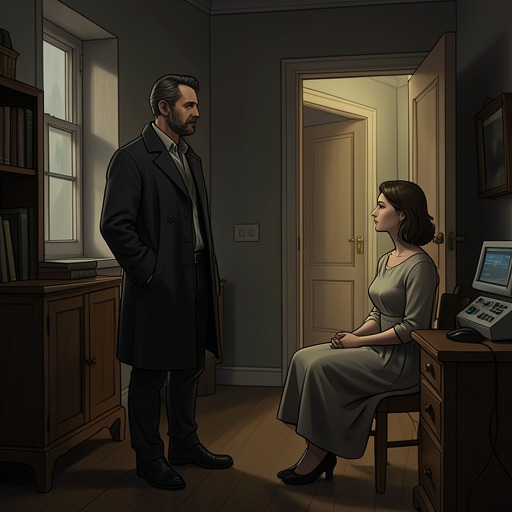
An earlier episode gives the weapon a different kind of importance. Lilliana says she will try to collect Malphas’s sword before it is found and people begin looking for him. He realizes that he has completely forgotten it. That lapse is striking because he has never before set the sword aside or been disarmed by anyone. For a bearer accustomed to keeping it close, its absence briefly makes the weapon’s practical hold on his attention visible.
Concealment and the Threat of Enslavement
Later, Malphas manifests the sword in front of Lilliana, who is surprised that he still has it. He cannot let it go, he explains, because an enemy might use it to enslave him. The danger is not that the weapon will simply be captured as a prize: its possession could become a way to control its bearer.
The broader political circumstances give that fear a specific context. Malphas warns that after the war Monakribos Malachai may kill, capture, or enslave those who have fought under him. In the existing order, the dark powers allow their followers freedom only while war continues; Malphas says the longer the war lasts, the less he has to fear those powers leashing his own powers and freedom. His attachment to the sword thus belongs to a larger struggle in which military service and the prospect of peace can both leave him exposed to captivity.
Unable to destroy the weapon, Malphas wraps it in the Enchanted cloak, which keeps it hidden from anyone who might try to track him through it. He then uses his powers to conceal the wrapped sword in the wall above the bed he shares with Lilliana. The arrangement protects the weapon from discovery while preserving his control of it: the sword is neither carried openly nor surrendered, but kept close and out of sight.
Return to War
That concealment does not end the sword’s role in the conflict. When preparations turn toward war, Malphas goes to the bedroom and removes it from the wall, despite having sworn never to do so. He considers whether carrying it might be enough to affect the enemy: a demonic army would know him if he went to war with the sword, and that recognition might frighten them off. The weapon can expose him, but that exposure may itself serve as a warning.
Malphas later draws the sword in a confrontation with Itzal. He orders Itzal to pull back his forces and makes clear that refusal would make them enemies; once Itzal understands that Malphas is serious, Malphas unsheathes the weapon and pleads with his brother not to force him to use it. Itzal answers with a threat to kill him. In this exchange, the sword marks the point at which Malphas’s change of allegiance becomes an immediate danger between brothers, not just a declaration of political alignment.
Meaning and Consequences
The sword’s uses remain bound to its risks. Its divine origin makes it impossible for Malphas to destroy; its concealment protects it from tracking; its possession may allow an enemy to enslave him; and its reappearance signals that he is prepared to return to battle. Each choice to hide or draw it is therefore also a choice about exposure, control, and the possibility of coercion.
Its significance shifts with Malphas’s purpose. He once fought for an order in which continued war offered some protection from enslavement; later, he brings the sword into conflict while siding against that order and asking Itzal to withdraw. The same weapon that can identify him as a feared warrior can also announce the limits of his willingness to fight. Kept above the bed and brought back into the field, Malphas’s god-forged sword connects private vulnerability to public allegiance: he cannot make it harmless, so he must decide what its power will defend.