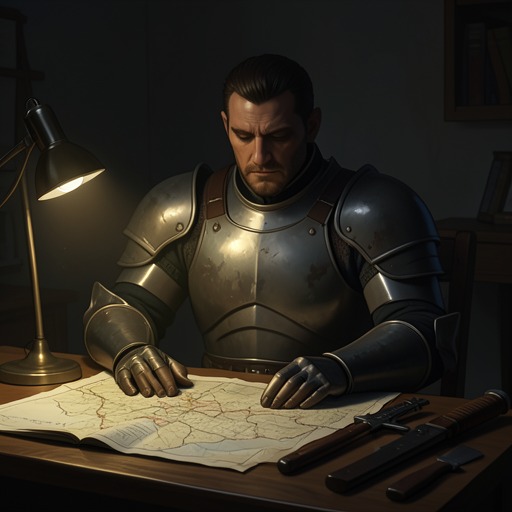
Out of evil comes good
Last Christmas“Out of evil comes good” is both Jaden’s motto and the meaning Caleb finally discovers in the circumstances that brought him to his wedding. Etched on his father’s sword, the phrase shifts from a saying Caleb considers hollow to a hard-won recognition: an evil intention has, unexpectedly, opened the way to a good he once thought impossible.
Origin and Earlier Meaning
The words are etched on Caleb’s father’s sword and serve as Jaden’s motto. Caleb had never truly understood them. He regarded the phrase as a pithy comfort offered to humans, a way of placating them for suffering that he believed the gods imposed needlessly, often simply because they were bored.
That skepticism gives the motto its force when Caleb’s understanding changes. The phrase had seemed to him to excuse suffering after the fact; now it names a consequence he has experienced, without making the original cruelty any less real.
Caleb’s Recognition
Caleb’s enemies had meant to kill him and had been determined to do so. Yet, in the aftermath of that intended violence, he finds a good he had never known existed. The realization is not that his enemies acted benevolently, but that their brutality did not determine everything that followed.
The good is bound up with the kindness Caleb receives and his love for Lilliana. Until Lilliana, kindness of any kind had been unfamiliar to him; now, as he looks at his soon-to-be wife, the moment moves him. He also recognizes the irony that he owes it to Myone’s attempt to kill him. The phrase thus gathers together a reversal of intention and outcome: the attempt on his life becomes part of the chain of circumstances leading to a happiness he could not previously imagine.
Meaning in the Narrative
The motto’s significance lies in Caleb’s change of understanding. He had treated it as a consoling formula for people made helpless by suffering; his experience gives it a personal meaning grounded not in the denial of evil, but in the possibility that evil will not have the final consequence. His enemies’ purpose remains murderous, while the outcome contains love and kindness that they did not intend.
The surrounding reflection turns toward impermanence: day follows night, nothing lasts forever, and the bad does not last forever either. Read beside that thought, the motto belongs to a movement from Caleb’s former certainty about the gods’ arbitrary cruelty toward recognition that pain and goodness can coexist in a life, and that the former need not erase the latter.